THE ADVENTURE COLLECTIVE® · Independent discovery and booking for outdoor travel

Ride a quiet e-bike down Kane Creek Canyon to view cliffside petroglyphs and sweeping red‑rock scenery. This short guided loop mixes paved road with dirt track and stops at prominent rock‑art panels for interpretation.
Ride a quiet e-bike down Kane Creek Canyon to view cliffside petroglyphs and sweeping red‑rock scenery. This short guided loop mixes paved road with dirt track and stops at prominent rock‑art panels for interpretation.
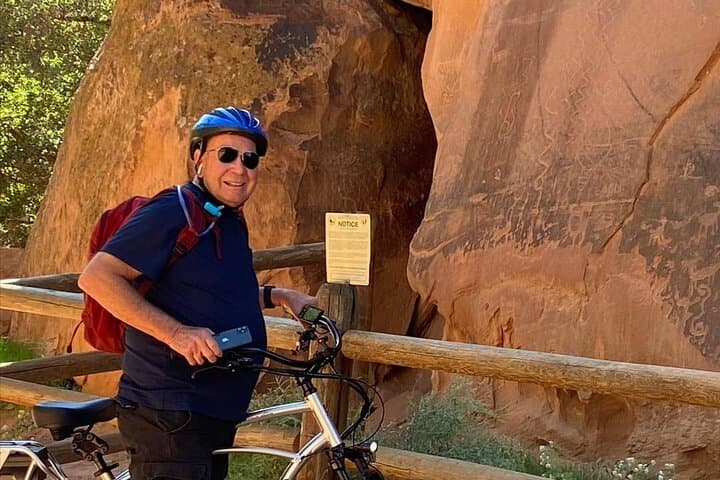
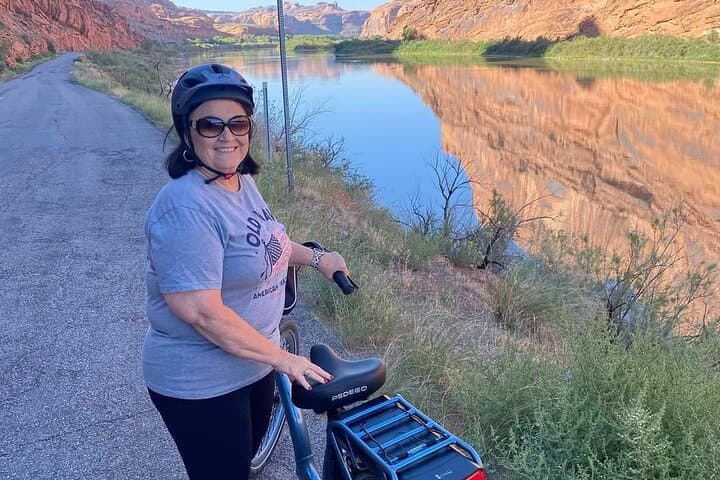
You push off from a shaded pullout and the e-bike whispers forward, river and red rock slipping past as cliffs lean in to watch. The road drops into Kane Creek Canyon, half paved, half dirt, with narrow cut-banks and petroglyph panels perched high on boulders and cliff faces.
Verified experiences and guided adventures in the surrounding area.
Operated by Pedego Moab · Moab, Utah
You push off from a shaded pullout and the e-bike whispers forward, river and red rock slipping past as cliffs lean in to watch. The road drops into Kane Creek Canyon, half paved, half dirt, with narrow cut-banks and petroglyph panels perched high on boulders and cliff faces.
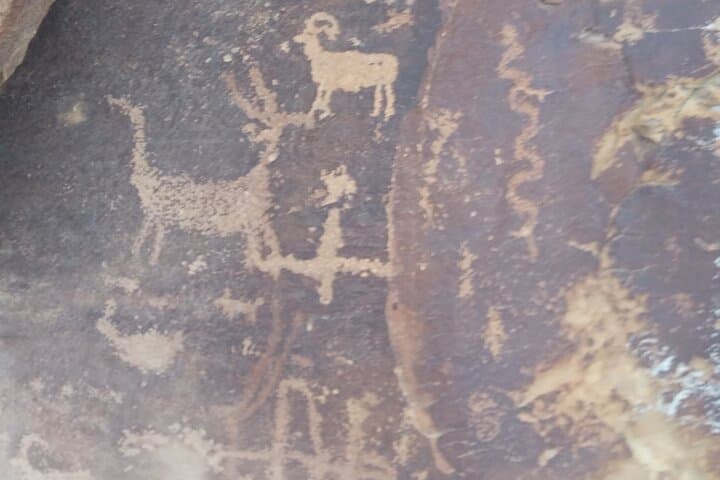
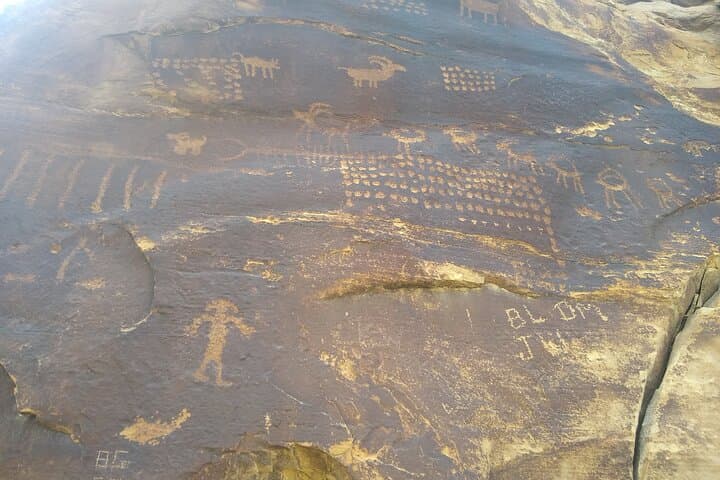
These glyphs were pecked into stone by ancestral Puebloan and Fremont peoples over thousands of years; the canyon’s sandstone — Entrada and Morrison formations — records ancient rivers, wind-buried sand dunes, and the slow tilt of the Colorado Plateau. Guides will point out panels like the large “Birthing Rock” composition and explain stylistic differences that hint at shifting cultures and uses: territorial markers, astronomical notation, or ceremonial imagery.
Culturally, this ride puts you at the edge of living ranch land, modern Moab recreation, and deep prehistoric human presence. Expect ravens overhead and the scrub-steppe smell of greasewood and piñon. The river below still dares you to follow the canyon farther; here the land invites study as much as spectacle.
Practical guidance: bikes and helmets are provided; adults must meet height restrictions so bring measurements. Half the route is on smooth pavement and half on compact dirt road with exposed edges — stay alert and ride within your comfort zone. Hydrate before you set out, apply strong sun protection, and plan for 2–3 hours on the clock to include stops at panels. Small-group guides stop frequently for interpretation, photos, and to situate the rock art in landscape and timeline. This is an accessible, interpretive way to cover more ground than a hike while learning how humans have read and marked this canyon for millennia.
easy.
2–3 hours.
Suitable for most people who can balance on a bike and pedal with occasional effort; basic cardiovascular fitness recommended.
Plan 2–3 hours total on the tour; guides ride conservatively with multiple stops for petroglyph interpretation and photos, so it’s relaxed rather than strenuous.
Yes — adults must meet minimum height requirements and smaller bikes are available for youth; provide height and weight when booking so the operator can prepare proper bikes.
Yes — the tour is rated easy and suitable for most fitness levels, but riders should be comfortable balancing and following basic e‑bike handling instructions; exposure near cliffs requires caution.
Full refund if cancelled at least 24 hours before departure; trips may be cancelled for bad weather or insufficient participants.
Petroglyphs along Kane Creek were produced by ancestral Puebloan and Fremont peoples over many centuries and reflect changing styles and uses across time.
These are fragile cultural resources—do not touch or climb on panels, stay on roads or designated paths, and pack out all trash to protect the rock art and desert ecosystem.
Pedego Moab operates guided outdoor trips and adventures with an emphasis on safety, stewardship, and memorable experiences.
You push off from a shaded pullout and the e-bike whispers forward, river and red rock slipping past as cliffs lean in to watch. The road drops into Kane Creek Canyon, half paved, half dirt, with narrow cut-banks and petroglyph panels perched high on boulders and cliff faces.
You push off from a shaded pullout and the e-bike whispers forward, river and red rock slipping past as cliffs lean in to watch. The road drops into Kane Creek Canyon, half paved, half dirt, with narrow cut-banks and petroglyph panels perched high on boulders and cliff faces.
These glyphs were pecked into stone by ancestral Puebloan and Fremont peoples over thousands of years; the canyon’s sandstone — Entrada and Morrison formations — records ancient rivers, wind-buried sand dunes, and the slow tilt of the Colorado Plateau. Guides will point out panels like the large “Birthing Rock” composition and explain stylistic differences that hint at shifting cultures and uses: territorial markers, astronomical notation, or ceremonial imagery.
Culturally, this ride puts you at the edge of living ranch land, modern Moab recreation, and deep prehistoric human presence. Expect ravens overhead and the scrub-steppe smell of greasewood and piñon. The river below still dares you to follow the canyon farther; here the land invites study as much as spectacle.
Practical guidance: bikes and helmets are provided; adults must meet height restrictions so bring measurements. Half the route is on smooth pavement and half on compact dirt road with exposed edges — stay alert and ride within your comfort zone. Hydrate before you set out, apply strong sun protection, and plan for 2–3 hours on the clock to include stops at panels. Small-group guides stop frequently for interpretation, photos, and to situate the rock art in landscape and timeline. This is an accessible, interpretive way to cover more ground than a hike while learning how humans have read and marked this canyon for millennia.