THE ADVENTURE COLLECTIVE® · Independent discovery and booking for outdoor travel

Test your fitness and nerves in Moab’s red-rock slot canyons. This guided canyoneering trip—available as a short introduction or a full-day outing to Robbers Roost—combines rappelling, chimneying and technical down-climbs with expert instruction.
Test your fitness and nerves in Moab’s red-rock slot canyons. This guided canyoneering trip—available as a short introduction or a full-day outing to Robbers Roost—combines rappelling, chimneying and technical down-climbs with expert instruction.
You step off the 4x4 into a pocket of red sandstone where light slices narrow bands of shade and the canyon floor drops away into cool, shadowed corridors. The guide clips a helmet to your pack, lays out a rope, and points toward a tight slot where you'll chimney, chimney again, and downclimb a series of stepped drops.
Verified experiences and guided adventures in the surrounding area.
Operated by NAVTEC Expeditions · Moab, Utah
You step off the 4x4 into a pocket of red sandstone where light slices narrow bands of shade and the canyon floor drops away into cool, shadowed corridors. The guide clips a helmet to your pack, lays out a rope, and points toward a tight slot where you'll chimney, chimney again, and downclimb a series of stepped drops.
Southern Utah's canyons are cut from Jurassic Navajo Sandstone — wind-deposited dunes turned stone and later carved by intermittent water into sinuous slots and potholes. The land around Moab carries human history from Ute and Paiute use to 19th-century prospectors; names like Robbers Roost reflect a rugged frontier past. Geological folds and cross-beds are obvious here; the canyon's walls record cycles of desert wind and flash-floods.
On a half-day near Moab you’ll work on basic rope skills, short rappels and technical downclimbs close to town. A full-day trip ventures farther (the operator notes a roughly two-hour drive to Robbers Roost) and requires more endurance. Expect a mix of hiking, scrambling across slickrock and several rope-assisted sections — sometimes into pools — with exposure to intense sun and heat. Guides supply harnesses, helmets and ropes and teach anchors, belays and rappelling technique.
Practical prep: pack at least a gallon of water, wear sturdy closed-toe shoes with sticky soles, carry sun protection and tie back long hair. Move steadily, follow guide instructions for rope work, and be ready for a physically engaging, route-finding day in classic red-rock terrain.
moderate.
4–8 hours.
Be in good aerobic shape and have leg and core strength for scrambling, rappelling and carrying a daypack; prior climbing experience helps but is not required.
No — this trip is guided and designed for beginners to learn basic rappelling and rope techniques, though participants should be reasonably fit.
Guides, required technical gear (harnesses, helmets, ropes), 4x4 transport and, on full-day trips, a buffet-style lunch; hotel pick-up may be available depending on location.
Full-day outings are rated moderate and include a longer drive and more sustained sections of scrambling and rope work; expect an all-day physical outing with multiple rappels and hikes.
Tours can be canceled for bad weather or if minimum participants aren't met; in hot months operators emphasize bringing extra water and may adjust timing for safety.
The region’s canyons sit on Navajo Sandstone carved by episodic floods; Indigenous groups including Ute and Paiute historically traversed this landscape and artifacts dot the wider region.
Stick to established routes, avoid stepping on cryptobiotic soil, pack out all waste and follow Leave No Trace principles to protect fragile desert ecosystems.
NAVTEC Expeditions operates guided outdoor trips and adventures with an emphasis on safety, stewardship, and memorable experiences.

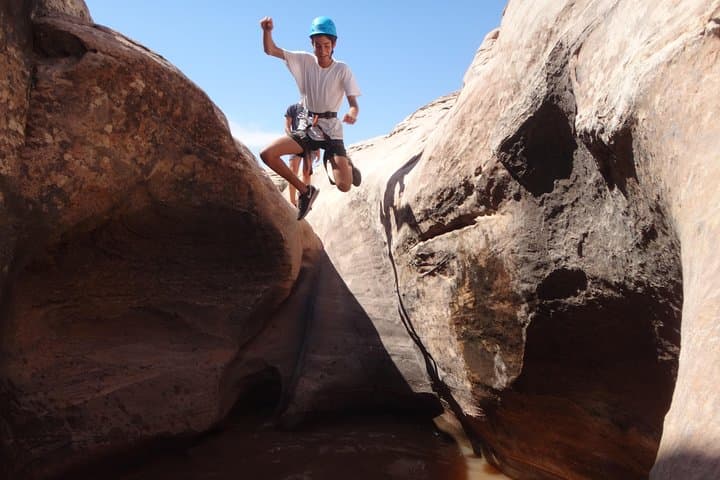


You step off the 4x4 into a pocket of red sandstone where light slices narrow bands of shade and the canyon floor drops away into cool, shadowed corridors. The guide clips a helmet to your pack, lays out a rope, and points toward a tight slot where you'll chimney, chimney again, and downclimb a series of stepped drops.
You step off the 4x4 into a pocket of red sandstone where light slices narrow bands of shade and the canyon floor drops away into cool, shadowed corridors. The guide clips a helmet to your pack, lays out a rope, and points toward a tight slot where you'll chimney, chimney again, and downclimb a series of stepped drops.
Southern Utah's canyons are cut from Jurassic Navajo Sandstone — wind-deposited dunes turned stone and later carved by intermittent water into sinuous slots and potholes. The land around Moab carries human history from Ute and Paiute use to 19th-century prospectors; names like Robbers Roost reflect a rugged frontier past. Geological folds and cross-beds are obvious here; the canyon's walls record cycles of desert wind and flash-floods.
On a half-day near Moab you’ll work on basic rope skills, short rappels and technical downclimbs close to town. A full-day trip ventures farther (the operator notes a roughly two-hour drive to Robbers Roost) and requires more endurance. Expect a mix of hiking, scrambling across slickrock and several rope-assisted sections — sometimes into pools — with exposure to intense sun and heat. Guides supply harnesses, helmets and ropes and teach anchors, belays and rappelling technique.
Practical prep: pack at least a gallon of water, wear sturdy closed-toe shoes with sticky soles, carry sun protection and tie back long hair. Move steadily, follow guide instructions for rope work, and be ready for a physically engaging, route-finding day in classic red-rock terrain.