THE ADVENTURE COLLECTIVE® · Independent discovery and booking for outdoor travel

Ride a traditional rickshaw across Miyajima's quiet lanes to the UNESCO-listed Itsukushima Shrine. This private, customizable tour pairs cultural storytelling with tidal drama — ideal for travelers who want a compact, accessible introduction to the island.
Ride a traditional rickshaw across Miyajima's quiet lanes to the UNESCO-listed Itsukushima Shrine. This private, customizable tour pairs cultural storytelling with tidal drama — ideal for travelers who want a compact, accessible introduction to the island.
The rickshaw creaks forward as gulls wheel above the bay and the red torii looms through a fine salt haze — Miyajima arrives not as a postcard but as a living place, where footsteps and waves mark time.
Verified experiences and guided adventures in the surrounding area.
Operated by Ebisuya · Hatsukaichi, Hiroshima Prefecture
The rickshaw creaks forward as gulls wheel above the bay and the red torii looms through a fine salt haze — Miyajima arrives not as a postcard but as a living place, where footsteps and waves mark time.
This private rickshaw tour centers on Itsukushima Shrine, a UNESCO-listed site famous for its “floating” gate and timber walkways built directly over the tidal flats. The island’s landscape is volcanic in origin: wooded slopes rising from a rocky shoreline, with Momiji Valley offering a sharper palette in autumn. Culturally, Miyajima has been a sacred island for centuries; the shrine complex and surrounding streets preserve Edo- and Meiji-era craftsmanship alongside contemporary ryokan and oyster stalls.
A typical outing lasts 30–120 minutes and can be tailored to include an interior visit to the shrine on longer options. Tours launch just outside the ferry terminal and can end at a customizable drop-off. Rickshaws carry up to two adults (74 cm wide); talk to your provider about booking separate chairs for larger guests or if you need a multilingual driver. Mobility access is generally good, and tours accommodate strollers and some wheelchairs.
Practical notes: time your visit around tide charts to see the torii both afloat and accessible on foot; mornings are best for light and fewer crowds. Wear comfortable shoes for short walks on wooden planks, bring sun protection and a light layer for changing bay breezes, and carry cash for small purchases. The experience combines quiet streets, historic timber architecture, and the slow, deliberate pace of a human-powered ride — an efficient way to absorb Miyajima’s history and shoreline rhythm in a single, customizable loop.
easy.
30–120 minutes.
Minimal fitness required; able to board a low-profile rickshaw and walk short wooden paths.
Tours are customizable between 30 and 120 minutes; shorter loops cover key viewpoints while longer options include time inside the shrine.
Yes — the torii becomes walkable at low tide; check local tide times to plan a shore approach versus a high-tide photo from the boardwalk.
The tour notes wheelchair and stroller accessibility; confirm specifics with the operator about your finish point and any mobility needs.
Multilingual drivers may be available but are subject to scheduling; request an English-speaking driver when booking to secure availability.
Miyajima has been a sacred island for centuries; Itsukushima Shrine was developed as a coastal, water-facing complex to enforce the island’s ritual separation from the mainland.
The shrine and island manage high visitor volumes with preservation measures; stick to designated paths and avoid disturbing shore life to protect tidal ecosystems.
Ebisuya operates guided outdoor trips and adventures with an emphasis on safety, stewardship, and memorable experiences.

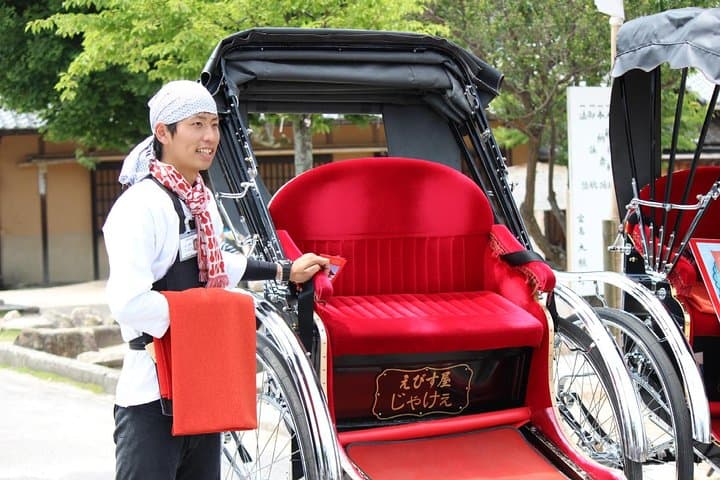


The rickshaw creaks forward as gulls wheel above the bay and the red torii looms through a fine salt haze — Miyajima arrives not as a postcard but as a living place, where footsteps and waves mark time.
The rickshaw creaks forward as gulls wheel above the bay and the red torii looms through a fine salt haze — Miyajima arrives not as a postcard but as a living place, where footsteps and waves mark time.
This private rickshaw tour centers on Itsukushima Shrine, a UNESCO-listed site famous for its “floating” gate and timber walkways built directly over the tidal flats. The island’s landscape is volcanic in origin: wooded slopes rising from a rocky shoreline, with Momiji Valley offering a sharper palette in autumn. Culturally, Miyajima has been a sacred island for centuries; the shrine complex and surrounding streets preserve Edo- and Meiji-era craftsmanship alongside contemporary ryokan and oyster stalls.
A typical outing lasts 30–120 minutes and can be tailored to include an interior visit to the shrine on longer options. Tours launch just outside the ferry terminal and can end at a customizable drop-off. Rickshaws carry up to two adults (74 cm wide); talk to your provider about booking separate chairs for larger guests or if you need a multilingual driver. Mobility access is generally good, and tours accommodate strollers and some wheelchairs.
Practical notes: time your visit around tide charts to see the torii both afloat and accessible on foot; mornings are best for light and fewer crowds. Wear comfortable shoes for short walks on wooden planks, bring sun protection and a light layer for changing bay breezes, and carry cash for small purchases. The experience combines quiet streets, historic timber architecture, and the slow, deliberate pace of a human-powered ride — an efficient way to absorb Miyajima’s history and shoreline rhythm in a single, customizable loop.