THE ADVENTURE COLLECTIVE® · Independent discovery and booking for outdoor travel

Explore Memphis, Saqqara and Dahshur in one private day—walk at the Step Pyramid, see the massive Ramesses II statue remnants, and study Middle Kingdom experiments in pyramid design. This five‑hour tour focuses on archaeology, context, and practical pacing for hot desert conditions.
Explore Memphis, Saqqara and Dahshur in one private day—walk at the Step Pyramid, see the massive Ramesses II statue remnants, and study Middle Kingdom experiments in pyramid design. This five‑hour tour focuses on archaeology, context, and practical pacing for hot desert conditions.
Morning light slices across the desert as an air‑conditioned vehicle hums away from Cairo, carrying travelers toward stone that once defined an empire. The flat plateau opens up: stepped edges of mastabas, the squat silhouette of Djoser’s Step Pyramid, and the distant dark mound of Dahshur where the ground feels older underfoot.
Verified experiences and guided adventures in the surrounding area.
Operated by Egipto Excursiones · Mit Rahina, Giza Governorate
Morning light slices across the desert as an air‑conditioned vehicle hums away from Cairo, carrying travelers toward stone that once defined an empire. The flat plateau opens up: stepped edges of mastabas, the squat silhouette of Djoser’s Step Pyramid, and the distant dark mound of Dahshur where the ground feels older underfoot.
This private day trip links three complementary sites. Mit Rahina preserves open‑air ruins of Memphis, the first royal capital; Saqqara houses the Step Pyramid complex—arguably the world’s oldest stone building project—and nearby mastabas; Dahshur presents experimental pyramid forms, including the Bent and Black Pyramids from the Middle Kingdom. Geologically the plain is Pleistocene Nile sediment and desert loess, giving the site its firm, wind‑sculpted surfaces and clear sightlines that made it suitable for monumental architecture.
Culturally, expect sparse signage at some areas and active archaeology at others; local guides add context about pharaonic burial traditions, the Serapeum’s buried bulls, and the shifting visibility of ruins as sand and time trade places.
Practical guidance: the tour runs about five hours and moves between open, exposed sites—start early to avoid peak heat, bring ample water, and wear sturdy shoes for uneven stone and sand. Cameras are welcome but follow site rules and guide directions; many entry fees may be extra depending on options. Allow time for short walks at each stop, and budget for shaded breaks back in the vehicle. With straightforward logistics and a private guide, this itinerary compresses key archaeological layers into one efficient, informative day outside Cairo.
easy.
5 hours.
Suitable for most fitness levels; requires standing and walking over uneven ground for short periods.
Entrance fees may not be included—many itineraries leave some tickets as optional add‑ons; confirm at booking.
Sites have uneven ground and some low steps; the tour is generally not ideal for travelers with severe mobility restrictions or spinal issues.
Private transportation is included, but you must provide a pickup point; confirm exact pickup location and timing when booking.
Photography is normally allowed outdoors; indoor displays or certain monuments may have restrictions—follow guide instructions and posted rules.
Memphis was the first royal capital of ancient Egypt; Saqqara’s Step Pyramid dates to the Third Dynasty and represents the earliest large‑scale stone construction. Dahshur preserves experimental pyramid forms from later dynasties.
Ongoing conservation balances public access with fragile archaeology—stay on marked paths, avoid touching carved stone, and support local preservation efforts by using authorized guides.
Egipto Excursiones operates guided outdoor trips and adventures with an emphasis on safety, stewardship, and memorable experiences.
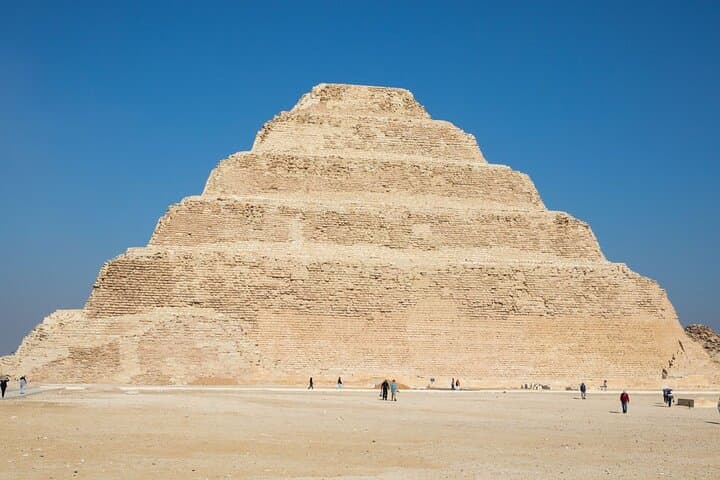
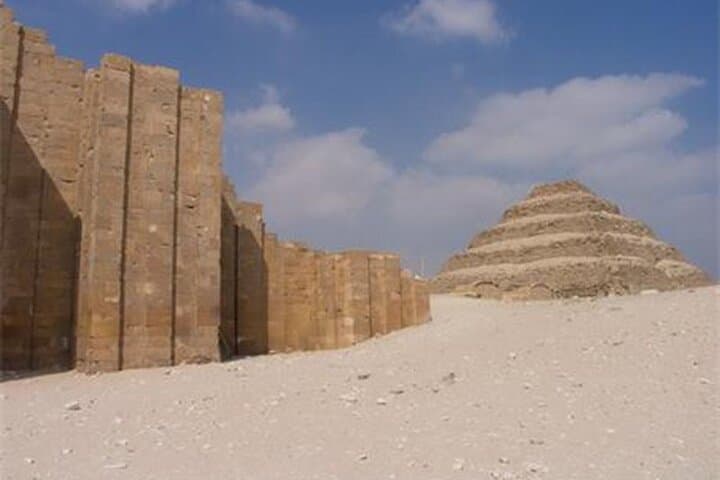
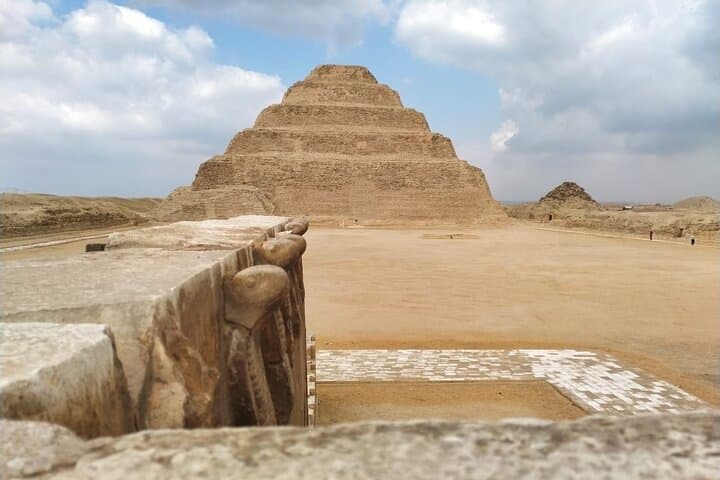
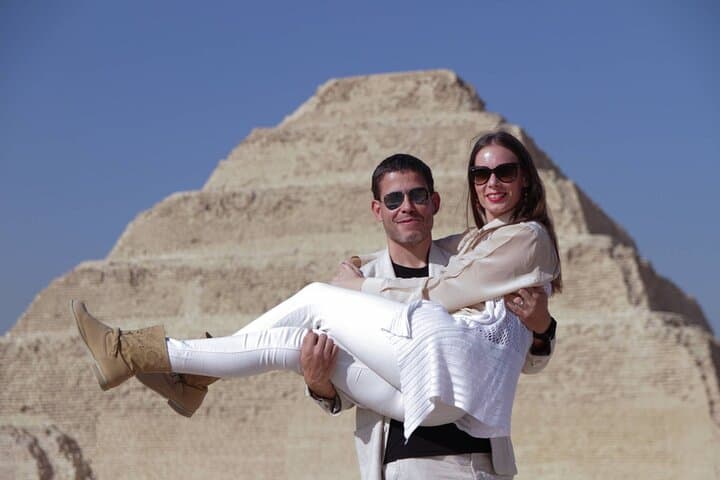
Morning light slices across the desert as an air‑conditioned vehicle hums away from Cairo, carrying travelers toward stone that once defined an empire. The flat plateau opens up: stepped edges of mastabas, the squat silhouette of Djoser’s Step Pyramid, and the distant dark mound of Dahshur where the ground feels older underfoot.
Morning light slices across the desert as an air‑conditioned vehicle hums away from Cairo, carrying travelers toward stone that once defined an empire. The flat plateau opens up: stepped edges of mastabas, the squat silhouette of Djoser’s Step Pyramid, and the distant dark mound of Dahshur where the ground feels older underfoot.
This private day trip links three complementary sites. Mit Rahina preserves open‑air ruins of Memphis, the first royal capital; Saqqara houses the Step Pyramid complex—arguably the world’s oldest stone building project—and nearby mastabas; Dahshur presents experimental pyramid forms, including the Bent and Black Pyramids from the Middle Kingdom. Geologically the plain is Pleistocene Nile sediment and desert loess, giving the site its firm, wind‑sculpted surfaces and clear sightlines that made it suitable for monumental architecture.
Culturally, expect sparse signage at some areas and active archaeology at others; local guides add context about pharaonic burial traditions, the Serapeum’s buried bulls, and the shifting visibility of ruins as sand and time trade places.
Practical guidance: the tour runs about five hours and moves between open, exposed sites—start early to avoid peak heat, bring ample water, and wear sturdy shoes for uneven stone and sand. Cameras are welcome but follow site rules and guide directions; many entry fees may be extra depending on options. Allow time for short walks at each stop, and budget for shaded breaks back in the vehicle. With straightforward logistics and a private guide, this itinerary compresses key archaeological layers into one efficient, informative day outside Cairo.