THE ADVENTURE COLLECTIVE® · Independent discovery and booking for outdoor travel

Step into one of Southern California’s largest adobe complexes and explore three centuries of Californian history at Mission San Luis Rey. This self-guided admission gives you access to the museum, gardens, and mission grounds—plan about 2–3 hours.
Step into one of Southern California’s largest adobe complexes and explore three centuries of Californian history at Mission San Luis Rey. This self-guided admission gives you access to the museum, gardens, and mission grounds—plan about 2–3 hours.
You arrive through a gate of sunlit stucco and shadowed archways; courtyard palms lift their fronds as if pointing the way to hidden rooms and a wooden cupola that crowns the mission church. The Mission San Luis Rey grounds open gradually—sunken gardens, a lavanderia archaeological site, and the low, cool thickness of adobe walls that hold three centuries of human stories.
Verified experiences and guided adventures in the surrounding area.
Operated by Mission San Luis Rey · Oceanside, California
You arrive through a gate of sunlit stucco and shadowed archways; courtyard palms lift their fronds as if pointing the way to hidden rooms and a wooden cupola that crowns the mission church. The Mission San Luis Rey grounds open gradually—sunken gardens, a lavanderia archaeological site, and the low, cool thickness of adobe walls that hold three centuries of human stories.
Founded in 1798 and once called the “King of the Missions,” San Luis Rey sits on ancestral Luiseño land and traces Spanish, Mexican, and early American chapters of California history. The museum collection stitches together Native American basketry, colonial-era liturgical objects, and agricultural implements—each piece a small map of cultural contact and change. Geologically the mission occupies coastal plain soils fed by nearby creeks; the gardens and lawns are more recent layers on older alluvial terraces.
Culturally the site still functions: friars live here and the church offers daily Mass, a reminder that history is active, not just preserved. Local insights: the wooden dome and lavanderia reveal construction techniques you won’t see on newer historic sites, and the mission’s retreat center schedule sometimes limits access to parts of the property.
Practical guidance: admission is for a self-guided visit between the posted hours—plan 2–3 hours, wear comfortable walking shoes for uneven surfaces, bring water and sun protection, and present your mobile or printed ticket at the museum desk. Respect quiet zones during services, and allow time to read interpretive panels that place artifacts in historical context.
easy.
2–3 hours.
Suitable for most fitness levels; expect light walking and some steps or uneven surfaces.
Admission is valid during posted museum hours; verify the current daily schedule before visiting as hours may vary seasonally.
Some areas have uneven surfaces and may be difficult for wheelchairs; contact the museum desk ahead of your visit to discuss accessible routes.
Yes—daily Mass is celebrated at the mission; visitors are welcome but should observe quiet and appropriate dress during services.
This admission is for self-guided access. Check the mission’s official site or contact the museum desk to see if guided programs or docent-led tours are offered on specific days.
Established in 1798, Mission San Luis Rey became one of the largest Spanish missions in California and served as a regional hub for agriculture, trade, and evangelization under Franciscan administration.
The mission balances visitor access with preservation of adobe structures and archaeological sites; follow posted paths and respect restricted zones to limit wear and protect fragile features.
Mission San Luis Rey operates guided outdoor trips and adventures with an emphasis on safety, stewardship, and memorable experiences.
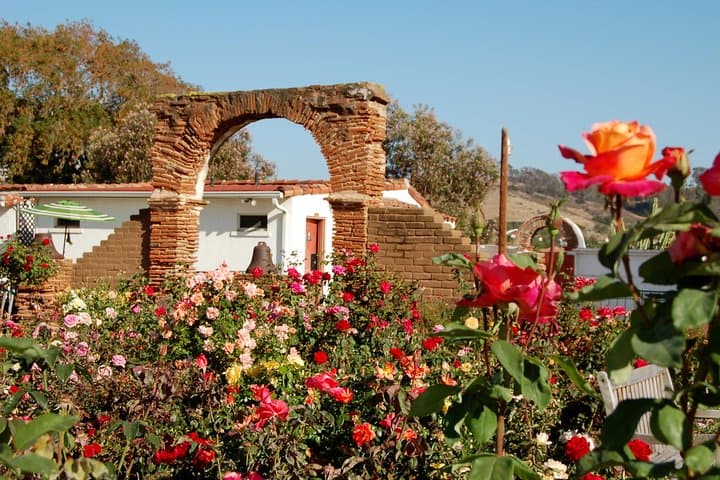
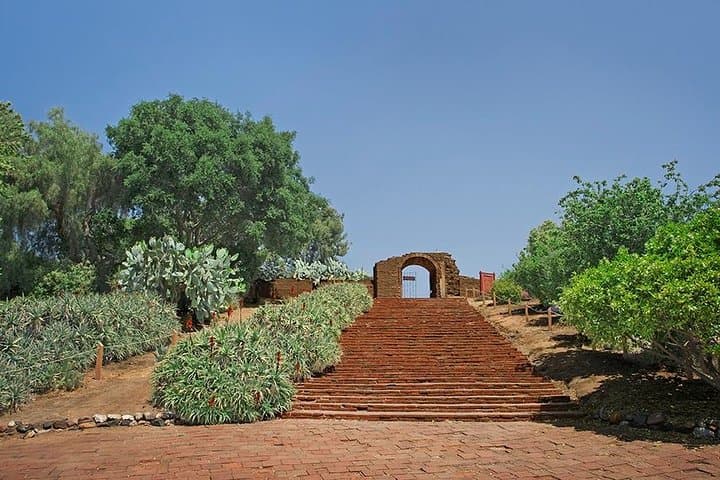
You arrive through a gate of sunlit stucco and shadowed archways; courtyard palms lift their fronds as if pointing the way to hidden rooms and a wooden cupola that crowns the mission church. The Mission San Luis Rey grounds open gradually—sunken gardens, a lavanderia archaeological site, and the low, cool thickness of adobe walls that hold three centuries of human stories.
You arrive through a gate of sunlit stucco and shadowed archways; courtyard palms lift their fronds as if pointing the way to hidden rooms and a wooden cupola that crowns the mission church. The Mission San Luis Rey grounds open gradually—sunken gardens, a lavanderia archaeological site, and the low, cool thickness of adobe walls that hold three centuries of human stories.
Founded in 1798 and once called the “King of the Missions,” San Luis Rey sits on ancestral Luiseño land and traces Spanish, Mexican, and early American chapters of California history. The museum collection stitches together Native American basketry, colonial-era liturgical objects, and agricultural implements—each piece a small map of cultural contact and change. Geologically the mission occupies coastal plain soils fed by nearby creeks; the gardens and lawns are more recent layers on older alluvial terraces.
Culturally the site still functions: friars live here and the church offers daily Mass, a reminder that history is active, not just preserved. Local insights: the wooden dome and lavanderia reveal construction techniques you won’t see on newer historic sites, and the mission’s retreat center schedule sometimes limits access to parts of the property.
Practical guidance: admission is for a self-guided visit between the posted hours—plan 2–3 hours, wear comfortable walking shoes for uneven surfaces, bring water and sun protection, and present your mobile or printed ticket at the museum desk. Respect quiet zones during services, and allow time to read interpretive panels that place artifacts in historical context.