THE ADVENTURE COLLECTIVE® · Independent discovery and booking for outdoor travel

Head offshore from Mirissa for a full-day marine wildlife experience: blue whales, dolphins, local stilt fishing, and a visit to a sea turtle conservation project — all paired with local history at Galle Fort. Small groups and onboard naturalists keep encounters responsible and informative.
Head offshore from Mirissa for a full-day marine wildlife experience: blue whales, dolphins, local stilt fishing, and a visit to a sea turtle conservation project — all paired with local history at Galle Fort. Small groups and onboard naturalists keep encounters responsible and informative.
You push off before dawn, the coastline shrinking to a band of palms while the ocean opens like a challenge. The boat's wake threads through glassy early water and, an hour or two out, the surface changes—a blow, a dorsal, a curved back slipping away. Blue whales and playful spinner dolphins habitually cross these deep continental-shelf waters; here the sea seems to be calling you forward.
Verified experiences and guided adventures in the surrounding area.
Operated by Sigiritrip Tours · Mirissa, Southern Province
You push off before dawn, the coastline shrinking to a band of palms while the ocean opens like a challenge. The boat's wake threads through glassy early water and, an hour or two out, the surface changes—a blow, a dorsal, a curved back slipping away. Blue whales and playful spinner dolphins habitually cross these deep continental-shelf waters; here the sea seems to be calling you forward.
This stretch of Sri Lanka’s southern coast has long been a corridor for migrating baleen and toothed whales. Geologically, the continental shelf drops quickly off Mirissa, creating nutrient-rich upwellings that attract krill and the giants that feed on them. Culturally, stilt fishermen—perched on slender poles offshore—offer a picture of coastal ingenuity; Galle’s Dutch Fort, nearby, records centuries of maritime trade and colonial exchange.
Expect guided marine interpretation from trained naturalists, a stop at a local turtle conservation project, and a short tour of Galle Fort on longer itineraries. Sightings are never guaranteed, but small-group trips increase viewing quality and reduce disturbance.
Practical notes: the tour runs 8–12 hours including round-trip transfer from Colombo; dress in layers, bring sun protection, and pack sea-sickness remedies if you’re prone to motion discomfort. A telephoto lens or binoculars helps—phones often fall short at distance. Respect viewing distance and follow guide instructions to minimize impact on animals. Plan trips between November and April for the calmest seas and highest blue whale odds; off-season can be rougher but still productive for dolphins and turtles.
easy.
8–12 hours.
Light: able to sit/stand for extended periods, board boats, and handle short walks at shore stops.
The prime season is November through April when seas are calmer and blue whale sightings are most frequent, though dolphins and turtles can be seen year-round.
Vessels typically travel 1–3 hours each way depending on sea conditions and animal locations; total tour time including transfers is usually 8–12 hours.
Yes; the activity is suitable for a wide range of ages, but infants and young children should be secured and supervised on board, and parents should consider seasickness risk.
Responsible operators maintain minimum approach distances, avoid chasing animals, limit engine noise, and brief guests on no-contact etiquette to minimize disturbance.
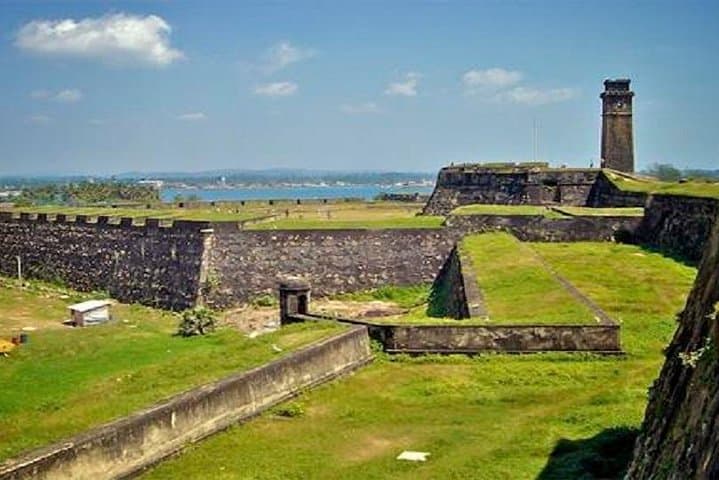
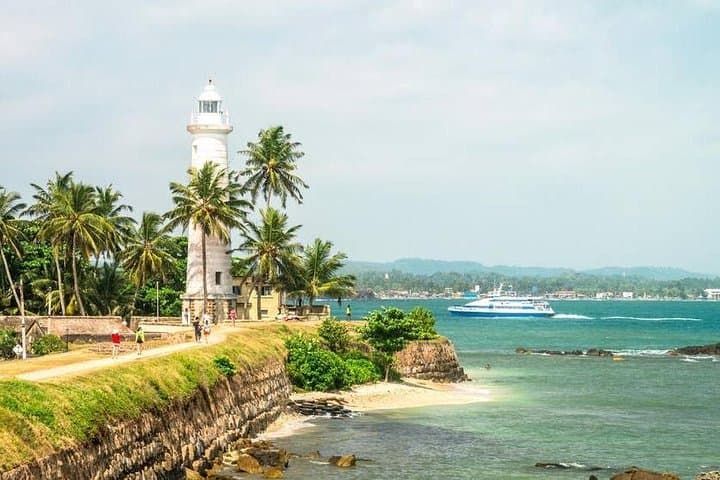
Galle Fort, a 17th-century Dutch colonial stronghold nearby, marks centuries of maritime trade; the whole coastline bears traces of Portuguese, Dutch, and British seafaring influence.
Tour operators commonly follow national marine-wildlife guidelines and support local turtle rehabilitation projects; choose operators that limit group sizes and support monitoring programs.
Sigiritrip Tours operates guided outdoor trips and adventures with an emphasis on safety, stewardship, and memorable experiences.


You push off before dawn, the coastline shrinking to a band of palms while the ocean opens like a challenge. The boat's wake threads through glassy early water and, an hour or two out, the surface changes—a blow, a dorsal, a curved back slipping away. Blue whales and playful spinner dolphins habitually cross these deep continental-shelf waters; here the sea seems to be calling you forward.
You push off before dawn, the coastline shrinking to a band of palms while the ocean opens like a challenge. The boat's wake threads through glassy early water and, an hour or two out, the surface changes—a blow, a dorsal, a curved back slipping away. Blue whales and playful spinner dolphins habitually cross these deep continental-shelf waters; here the sea seems to be calling you forward.
This stretch of Sri Lanka’s southern coast has long been a corridor for migrating baleen and toothed whales. Geologically, the continental shelf drops quickly off Mirissa, creating nutrient-rich upwellings that attract krill and the giants that feed on them. Culturally, stilt fishermen—perched on slender poles offshore—offer a picture of coastal ingenuity; Galle’s Dutch Fort, nearby, records centuries of maritime trade and colonial exchange.
Expect guided marine interpretation from trained naturalists, a stop at a local turtle conservation project, and a short tour of Galle Fort on longer itineraries. Sightings are never guaranteed, but small-group trips increase viewing quality and reduce disturbance.
Practical notes: the tour runs 8–12 hours including round-trip transfer from Colombo; dress in layers, bring sun protection, and pack sea-sickness remedies if you’re prone to motion discomfort. A telephoto lens or binoculars helps—phones often fall short at distance. Respect viewing distance and follow guide instructions to minimize impact on animals. Plan trips between November and April for the calmest seas and highest blue whale odds; off-season can be rougher but still productive for dolphins and turtles.