THE ADVENTURE COLLECTIVE® · Independent discovery and booking for outdoor travel

A private, full-day transfer from Mirissa to Ella that stops for a jeep safari in Udawalawe National Park. Expect close-up views of Asian elephants, short game drives in mixed grassland and wetlands, and an efficient transfer between two of Sri Lanka’s most visited regions.
A private, full-day transfer from Mirissa to Ella that stops for a jeep safari in Udawalawe National Park. Expect close-up views of Asian elephants, short game drives in mixed grassland and wetlands, and an efficient transfer between two of Sri Lanka’s most visited regions.
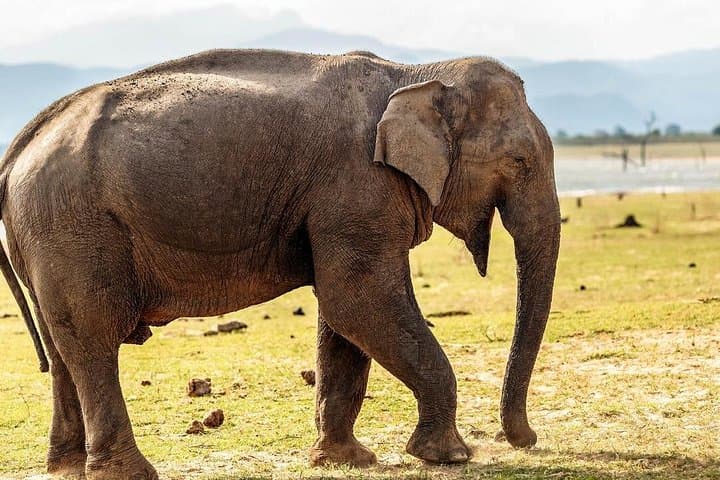
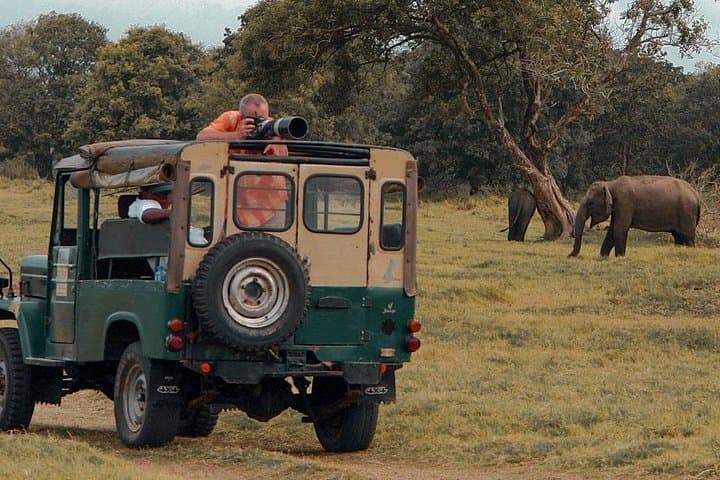
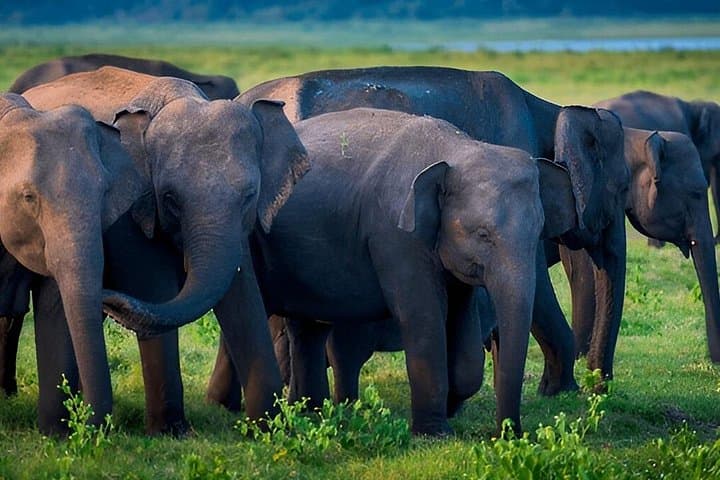
The day begins on the coastal road out of Mirissa, the sea shrinking behind you as the land lifts toward the island’s central escarpment. By midmorning you reach the rim where grassland spreads like a worked plain and the first elephants appear as moving islands against the horizon. In a safari jeep with an English-speaking driver and tracker, the park’s grasslands, wetlands and scrub forests unfold in short bursts of motion — a herd crossing, a solitary bull foraging, waders probing the shallows.
Verified experiences and guided adventures in the surrounding area.
Operated by Lakpura LLC · Udawalawe, Sabaragamuwa Province
The day begins on the coastal road out of Mirissa, the sea shrinking behind you as the land lifts toward the island’s central escarpment. By midmorning you reach the rim where grassland spreads like a worked plain and the first elephants appear as moving islands against the horizon. In a safari jeep with an English-speaking driver and tracker, the park’s grasslands, wetlands and scrub forests unfold in short bursts of motion — a herd crossing, a solitary bull foraging, waders probing the shallows.
Udawalawe National Park, created to protect elephant range and watering grounds in 1972, sits just south of Sri Lanka’s Central Highlands. Geologically the park is carved by seasonal rivers and a reservoir; the escarpment to the north gives abrupt vertical relief and a dramatic backdrop for wildlife viewing. Local communities around the park are rural and largely agrarian, with small villages and rice paddies lining access roads.
Practically: this product is a private, full-day transfer (about 8 hours) from Mirissa to Ella with a scheduled safari stop in Udawalawe. Expect a game drive window of roughly 2–3 hours inside the park; roads are uneven and dusty but navigable in a 4x4 jeep. Bring binoculars, sun protection, and closed shoes; mornings and late afternoons are best for elephant activity and softer light for photography. The tour includes hotel pickup in Mirissa, drop-off in Ella, bottled water, and an air-conditioned vehicle for the transfer, with the option to sit quietly and let the tracker point wildlife rather than rushing between sightings.
Timing your trip around cooler morning hours, and keeping noise and flash photography to a minimum, will improve your chance of meaningful, low-impact encounters.
easy.
8 hours.
Suitable for most fitness levels; involves vehicle transfers and short, bumpy jeep rides rather than long hikes.
Most private tours include a 2–3 hour jeep safari inside the park, timed to maximize wildlife activity while keeping the full transfer within an 8-hour day.
Yes — the tour includes pickup in Mirissa and drop-off in Ella; you’ll be contacted with exact driver and vehicle details after booking.
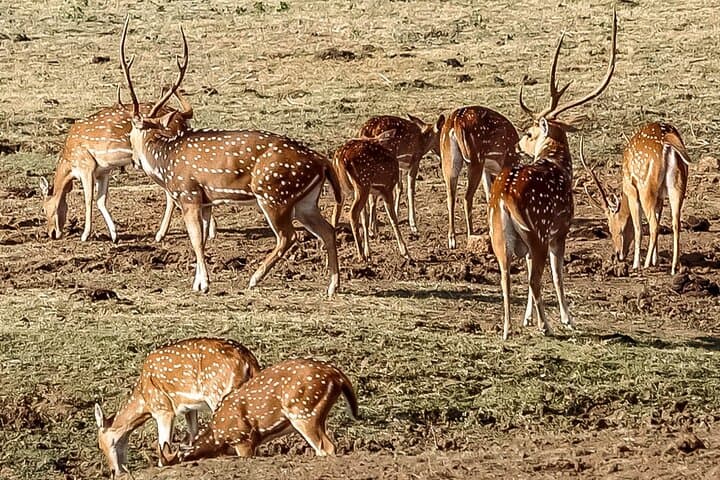
Udawalawe is best known for Asian elephants and commonly hosts waterbirds, sambar deer and water buffalo; leopards are present but sightings are rare.
Yes — the activity is vehicle-based and suitable for most ages and fitness levels, though jeep terrain can be bumpy and brief steps are required for boarding.
Udawalawe was designated a national park in 1972 to protect crucial elephant range and the catchment for the reservoir created upstream of the park.
The park works with local communities and rehabilitation programs (like the Elephant Transit Home) to reduce human–wildlife conflict; visitors are encouraged to follow park rules to minimize disturbance.
Lakpura LLC operates guided outdoor trips and adventures with an emphasis on safety, stewardship, and memorable experiences.
The day begins on the coastal road out of Mirissa, the sea shrinking behind you as the land lifts toward the island’s central escarpment. By midmorning you reach the rim where grassland spreads like a worked plain and the first elephants appear as moving islands against the horizon. In a safari jeep with an English-speaking driver and tracker, the park’s grasslands, wetlands and scrub forests unfold in short bursts of motion — a herd crossing, a solitary bull foraging, waders probing the shallows.
The day begins on the coastal road out of Mirissa, the sea shrinking behind you as the land lifts toward the island’s central escarpment. By midmorning you reach the rim where grassland spreads like a worked plain and the first elephants appear as moving islands against the horizon. In a safari jeep with an English-speaking driver and tracker, the park’s grasslands, wetlands and scrub forests unfold in short bursts of motion — a herd crossing, a solitary bull foraging, waders probing the shallows.
Udawalawe National Park, created to protect elephant range and watering grounds in 1972, sits just south of Sri Lanka’s Central Highlands. Geologically the park is carved by seasonal rivers and a reservoir; the escarpment to the north gives abrupt vertical relief and a dramatic backdrop for wildlife viewing. Local communities around the park are rural and largely agrarian, with small villages and rice paddies lining access roads.
Practically: this product is a private, full-day transfer (about 8 hours) from Mirissa to Ella with a scheduled safari stop in Udawalawe. Expect a game drive window of roughly 2–3 hours inside the park; roads are uneven and dusty but navigable in a 4x4 jeep. Bring binoculars, sun protection, and closed shoes; mornings and late afternoons are best for elephant activity and softer light for photography. The tour includes hotel pickup in Mirissa, drop-off in Ella, bottled water, and an air-conditioned vehicle for the transfer, with the option to sit quietly and let the tracker point wildlife rather than rushing between sightings.
Timing your trip around cooler morning hours, and keeping noise and flash photography to a minimum, will improve your chance of meaningful, low-impact encounters.