THE ADVENTURE COLLECTIVE® · Independent discovery and booking for outdoor travel

A three-hour jeep safari across Minneriya’s grasslands offers one of Sri Lanka’s most dramatic wildlife shows: the seasonal ‘Great Gathering’ of elephants around the reservoir. Expect long views, dusty tracks, and close encounters guided by local naturalists.
A three-hour jeep safari across Minneriya’s grasslands offers one of Sri Lanka’s most dramatic wildlife shows: the seasonal ‘Great Gathering’ of elephants around the reservoir. Expect long views, dusty tracks, and close encounters guided by local naturalists.
Dust rises in a long, slow ribbon as a safari jeep threads between tall grass and thorn scrub. The Minneriya Reservoir appears like a sheet of bright metal; elephants scatter along its margins, some wading, some standing shoulder-deep as if daring the water to move them. Guides lower voices and point—tusks, calves, a matriarch peeling bark—while the afternoon light hardens the shapes.
Verified experiences and guided adventures in the surrounding area.
Operated by Pigeon Island Tours · Minneriya, North Central Province
Dust rises in a long, slow ribbon as a safari jeep threads between tall grass and thorn scrub. The Minneriya Reservoir appears like a sheet of bright metal; elephants scatter along its margins, some wading, some standing shoulder-deep as if daring the water to move them. Guides lower voices and point—tusks, calves, a matriarch peeling bark—while the afternoon light hardens the shapes.
Minneriya sits in Sri Lanka’s dry zone, shaped by ancient irrigation works and basalt bedrock that hold the large tanks built by early Sinhalese kings. The reservoir you’ll see today dates to historic hydraulic engineering that supported rice cultivation and seasonal wildlife concentrations. Villages and Buddhist temples ring the park; local communities have long adapted to living beside wandering herds.
On safari you should expect three hours of rolling track, sudden clearings, and long views across grassland punctuated by thorn forest. The operator covers the jeep; park entry (approximately LKR 11,000 per person) is paid at the meeting point. The best chance to witness the “Great Gathering” is in the late dry season—when water shrinks and animals concentrate—so plan afternoon runs for stronger light and active behavior.
Practical notes: bring binoculars and a telephoto lens, carry cash for entrance and tips, wear sturdy closed shoes for the bumpy ride, and use sun protection. Respect the animals—no feeding, keep noise low, and follow your guide’s distance rules. This is a safari of contrasts: sudden wildlife spectacle framed by centuries of human water management—raw, watchful, and eminently photographable.
moderate.
3 hours.
A moderate level of fitness is recommended—sustained sitting in a bumpy jeep and short on/off movements are required.
The safari jeep and driver are included; park entrance (approx. LKR 11,000 per person) is paid separately at the meeting point.
The late dry season—roughly August to October—offers the strongest chance to see large elephant congregations around the reservoir.
Children under 5 often ride free but check operator policy; the activity is not recommended for pregnant travelers or those with serious back or heart conditions.
Guides maintain safe distances as required by park rules; you’ll often get excellent views at a respectful range without disturbing the animals.
Minneriya’s reservoir is part of an ancient irrigation network expanded by early Sri Lankan kings to support agriculture and seasonal wildlife movement.
The park balances tourism with conservation by limiting vehicle numbers and encouraging guides to follow distance rules; visitors should avoid feeding wildlife and minimize noise.
Pigeon Island Tours operates guided outdoor trips and adventures with an emphasis on safety, stewardship, and memorable experiences.
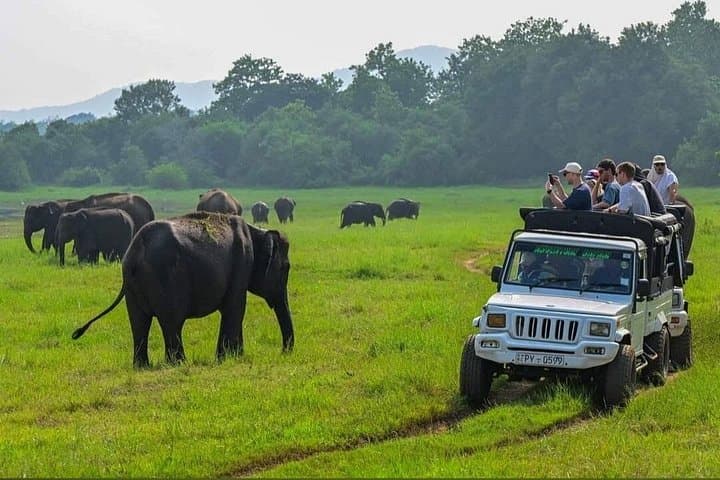
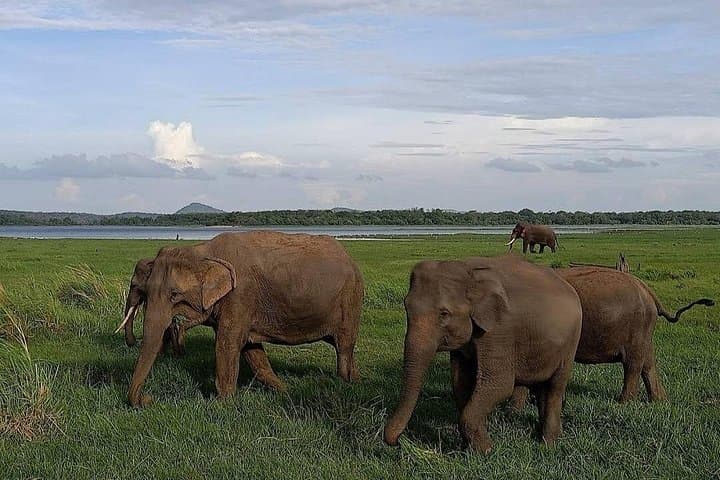
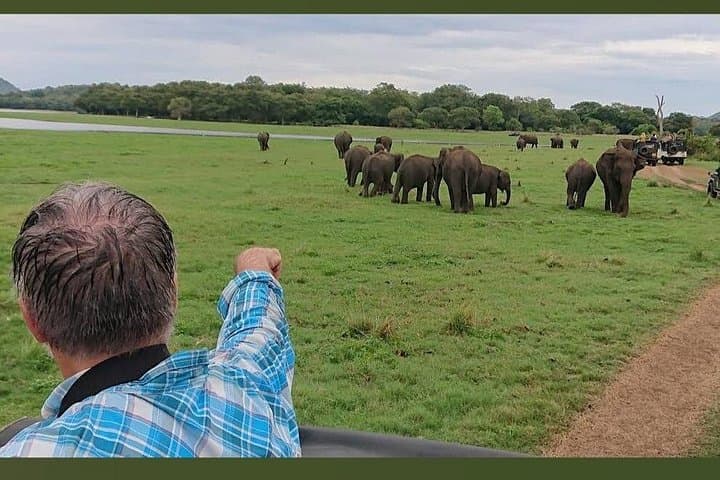
Dust rises in a long, slow ribbon as a safari jeep threads between tall grass and thorn scrub. The Minneriya Reservoir appears like a sheet of bright metal; elephants scatter along its margins, some wading, some standing shoulder-deep as if daring the water to move them. Guides lower voices and point—tusks, calves, a matriarch peeling bark—while the afternoon light hardens the shapes.
Dust rises in a long, slow ribbon as a safari jeep threads between tall grass and thorn scrub. The Minneriya Reservoir appears like a sheet of bright metal; elephants scatter along its margins, some wading, some standing shoulder-deep as if daring the water to move them. Guides lower voices and point—tusks, calves, a matriarch peeling bark—while the afternoon light hardens the shapes.
Minneriya sits in Sri Lanka’s dry zone, shaped by ancient irrigation works and basalt bedrock that hold the large tanks built by early Sinhalese kings. The reservoir you’ll see today dates to historic hydraulic engineering that supported rice cultivation and seasonal wildlife concentrations. Villages and Buddhist temples ring the park; local communities have long adapted to living beside wandering herds.
On safari you should expect three hours of rolling track, sudden clearings, and long views across grassland punctuated by thorn forest. The operator covers the jeep; park entry (approximately LKR 11,000 per person) is paid at the meeting point. The best chance to witness the “Great Gathering” is in the late dry season—when water shrinks and animals concentrate—so plan afternoon runs for stronger light and active behavior.
Practical notes: bring binoculars and a telephoto lens, carry cash for entrance and tips, wear sturdy closed shoes for the bumpy ride, and use sun protection. Respect the animals—no feeding, keep noise low, and follow your guide’s distance rules. This is a safari of contrasts: sudden wildlife spectacle framed by centuries of human water management—raw, watchful, and eminently photographable.