THE ADVENTURE COLLECTIVE® · Independent discovery and booking for outdoor travel

Ride into the reservoir plains of Minneriya for a half-day Jeep safari where elephants gather and wetlands teem with birds and crocodiles. Morning and afternoon departures offer different light and wildlife behavior—perfect for photographers and nature lovers.
Ride into the reservoir plains of Minneriya for a half-day Jeep safari where elephants gather and wetlands teem with birds and crocodiles. Morning and afternoon departures offer different light and wildlife behavior—perfect for photographers and nature lovers.
Dawn breaks over a broad, flat reservoir and the air smells of dust and damp reeds. A Jeep rattles from the park gate as herds of gray backs bob at the waterline — elephants ambling, calves testing the shallows, and an alert matriarch scanning the scrub. The scene is immediate and unadorned: wildlife moving through a landscape shaped by monsoon and ancient engineering.
Verified experiences and guided adventures in the surrounding area.
Operated by Minneriya Wild Tours · Habarana, North Central Province
Dawn breaks over a broad, flat reservoir and the air smells of dust and damp reeds. A Jeep rattles from the park gate as herds of gray backs bob at the waterline — elephants ambling, calves testing the shallows, and an alert matriarch scanning the scrub. The scene is immediate and unadorned: wildlife moving through a landscape shaped by monsoon and ancient engineering.
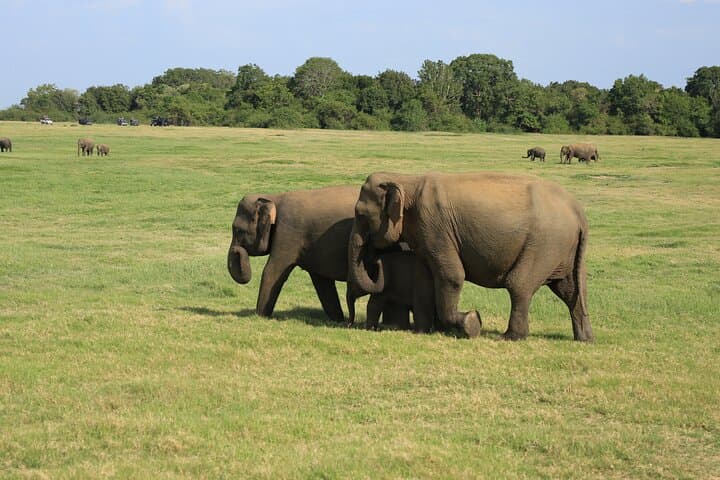
Minneriya National Park sits on the island’s north-central plains, its central tank created centuries ago as part of Sri Lanka’s medieval irrigation works. The geology is low, rocky outcrops and red-earth grasslands punctuated by seasonal wetlands; culturally the region has long tied subsistence farming to these reservoirs. The park’s annual elephant gathering — when dozens to hundreds of elephants concentrate around the reservoir — is a behavioral response to dry-season water and forage, not a manufactured spectacle.
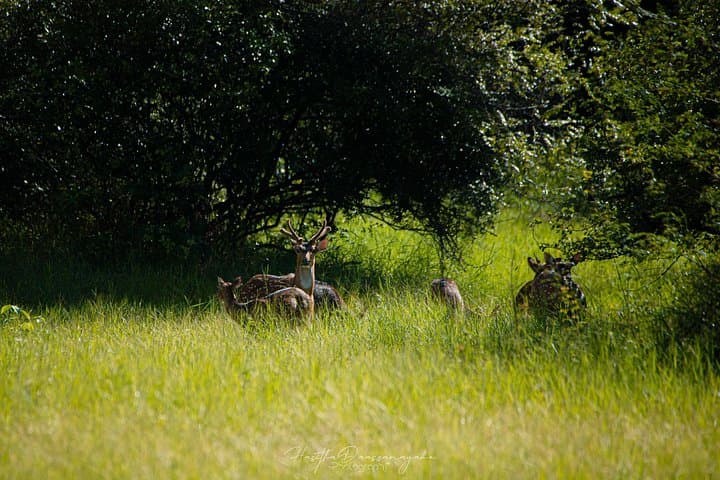
Expect four-hour safaris that weave over rutted trails and around shallow lagoons. Guides scan for silhouettes: crocodiles basking on banks, kites plunging for fish, spotted deer skirting the tree line. Light shifts fast here; mornings offer cooler air and active birds, afternoons bring long shadows and a different rhythm.
Practicalities: safaris leave at 06:00 or around 13:00, pickups are often included within a short radius, and park admission is typically separate. Bring binoculars, sun protection, and a camera with a telephoto lens; keep noise low and stay in the vehicle — the best viewing is patient, observant, and respectful of the animals’ space.
easy.
3–4 hours.
Minimal fitness required; tour is vehicle-based but may include short uneven walking at lookouts
Park admission is typically not included in the tour price and is paid separately at the park entrance.
Many operators offer complimentary pickup if your hotel is within about 10 km of the Minneriya entrance—confirm at booking.
The dry season (roughly July–September) usually concentrates elephants at the reservoir, producing the largest gatherings.
The Jeep ride is suitable for most ages, but people with serious mobility issues should check vehicle access and seat height with the operator.
The Minneriya tank is part of Sri Lanka’s ancient irrigation network; medieval kings expanded reservoirs to control seasonal water across the plains.
The elephant gatherings depend on intact water sources and corridors; stick to guided routes, avoid driving off-track, and support operators that follow park rules.
Minneriya Wild Tours operates guided outdoor trips and adventures with an emphasis on safety, stewardship, and memorable experiences.
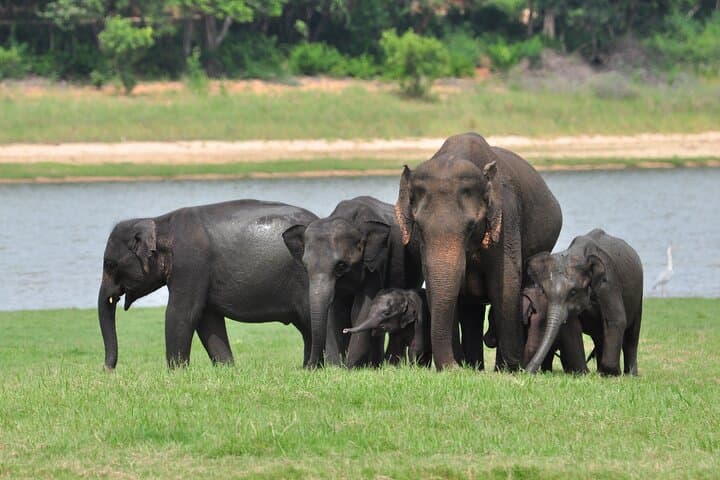
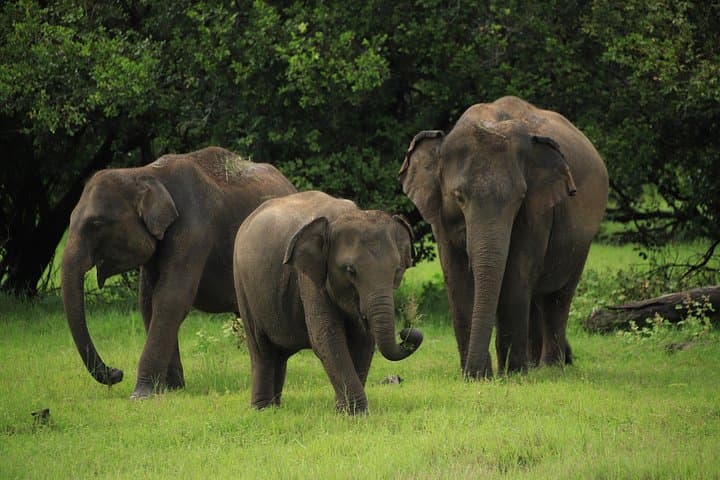
Dawn breaks over a broad, flat reservoir and the air smells of dust and damp reeds. A Jeep rattles from the park gate as herds of gray backs bob at the waterline — elephants ambling, calves testing the shallows, and an alert matriarch scanning the scrub. The scene is immediate and unadorned: wildlife moving through a landscape shaped by monsoon and ancient engineering.
Dawn breaks over a broad, flat reservoir and the air smells of dust and damp reeds. A Jeep rattles from the park gate as herds of gray backs bob at the waterline — elephants ambling, calves testing the shallows, and an alert matriarch scanning the scrub. The scene is immediate and unadorned: wildlife moving through a landscape shaped by monsoon and ancient engineering.
Minneriya National Park sits on the island’s north-central plains, its central tank created centuries ago as part of Sri Lanka’s medieval irrigation works. The geology is low, rocky outcrops and red-earth grasslands punctuated by seasonal wetlands; culturally the region has long tied subsistence farming to these reservoirs. The park’s annual elephant gathering — when dozens to hundreds of elephants concentrate around the reservoir — is a behavioral response to dry-season water and forage, not a manufactured spectacle.
Expect four-hour safaris that weave over rutted trails and around shallow lagoons. Guides scan for silhouettes: crocodiles basking on banks, kites plunging for fish, spotted deer skirting the tree line. Light shifts fast here; mornings offer cooler air and active birds, afternoons bring long shadows and a different rhythm.
Practicalities: safaris leave at 06:00 or around 13:00, pickups are often included within a short radius, and park admission is typically separate. Bring binoculars, sun protection, and a camera with a telephoto lens; keep noise low and stay in the vehicle — the best viewing is patient, observant, and respectful of the animals’ space.