THE ADVENTURE COLLECTIVE® · Independent discovery and booking for outdoor travel

Float on a controlled column of wind at iFLY Minneapolis: two instructor-led flights, a training session, and a personalized certificate make this a compact, high-adrenaline introduction to body flight. Practical safety rules and a short briefing mean almost anyone can try it.
Float on a controlled column of wind at iFLY Minneapolis: two instructor-led flights, a training session, and a personalized certificate make this a compact, high-adrenaline introduction to body flight. Practical safety rules and a short briefing mean almost anyone can try it.
Stepping into iFLY Minneapolis, the room tightens into low, humming focus: a circular glass chamber, an 800-horsepower breath of air, and an instructor whose calm voice becomes the first thing you hear before you fly. The tunnel doesn’t mimic the sky so much as make the sky negotiable — wind lifts, a soft cushion of airflow holds, and for a minute you trade gravity for movement.
Verified experiences and guided adventures in the surrounding area.
Operated by iFLY Indoor Skydiving · Minnetonka, Minnesota
Stepping into iFLY Minneapolis, the room tightens into low, humming focus: a circular glass chamber, an 800-horsepower breath of air, and an instructor whose calm voice becomes the first thing you hear before you fly. The tunnel doesn’t mimic the sky so much as make the sky negotiable — wind lifts, a soft cushion of airflow holds, and for a minute you trade gravity for movement.
Minnetonka sits on the western edge of the Twin Cities, carved from glacial action that left shallow lakes and rolling moraines; Lake Minnetonka’s shoreline and the region’s short, cold winters shaped local recreation into year-round pursuits. The iFLY facility is part of Minneapolis’s larger outdoor-adventure culture: people who canoe lakes in summer and cross-country ski in winter also come here to test the same instincts indoors.
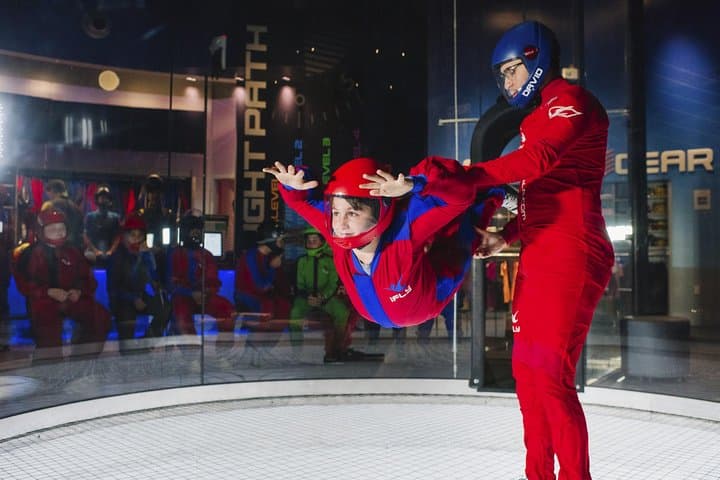
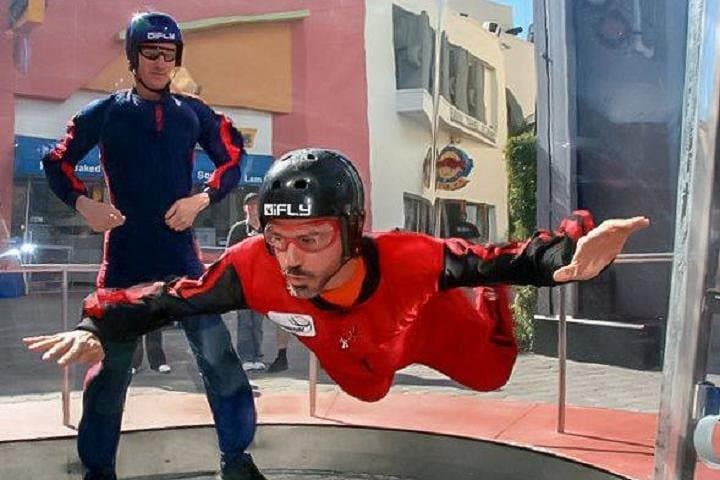
Expect a 75-minute session that blends safety briefing, fitted flight suit and two one-minute, instructor-led flights. The wind can reach 130–175 mph, but the experience is controlled: operators tune the column to hold you in place while instructors correct body position.
Practical guidance: arrive 10 minutes early, wear snug lace-up sneakers and pants, and disclose any neck, back, heart conditions or recent dislocations — those are hard cutoffs for safety. There’s a maximum weight policy (staff may evaluate guests between 260–300 lbs). Bring ID and plan for a short debrief afterward; you’ll leave with a flight certificate and a useful primer on body flight that transfers directly to skydiving and other aerial sports.
easy.
75 minutes.
Suitable for a wide range of fitness levels; basic mobility and ability to follow instructor cues required.
The facility accepts flyers from age 3 and up; minors must have a parent or guardian present to sign the waiver.
Each participant flies one-on-one for about 60 seconds per flight, with two flights included; the full session is roughly 75 minutes.
iFLY has a maximum weight limit of 300 lbs; guests between 260–300 lbs may undergo additional evaluation by staff on arrival.
Certain conditions (recent neck, back, heart issues, shoulder dislocations, pregnancy, or hard casts) disqualify participation — disclose these when booking or at check-in.
Minnetonka’s shoreline and recreational character grew from glacially formed lakes; the name 'Minnetonka' comes from the Dakota language meaning ‘big or great water,’ which inspired regional leisure culture.
Lake Minnetonka and local parks have active water-quality and habitat restoration programs; indoor centers like iFLY concentrate impact in one footprint and reduce pressure on natural sites by offering high-adrenaline experiences year-round.
iFLY Indoor Skydiving operates guided outdoor trips and adventures with an emphasis on safety, stewardship, and memorable experiences.
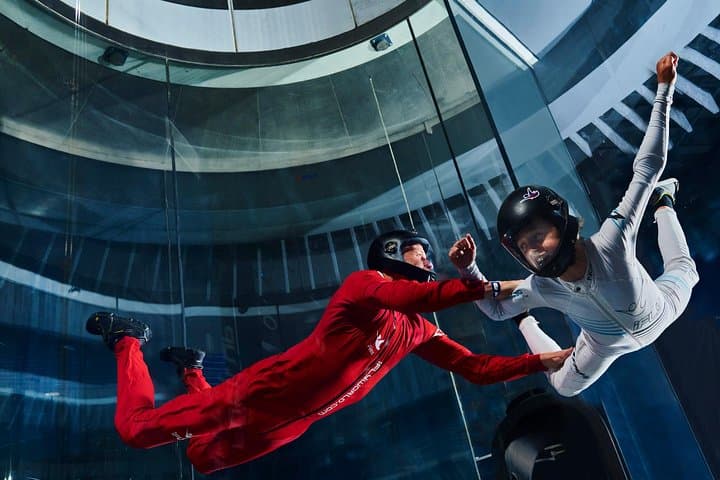
Stepping into iFLY Minneapolis, the room tightens into low, humming focus: a circular glass chamber, an 800-horsepower breath of air, and an instructor whose calm voice becomes the first thing you hear before you fly. The tunnel doesn’t mimic the sky so much as make the sky negotiable — wind lifts, a soft cushion of airflow holds, and for a minute you trade gravity for movement.
Stepping into iFLY Minneapolis, the room tightens into low, humming focus: a circular glass chamber, an 800-horsepower breath of air, and an instructor whose calm voice becomes the first thing you hear before you fly. The tunnel doesn’t mimic the sky so much as make the sky negotiable — wind lifts, a soft cushion of airflow holds, and for a minute you trade gravity for movement.
Minnetonka sits on the western edge of the Twin Cities, carved from glacial action that left shallow lakes and rolling moraines; Lake Minnetonka’s shoreline and the region’s short, cold winters shaped local recreation into year-round pursuits. The iFLY facility is part of Minneapolis’s larger outdoor-adventure culture: people who canoe lakes in summer and cross-country ski in winter also come here to test the same instincts indoors.
Expect a 75-minute session that blends safety briefing, fitted flight suit and two one-minute, instructor-led flights. The wind can reach 130–175 mph, but the experience is controlled: operators tune the column to hold you in place while instructors correct body position.
Practical guidance: arrive 10 minutes early, wear snug lace-up sneakers and pants, and disclose any neck, back, heart conditions or recent dislocations — those are hard cutoffs for safety. There’s a maximum weight policy (staff may evaluate guests between 260–300 lbs). Bring ID and plan for a short debrief afterward; you’ll leave with a flight certificate and a useful primer on body flight that transfers directly to skydiving and other aerial sports.