THE ADVENTURE COLLECTIVE® · Independent discovery and booking for outdoor travel

Spend four focused hours in Mindo’s cloud forest photographing toucans, tanagers, parrots and hummingbirds with a local guide. Expect scopes, binoculars and hands-on help arranging shots in variable light.
Spend four focused hours in Mindo’s cloud forest photographing toucans, tanagers, parrots and hummingbirds with a local guide. Expect scopes, binoculars and hands-on help arranging shots in variable light.
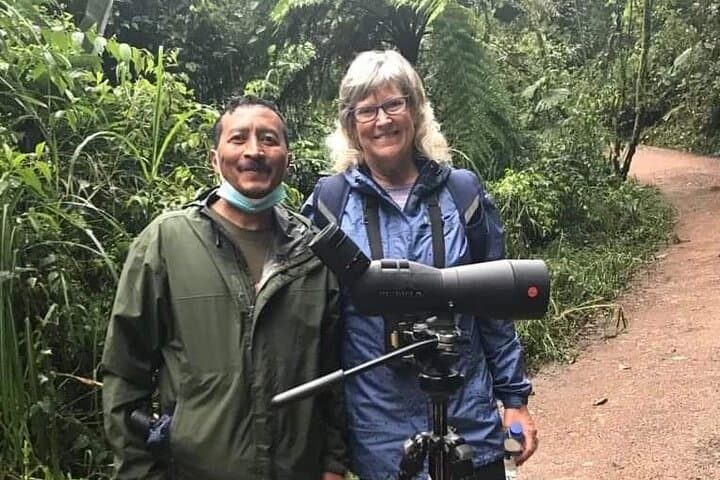
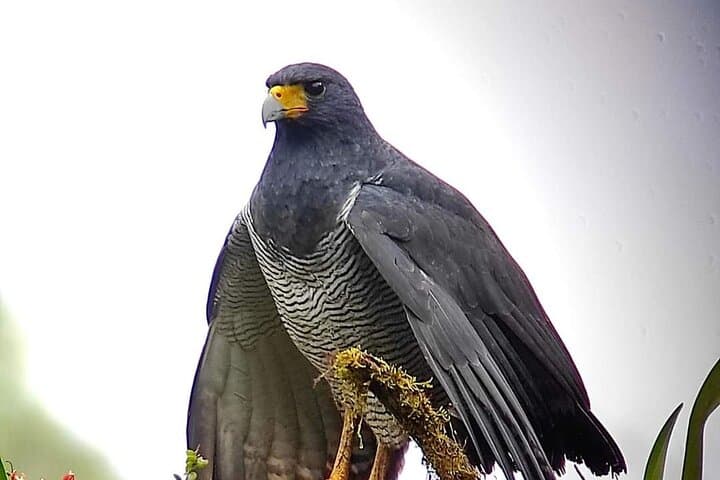
The morning light in Mindo slices through a low cloud and the forest answers with a chorus of wings and calls. Paths damp with last night’s mist open onto feeding clearings where toucans pend from branches and hummingbirds hover like living sparks; a guide positions a scope and invites you to compose the moment.
Verified experiences and guided adventures in the surrounding area.
Operated by Mindo Bird Guide · Mindo, Pichincha
The morning light in Mindo slices through a low cloud and the forest answers with a chorus of wings and calls. Paths damp with last night’s mist open onto feeding clearings where toucans pend from branches and hummingbirds hover like living sparks; a guide positions a scope and invites you to compose the moment.
Mindo sits on the western slopes of Ecuador’s northern Andes, part of the biodiverse Tumbes-Chocó-Magdalena corridor that drew scientists and ecotourists through the late 20th century. The landscape is young, folded volcanics giving way to steep ravines, streams and cloud-forest habitat that supports many endemic tanagers and parrots. Local communities have shifted toward small-scale guiding and conservation, and photography tours are tied closely to private reserves and feeders.
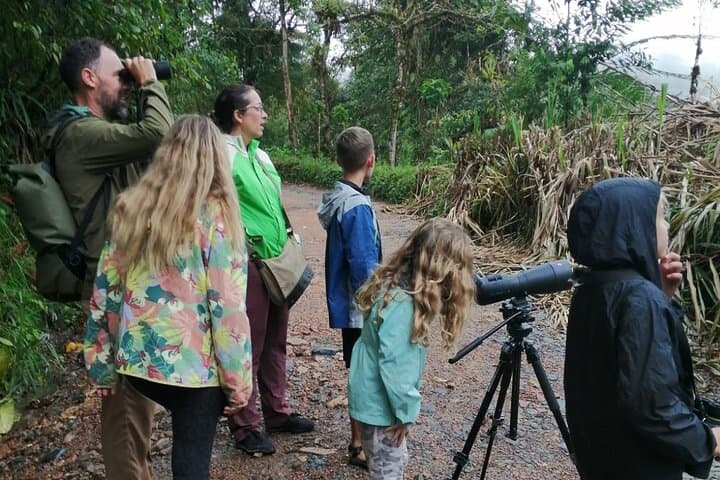
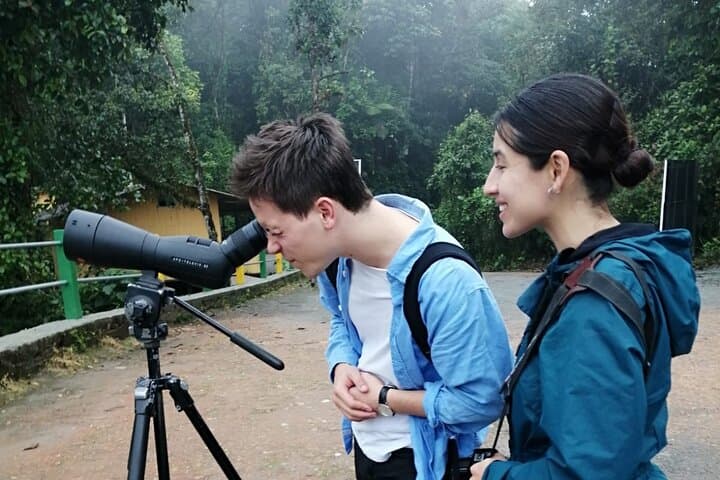
Expect a pragmatic morning: the guide supplies scopes and binoculars, uses audio cues selectively to draw species closer, and helps position cameras for successful framing. The terrain is forest trails and gentle slopes with occasional muddy sections; light changes quickly in the canopy so shutter speed and ISO adjustments are frequent. Keep movements measured—birds notice and the best shots come from patient, steady setups.
Practical tips: shoot in bursts, carry spare batteries and memory cards, wear grippy shoes, and bring a compact tripod or monopod for stability. Dawn and early morning are highest yield; mid-day can be quieter or rainy. Respect playback use—ask the guide about ethics—and consider booking private transport to maximize early access to hotspots.
easy.
4 hours.
Suitable for light walking and short stands; minimal fitness required but be prepared for uneven, sometimes muddy trails.
Quality binoculars and scopes are provided by the guide, but bringing personal optics ensures familiar focusing and comfort.
The tour is suitable for most ages, but it is not recommended for pregnant travelers per the operator’s policy—check with your booking contact for specifics.
Proximity varies by species and conditions; the guide uses feeders, perches and selective calls to improve opportunities, but distances can still range from a few meters to tens of meters.
Private transportation is included in the tour; confirm pickup location and time when booking to ensure an early start.
Mindo grew as an ecotourism hub in the 1990s as private reserves and community guides developed around its cloud-forest biodiversity.
Support local guides and reserves, stay on trails, and minimize playback use—these small practices help preserve sensitive bird populations and habitat.
Mindo Bird Guide operates guided outdoor trips and adventures with an emphasis on safety, stewardship, and memorable experiences.
The morning light in Mindo slices through a low cloud and the forest answers with a chorus of wings and calls. Paths damp with last night’s mist open onto feeding clearings where toucans pend from branches and hummingbirds hover like living sparks; a guide positions a scope and invites you to compose the moment.
The morning light in Mindo slices through a low cloud and the forest answers with a chorus of wings and calls. Paths damp with last night’s mist open onto feeding clearings where toucans pend from branches and hummingbirds hover like living sparks; a guide positions a scope and invites you to compose the moment.
Mindo sits on the western slopes of Ecuador’s northern Andes, part of the biodiverse Tumbes-Chocó-Magdalena corridor that drew scientists and ecotourists through the late 20th century. The landscape is young, folded volcanics giving way to steep ravines, streams and cloud-forest habitat that supports many endemic tanagers and parrots. Local communities have shifted toward small-scale guiding and conservation, and photography tours are tied closely to private reserves and feeders.
Expect a pragmatic morning: the guide supplies scopes and binoculars, uses audio cues selectively to draw species closer, and helps position cameras for successful framing. The terrain is forest trails and gentle slopes with occasional muddy sections; light changes quickly in the canopy so shutter speed and ISO adjustments are frequent. Keep movements measured—birds notice and the best shots come from patient, steady setups.
Practical tips: shoot in bursts, carry spare batteries and memory cards, wear grippy shoes, and bring a compact tripod or monopod for stability. Dawn and early morning are highest yield; mid-day can be quieter or rainy. Respect playback use—ask the guide about ethics—and consider booking private transport to maximize early access to hotspots.