THE ADVENTURE COLLECTIVE® · Independent discovery and booking for outdoor travel

Descend from Quito into the damp, bird-rich valleys of Mindo on a full-day tour of cloud forest trails, hummingbird feeders, waterfalls, and local chocolate and butterfly workshops. Expect close bird encounters, muddy forest paths, and a mix of easy walks and short climbs.
Descend from Quito into the damp, bird-rich valleys of Mindo on a full-day tour of cloud forest trails, hummingbird feeders, waterfalls, and local chocolate and butterfly workshops. Expect close bird encounters, muddy forest paths, and a mix of easy walks and short climbs.
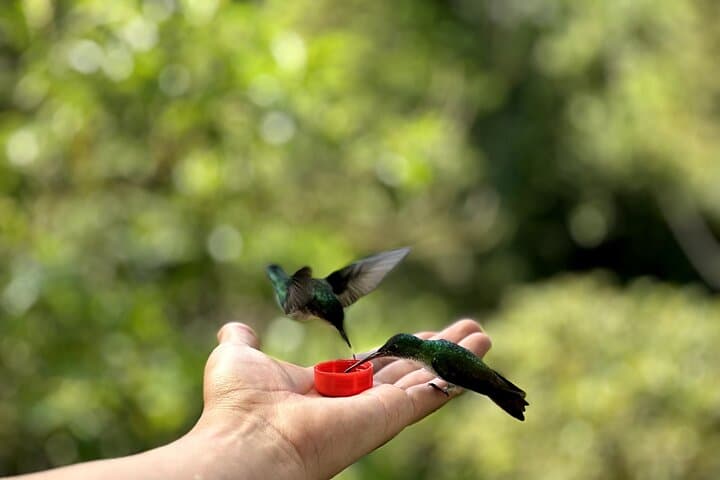
The van leaves Quito behind and the air shifts—cooler, damp, heavy with green. Roads carve down through Andean foothills into the Mindo valley, where cloud layers hang low and hummingbirds dart like living punctuation marks. At a coffee lodge the morning light catches iridescent throats; later, forest trails lead to waterfalls that push and murmur through moss-draped trees.
Verified experiences and guided adventures in the surrounding area.
Operated by See Galapagos · Mindo, Pichincha
The van leaves Quito behind and the air shifts—cooler, damp, heavy with green. Roads carve down through Andean foothills into the Mindo valley, where cloud layers hang low and hummingbirds dart like living punctuation marks. At a coffee lodge the morning light catches iridescent throats; later, forest trails lead to waterfalls that push and murmur through moss-draped trees.
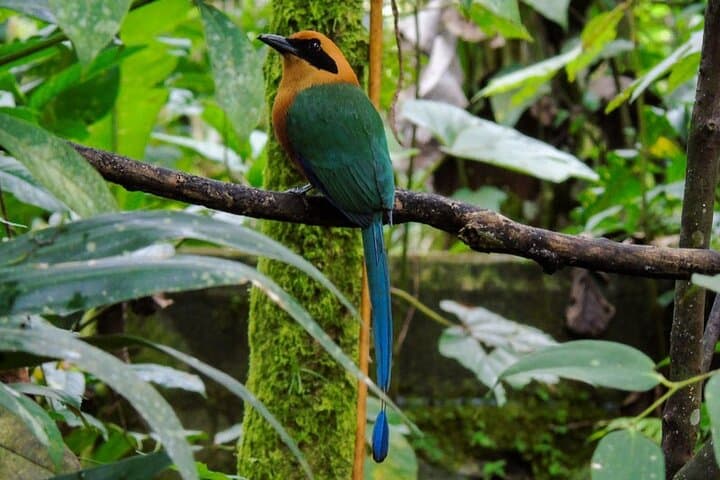
Mindo sits on the western slopes of the Ecuadorian Andes where volcanic geology and Pacific moisture converge. The ridge-and-valley topography creates microclimates that support hundreds of bird species, orchids, and endemic amphibians. Culturally, the valley has long been a crossroads: indigenous agriculture gave way to eco-tourism over recent decades, with small family farms, chocolate makers, and butterfly houses becoming part of the visitor loop.
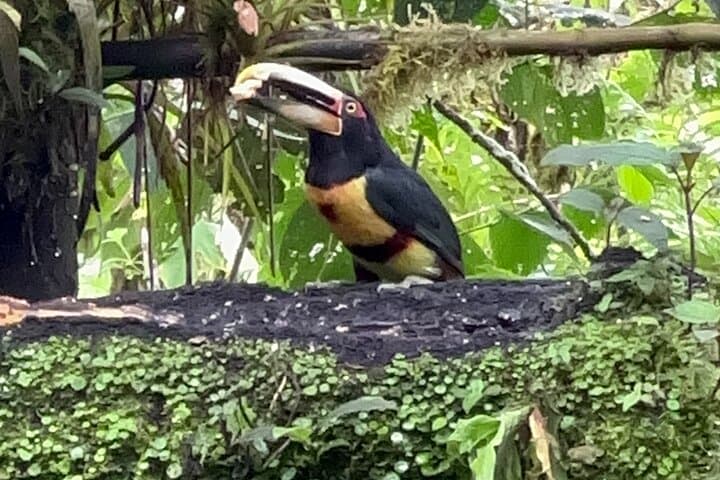
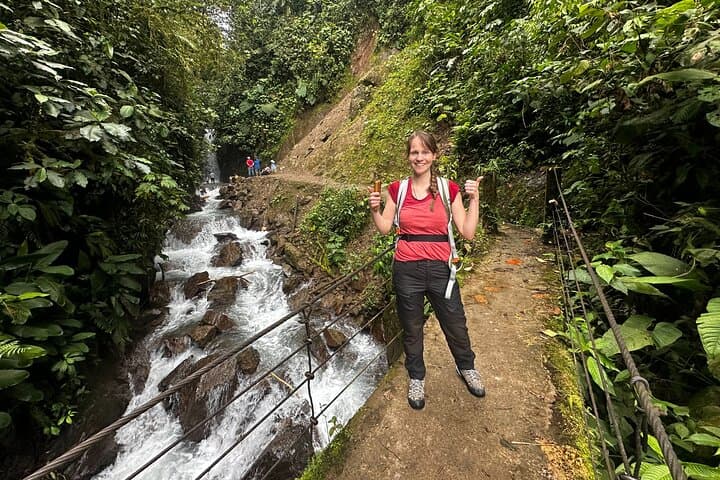
On a typical full-day outing from Quito you’ll sample that local mix: guided birdwatching at feeders and sanctuary trails, a chocolate workshop explaining Ecuador’s prized cacao, a walk to Nambillo Cascades, and a butterfly farm visit. Trails are forested, often muddy and steep in sections; expect short climbs, wet roots, and slippery rock near falls. Guides point out species and natural history while bilingual narration links local livelihoods to conservation.
Practical guide: bring binoculars and a waterproof layer, wear grippy hiking shoes, and pace the day—many high-drama sightings happen at first light and late afternoon. Hydrate for the descent from Quito’s altitude and carry insect repellent. With an experienced guide this is an accessible, wildlife-rich day that balances relaxed observation with a few active walks through one of Ecuador’s most biodiverse cloud forests.
moderate.
7–8 hours.
Light-to-moderate fitness: able to manage uneven, sometimes steep forest trails and short climbs for up to a couple hours.
The tour runs about 7–8 hours (420–480 minutes) and includes private transportation with pickup/drop-off in metropolitan Quito.
Yes—several stops include feeders and sanctuaries where hummingbirds come within a few meters, though sightings depend on time of day and weather.
Walks are generally short but can be muddy, uneven, and include some uphill sections; the tour is listed as suitable for most fitness levels.
You descend from Quito’s high elevation to the lower, warmer Mindo valley; symptoms of altitude sickness are unlikely but stay hydrated and move at a comfortable pace.
Mindo’s valley was historically agricultural; over the last few decades community-based ecotourism and small-scale chocolate production have become key local livelihoods.
Local reserves and private sanctuaries focus on preserving cloud forest corridors; visitors are encouraged to stay on trails and support small, locally run operations.
See Galapagos operates guided outdoor trips and adventures with an emphasis on safety, stewardship, and memorable experiences.
The van leaves Quito behind and the air shifts—cooler, damp, heavy with green. Roads carve down through Andean foothills into the Mindo valley, where cloud layers hang low and hummingbirds dart like living punctuation marks. At a coffee lodge the morning light catches iridescent throats; later, forest trails lead to waterfalls that push and murmur through moss-draped trees.
The van leaves Quito behind and the air shifts—cooler, damp, heavy with green. Roads carve down through Andean foothills into the Mindo valley, where cloud layers hang low and hummingbirds dart like living punctuation marks. At a coffee lodge the morning light catches iridescent throats; later, forest trails lead to waterfalls that push and murmur through moss-draped trees.
Mindo sits on the western slopes of the Ecuadorian Andes where volcanic geology and Pacific moisture converge. The ridge-and-valley topography creates microclimates that support hundreds of bird species, orchids, and endemic amphibians. Culturally, the valley has long been a crossroads: indigenous agriculture gave way to eco-tourism over recent decades, with small family farms, chocolate makers, and butterfly houses becoming part of the visitor loop.
On a typical full-day outing from Quito you’ll sample that local mix: guided birdwatching at feeders and sanctuary trails, a chocolate workshop explaining Ecuador’s prized cacao, a walk to Nambillo Cascades, and a butterfly farm visit. Trails are forested, often muddy and steep in sections; expect short climbs, wet roots, and slippery rock near falls. Guides point out species and natural history while bilingual narration links local livelihoods to conservation.
Practical guide: bring binoculars and a waterproof layer, wear grippy hiking shoes, and pace the day—many high-drama sightings happen at first light and late afternoon. Hydrate for the descent from Quito’s altitude and carry insect repellent. With an experienced guide this is an accessible, wildlife-rich day that balances relaxed observation with a few active walks through one of Ecuador’s most biodiverse cloud forests.