THE ADVENTURE COLLECTIVE® · Independent discovery and booking for outdoor travel

A two-hour guided forest immersion in Vermont that trades miles for attention. Learn simple mindfulness practices, sensory exercises, and portable tools to bring calm back into daily life.
A two-hour guided forest immersion in Vermont that trades miles for attention. Learn simple mindfulness practices, sensory exercises, and portable tools to bring calm back into daily life.
You step out of the car into a hush that feels intentional: damp loam, pine resin on the air, and a canopy that filters the light into soft, moving tiles.
Verified experiences and guided adventures in the surrounding area.
Operated by Landkind Guide · Montpelier, Vermont
You step out of the car into a hush that feels intentional: damp loam, pine resin on the air, and a canopy that filters the light into soft, moving tiles.
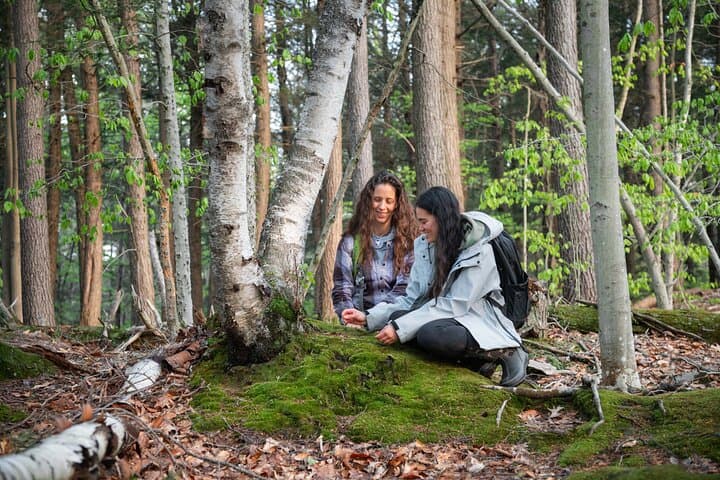
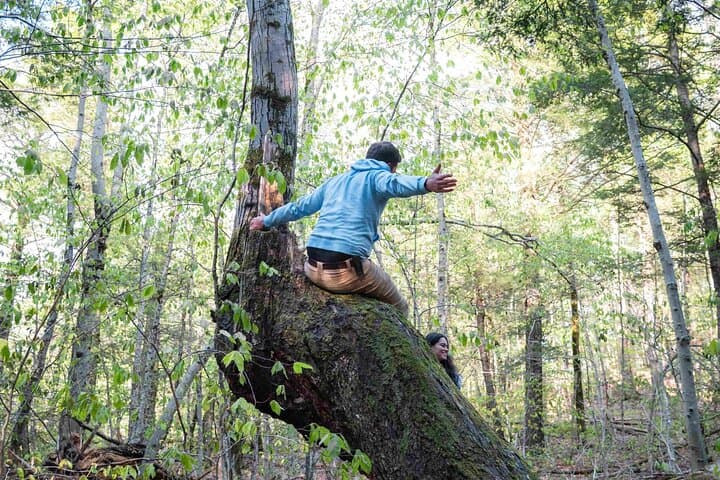
Over two hours a guide leads a small group along gentle woodland tracks and into quiet clearings where the forest deliberately slows your pace. This is not a fitness hike but a sensory itinerary — guided breathwork, short meditations, and sensory prompts that pull attention to texture, sound, and the subtler currents of the woods.
Vermont’s forests sit on ancient bedrock carved by glaciers; you’ll notice rounded boulders and stony ridgelines that record that glacial story while sugar maples and mixed hardwoods reflect a history of small-scale timber harvest and regrowth. The region is Abenaki land — a fact reflected in trail names and seasonal foraging traditions — and contemporary stewards include town land trusts and natural area managers protecting pockets of old-growth and riparian zones.
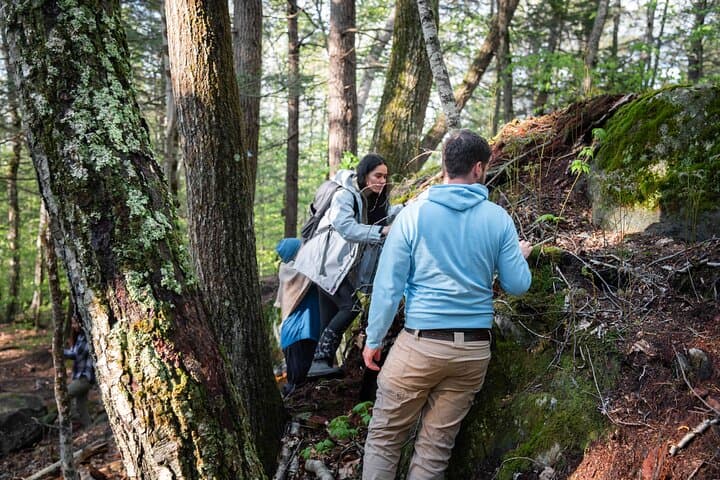
Practically, expect uneven dirt paths, short inclines, and a slow-moving rhythm designed for introspection rather than exertion. The guide supplies sit-mats and tea; bring layers, a refillable bottle, and shoes you can move quietly in. Expect limited cell service — plan your arrival and give yourself time to arrive early.
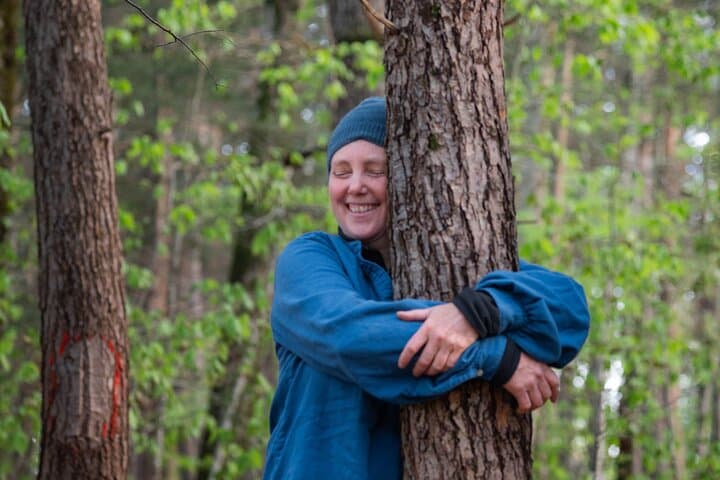
By the end you’ll have tangible practices to bring back to daily life: a five-minute grounding sequence, sensory anchoring, and an invitation to return. The experience is simple by design — the forest is both teacher and companion, willing you to breathe and notice.
easy.
2 hours.
Suitable for all fitness levels; participants should be able to walk short, uneven forest paths and stand or sit on the ground.
This is a guided forest immersion with short, gentle walks between stationary mindfulness practices—expect slow movement rather than sustained hiking.
Yes — the host supplies sit mats and serves tea at the end or during pauses; you may bring your own mat for extra comfort.
Absolutely — sessions are tailored to mixed experience levels with simple, accessible practices and no prior meditation background required.
The host requests that you contact them in advance; many practices can be adapted and the trails are generally short, but accessibility varies by exact parking and clearing conditions.
This region of Vermont rests on bedrock shaped by glaciers and has long been inhabited and cared for by Abenaki people; later, small-scale logging and reforestation shaped the present mixed hardwood stands.
Local land trusts and natural area managers protect many parcels here; visitors are asked to follow Leave No Trace principles and avoid disturbing understory plants to protect regeneration.
Landkind Guide operates guided outdoor trips and adventures with an emphasis on safety, stewardship, and memorable experiences.
You step out of the car into a hush that feels intentional: damp loam, pine resin on the air, and a canopy that filters the light into soft, moving tiles.
You step out of the car into a hush that feels intentional: damp loam, pine resin on the air, and a canopy that filters the light into soft, moving tiles.
Over two hours a guide leads a small group along gentle woodland tracks and into quiet clearings where the forest deliberately slows your pace. This is not a fitness hike but a sensory itinerary — guided breathwork, short meditations, and sensory prompts that pull attention to texture, sound, and the subtler currents of the woods.
Vermont’s forests sit on ancient bedrock carved by glaciers; you’ll notice rounded boulders and stony ridgelines that record that glacial story while sugar maples and mixed hardwoods reflect a history of small-scale timber harvest and regrowth. The region is Abenaki land — a fact reflected in trail names and seasonal foraging traditions — and contemporary stewards include town land trusts and natural area managers protecting pockets of old-growth and riparian zones.
Practically, expect uneven dirt paths, short inclines, and a slow-moving rhythm designed for introspection rather than exertion. The guide supplies sit-mats and tea; bring layers, a refillable bottle, and shoes you can move quietly in. Expect limited cell service — plan your arrival and give yourself time to arrive early.
By the end you’ll have tangible practices to bring back to daily life: a five-minute grounding sequence, sensory anchoring, and an invitation to return. The experience is simple by design — the forest is both teacher and companion, willing you to breathe and notice.