THE ADVENTURE COLLECTIVE® · Independent discovery and booking for outdoor travel

Walk Mill Avenue by lantern light and hear the true-crime and historical stories behind Tempe’s old brick buildings. This two-hour guided evening tour mixes historian-trained narration with theatrical delivery at at least seven notable stops.
Walk Mill Avenue by lantern light and hear the true-crime and historical stories behind Tempe’s old brick buildings. This two-hour guided evening tour mixes historian-trained narration with theatrical delivery at at least seven notable stops.
The streetlights fade and a guide strikes a lantern; Mill Avenue takes on a different voice. On this two-hour, after-dark walk you move through shadowed storefronts and past brick façades where light and rumor trade places. The guide leads small groups to at least seven stops — the Hayden Flour Mill, Governor Moeur’s residence, Tempe National Bank and the Hayden House — weaving documented crime, civic upheaval and ghost stories into a single evening.
Verified experiences and guided adventures in the surrounding area.
Operated by Mill Ave Ghost Tours · Tempe, Arizona
The streetlights fade and a guide strikes a lantern; Mill Avenue takes on a different voice. On this two-hour, after-dark walk you move through shadowed storefronts and past brick façades where light and rumor trade places. The guide leads small groups to at least seven stops — the Hayden Flour Mill, Governor Moeur’s residence, Tempe National Bank and the Hayden House — weaving documented crime, civic upheaval and ghost stories into a single evening.
Tempe’s bones are 19th-century irrigation, the Salt River’s rerouted channel, and the Hayden family’s industrial ambitions; those forces shaped Mill Avenue into a commercial spine that survived railroads, flood control and Arizona State University’s growth. Geologically you’re in the Salt River Valley, a flat basin of alluvial soils and river terraces that allowed the mills and mills’ warehouses to be built close to the river. Culturally, Mill Avenue is ASU-adjacent nightlife — students, small businesses and long-time residents share the stretch, so the tour keeps to public sidewalks and curbside vignettes.
Practical notes: tours are outdoors, on paved sidewalks, usually after dusk; lantern light is atmospheric but not blinding. Wear closed-toe shoes, bring a small water bottle and a light jacket for desert night air. Respect occupied buildings — guides narrate from outside only — and expect some stairs or uneven curbs when crossing. If you want a quieter experience, pick an early-week date; if you’re after stories grounded in research, ask for historic-source details when booking. This is a city walking tour that blends local history with theatrical delivery — educational, spooky and suited to visitors who can stand and walk for two hours.
easy.
2 hours.
Suitable for most fitness levels; participants should be able to stand and walk on paved sidewalks for two hours.
Yes; the tour is stroller-accessible and suitable for families, but content includes true-crime and paranormal stories that may be intense for very young children.
Guides are trained by research historians and separate verified history from folklore; expect a blend with clear sourcing on request.
Yes; the route uses public sidewalks and is listed as wheelchair accessible, though some curb transitions may require assistance.
All sales are final per the operator — no refunds for cancellations; tours may be canceled for bad weather or insufficient travelers.
Mill Avenue grew around the Hayden Flour Mill and the Salt River’s commerce in the late 19th and early 20th centuries, later evolving with ASU’s campus expansion.
Tours emphasize respecting private property and minimizing noise; staying on sidewalks reduces wear on urban green spaces and protects residents.
Mill Ave Ghost Tours operates guided outdoor trips and adventures with an emphasis on safety, stewardship, and memorable experiences.
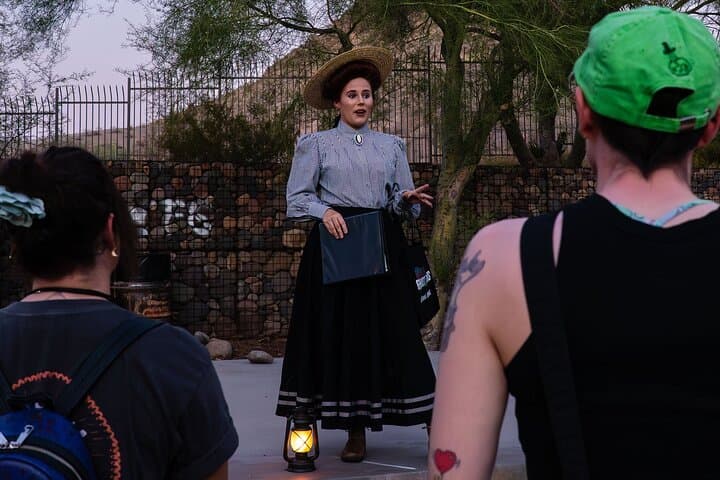
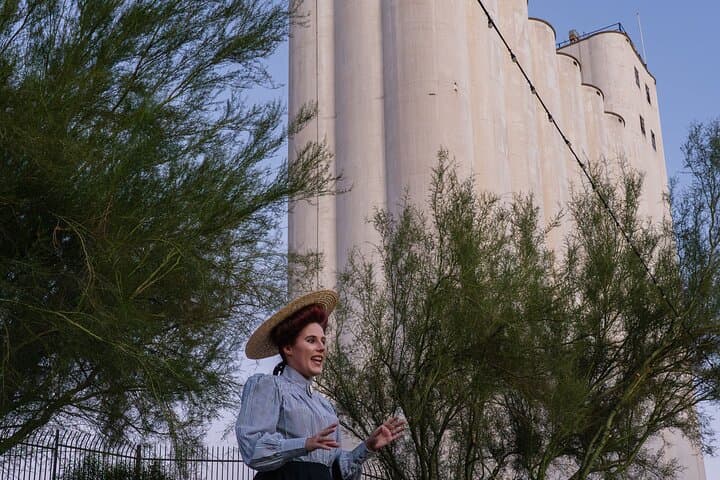
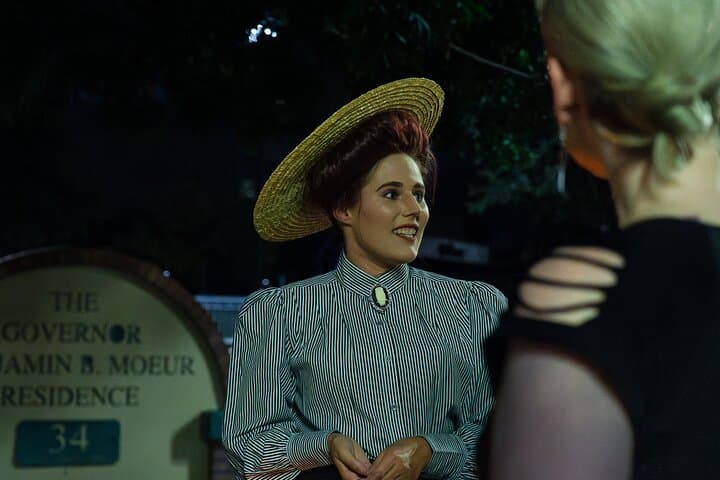
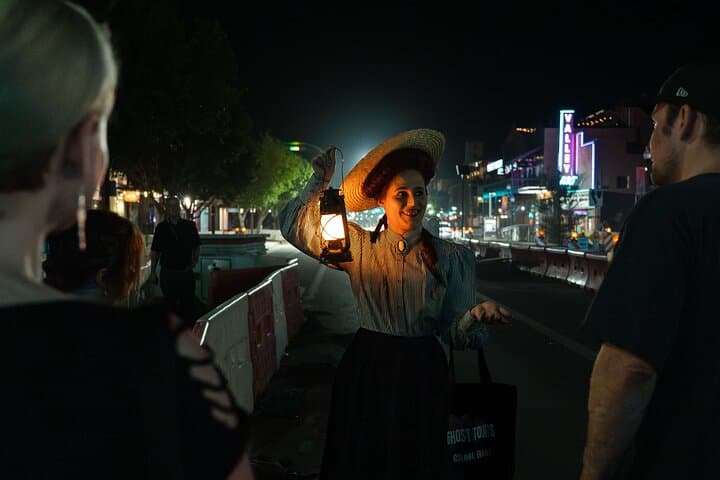
The streetlights fade and a guide strikes a lantern; Mill Avenue takes on a different voice. On this two-hour, after-dark walk you move through shadowed storefronts and past brick façades where light and rumor trade places. The guide leads small groups to at least seven stops — the Hayden Flour Mill, Governor Moeur’s residence, Tempe National Bank and the Hayden House — weaving documented crime, civic upheaval and ghost stories into a single evening.
The streetlights fade and a guide strikes a lantern; Mill Avenue takes on a different voice. On this two-hour, after-dark walk you move through shadowed storefronts and past brick façades where light and rumor trade places. The guide leads small groups to at least seven stops — the Hayden Flour Mill, Governor Moeur’s residence, Tempe National Bank and the Hayden House — weaving documented crime, civic upheaval and ghost stories into a single evening.
Tempe’s bones are 19th-century irrigation, the Salt River’s rerouted channel, and the Hayden family’s industrial ambitions; those forces shaped Mill Avenue into a commercial spine that survived railroads, flood control and Arizona State University’s growth. Geologically you’re in the Salt River Valley, a flat basin of alluvial soils and river terraces that allowed the mills and mills’ warehouses to be built close to the river. Culturally, Mill Avenue is ASU-adjacent nightlife — students, small businesses and long-time residents share the stretch, so the tour keeps to public sidewalks and curbside vignettes.
Practical notes: tours are outdoors, on paved sidewalks, usually after dusk; lantern light is atmospheric but not blinding. Wear closed-toe shoes, bring a small water bottle and a light jacket for desert night air. Respect occupied buildings — guides narrate from outside only — and expect some stairs or uneven curbs when crossing. If you want a quieter experience, pick an early-week date; if you’re after stories grounded in research, ask for historic-source details when booking. This is a city walking tour that blends local history with theatrical delivery — educational, spooky and suited to visitors who can stand and walk for two hours.