THE ADVENTURE COLLECTIVE® · Independent discovery and booking for outdoor travel

Skip the long road and see Fiordland from above: this 40-minute helicopter transfer from Milford Sound to Te Anau follows the Milford Track, flies past Sutherland Falls, and descends over Lake Te Anau for a fast, cinematic introduction to the region. Ideal for travelers short on time who want maximum scenery.
Skip the long road and see Fiordland from above: this 40-minute helicopter transfer from Milford Sound to Te Anau follows the Milford Track, flies past Sutherland Falls, and descends over Lake Te Anau for a fast, cinematic introduction to the region. Ideal for travelers short on time who want maximum scenery.
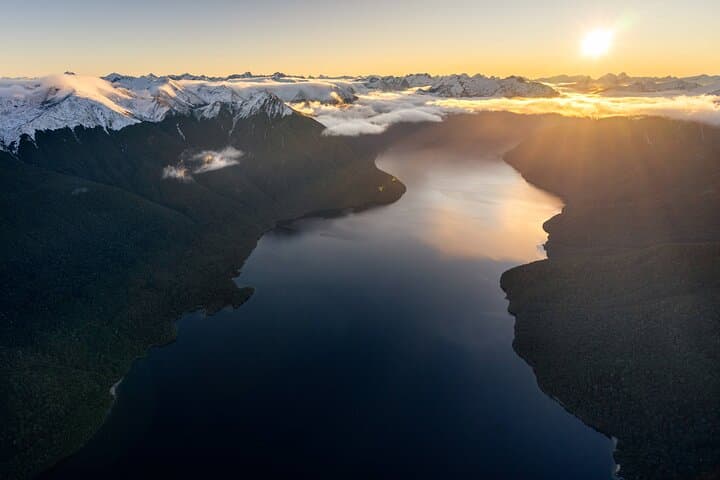
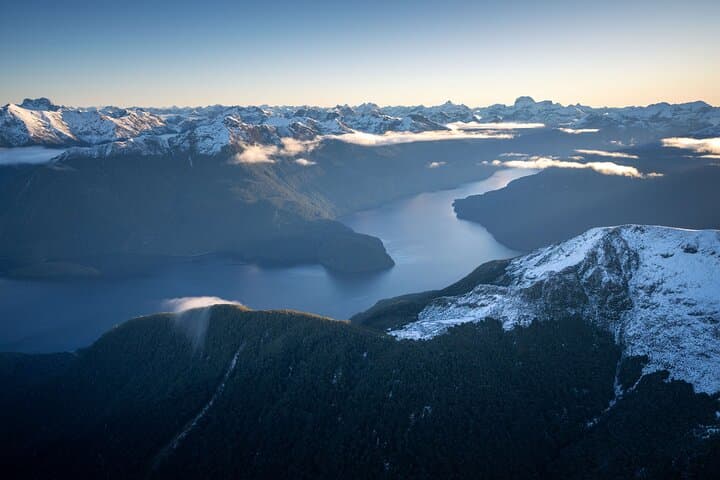
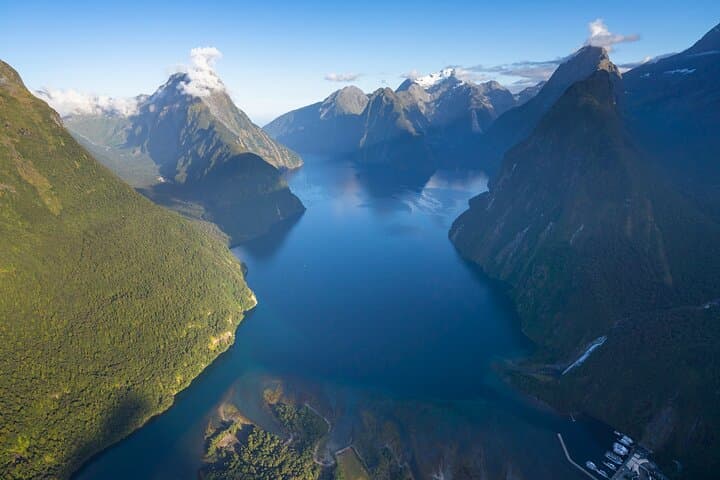
The rotor wash lifts you off a black water mirror and the fjord shrinks beneath you—the peaks around Milford Sound rise like the teeth of an old glacier, cliffs still damp with last night’s rain. For forty minutes the helicopter threads the spine of Fiordland, following the carved route the ice once gouged, sliding past plunging waterfalls and tucked alpine tarns before easing down toward Lake Te Anau.
Verified experiences and guided adventures in the surrounding area.
Operated by Milford Helicopters · Milford Sound, Southland
The rotor wash lifts you off a black water mirror and the fjord shrinks beneath you—the peaks around Milford Sound rise like the teeth of an old glacier, cliffs still damp with last night’s rain. For forty minutes the helicopter threads the spine of Fiordland, following the carved route the ice once gouged, sliding past plunging waterfalls and tucked alpine tarns before easing down toward Lake Te Anau.
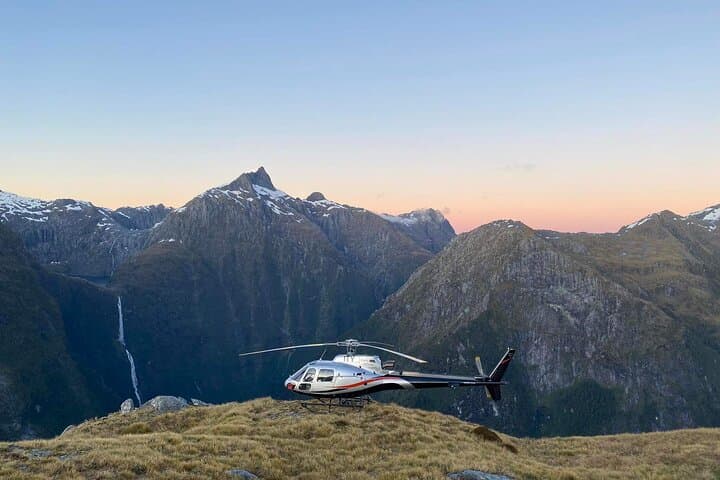
This is more than a transfer; it’s a compressed survey of Fiordland National Park. The flight follows a portion of the famed Milford Track—one of New Zealand’s Great Walks—so expect to recognize the line of beech forest and saddled ridgelines that hikers earn over several days. If the weather cooperates, the aircraft sweeps past Sutherland Falls, one of the country’s tallest cascades, its three-stage drop slicing the mountain face.
Geologically, you’re seeing the work of Pleistocene glaciers: U-shaped valleys, hanging lakes, and steep schist and granitic outcrops. Culturally, the skies are over Piopiotahi—Milford Sound’s Māori name—an area long used by Ngāi Tahu for seasonal resources; today the sound and surrounding lakes are part of Te Wahipounamu, a World Heritage landscape.
Practical side: the flight is roughly 40 minutes in the air. Departures are from Milford Sound Airport—meet at the left-hand side as you approach the terminal—and end with a landing at Te Anau/Manapouri Airport followed by a short vehicle transfer to Te Anau or Manapouri accommodations. Weight and passenger details are required at booking; bring ID and be prepared for possible cancellation if weather turns. Headsets and live commentary are provided.
Wildlife sightings are a bonus: from above you may spot red deer on alpine ridges, groups of New Zealand fur seals on coastal ledges, or pods of dolphins near the fjord entrance. Landings involve small passenger loads (shared flights max six), and landing fees apply as part of the service.
Timing and tips: morning flights often mean clearer skies and stronger light on the falls, while late afternoon can bring dramatic side-light across ridges. The helicopter makes this route accessible for travelers short on time who still want the full sweep of Fiordland’s scale.
If you plan to photograph, secure your camera, use a fast shutter to counter vibration, and keep lenses free of moisture—the place is famously changeable. Whether you’re connecting towns or checking a bucket-list aerial of Milford Track, this transfer turns transit into an expedition that reads like a highlight reel of New Zealand’s most rugged south-west corner.
easy.
40 minutes (flight) — allow 1–1.5 hours total with transfers.
Suitable for all fitness levels; mobility to board small helicopters required
The airborne portion is approximately 40 minutes; allow up to 1–1.5 hours total including transfers to and from airports.
Flights are often cancelled for safety in poor weather; operators will refund or rebook if cancelled at least 24 hours prior per policy.
Yes—bookings require passenger weights for load planning. Baggage is limited to small carry items; large suitcases are not permitted onboard.
Yes—photography is encouraged. Use a fast shutter speed, secure straps, and avoid touching doors or windows during takeoff and landing.
Infants must sit on an adult’s lap; check operator age and child safety requirements when booking.
Yes—flight concludes at Te Anau/Manapouri Airport and includes a vehicle transfer to Te Anau or Manapouri accommodations.
The area is part of Te Wahipounamu, a World Heritage site; Milford Sound is also known by its Māori name Piopiotahi, reflecting local Ngāi Tahu connections to the landscape.
Fiordland is highly protected—operators follow strict landing rules and visitors are asked to minimize noise and pack out waste to protect fragile alpine and marine ecosystems.
Milford Helicopters operates guided outdoor trips and adventures with an emphasis on safety, stewardship, and memorable experiences.
The rotor wash lifts you off a black water mirror and the fjord shrinks beneath you—the peaks around Milford Sound rise like the teeth of an old glacier, cliffs still damp with last night’s rain. For forty minutes the helicopter threads the spine of Fiordland, following the carved route the ice once gouged, sliding past plunging waterfalls and tucked alpine tarns before easing down toward Lake Te Anau.
The rotor wash lifts you off a black water mirror and the fjord shrinks beneath you—the peaks around Milford Sound rise like the teeth of an old glacier, cliffs still damp with last night’s rain. For forty minutes the helicopter threads the spine of Fiordland, following the carved route the ice once gouged, sliding past plunging waterfalls and tucked alpine tarns before easing down toward Lake Te Anau.
This is more than a transfer; it’s a compressed survey of Fiordland National Park. The flight follows a portion of the famed Milford Track—one of New Zealand’s Great Walks—so expect to recognize the line of beech forest and saddled ridgelines that hikers earn over several days. If the weather cooperates, the aircraft sweeps past Sutherland Falls, one of the country’s tallest cascades, its three-stage drop slicing the mountain face.
Geologically, you’re seeing the work of Pleistocene glaciers: U-shaped valleys, hanging lakes, and steep schist and granitic outcrops. Culturally, the skies are over Piopiotahi—Milford Sound’s Māori name—an area long used by Ngāi Tahu for seasonal resources; today the sound and surrounding lakes are part of Te Wahipounamu, a World Heritage landscape.
Practical side: the flight is roughly 40 minutes in the air. Departures are from Milford Sound Airport—meet at the left-hand side as you approach the terminal—and end with a landing at Te Anau/Manapouri Airport followed by a short vehicle transfer to Te Anau or Manapouri accommodations. Weight and passenger details are required at booking; bring ID and be prepared for possible cancellation if weather turns. Headsets and live commentary are provided.
Wildlife sightings are a bonus: from above you may spot red deer on alpine ridges, groups of New Zealand fur seals on coastal ledges, or pods of dolphins near the fjord entrance. Landings involve small passenger loads (shared flights max six), and landing fees apply as part of the service.
Timing and tips: morning flights often mean clearer skies and stronger light on the falls, while late afternoon can bring dramatic side-light across ridges. The helicopter makes this route accessible for travelers short on time who still want the full sweep of Fiordland’s scale.
If you plan to photograph, secure your camera, use a fast shutter to counter vibration, and keep lenses free of moisture—the place is famously changeable. Whether you’re connecting towns or checking a bucket-list aerial of Milford Track, this transfer turns transit into an expedition that reads like a highlight reel of New Zealand’s most rugged south-west corner.