THE ADVENTURE COLLECTIVE® · Independent discovery and booking for outdoor travel

Travel from Milan to Turin on a first‑class Italo train, then explore Turin’s elegant squares, arcades and monuments with a certified guide. This eight‑hour day tour mixes history, architecture and easy walking through the city’s best sights.
Travel from Milan to Turin on a first‑class Italo train, then explore Turin’s elegant squares, arcades and monuments with a certified guide. This eight‑hour day tour mixes history, architecture and easy walking through the city’s best sights.
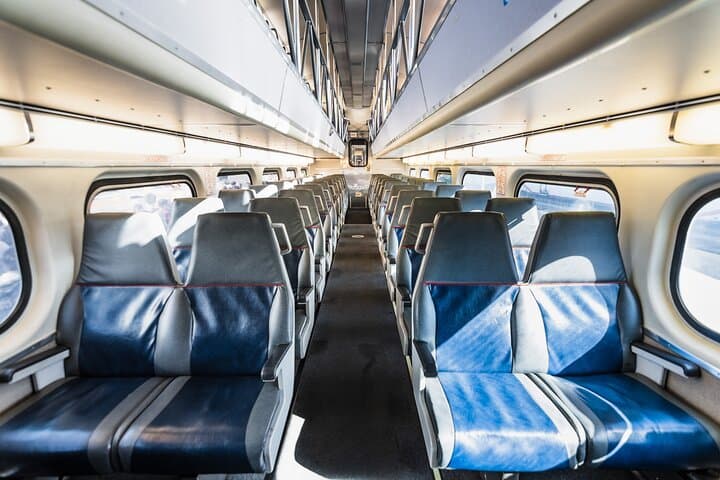
You step off the Italo first‑class carriage into a Turin that still carries the cadence of monarchs and the hush of arcaded cafés.
Verified experiences and guided adventures in the surrounding area.
Operated by Nearby Italy - Just around the corner · Turin, Piedmont
You step off the Italo first‑class carriage into a Turin that still carries the cadence of monarchs and the hush of arcaded cafés.
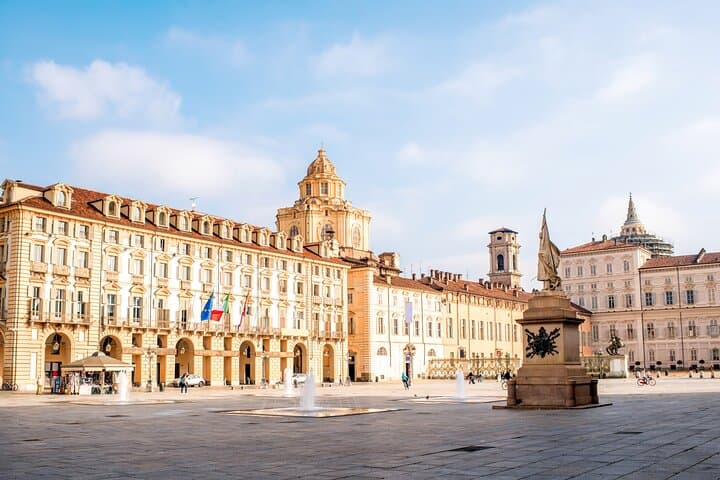
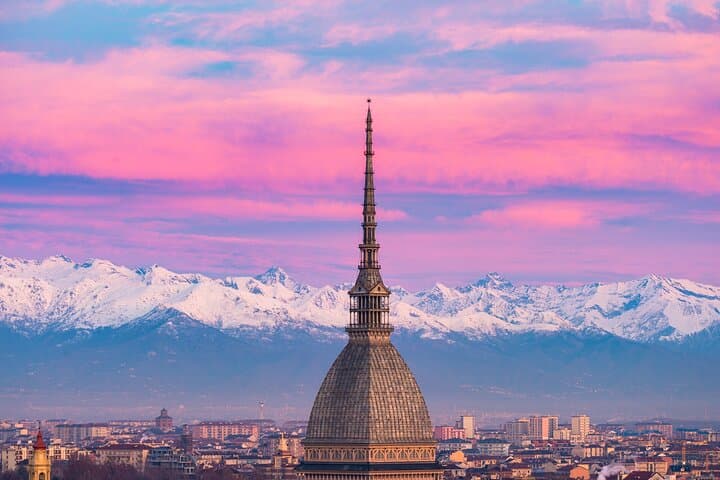
The walk begins at Piazza CLN, its twin fountains marking where the Po and Dora Riparia once divided the city’s fate. Under the guide’s steady voice you thread through Piazza San Carlo, where baroque facades and coffee shops keep a slow civic rhythm, then through Galleria San Federico’s glass canopy to the red brick drama of Piazza Carignano and a full view of the Mole Antonelliana’s spire.
Turin’s story is both industrial and regal: a Savoy capital that later fueled Italy’s early industry. Geology matters here only in the low, alluvial plains that shaped the Po valley and the city’s grid; culture shows up in slow rituals—espresso at a café, aperitivo at dusk, and shopkeepers who know which chocolate is gianduja.
Expect roughly 3–5 km of mostly flat walking between sites, paved streets and covered arcades that shelter you from brief rain or sun. The pace is interpretive: frequent stops for history, architecture and local anecdotes, with time to photograph façades or duck into a museum if you choose.
Practical edge: bring printed or mobile tickets, a charged phone, comfortable walking shoes and a light layer for changing weather. Trains run frequently between Milan and Torino Porta Nuova; first‑class seating shortens the trip and gives you space to review the day ahead. If you want quieter views, ask your guide about the Quadrilatero Romano side streets and the riverside paths along the Po.
easy.
8 hours.
Lightly active: suitable for most people who can walk several kilometers at a relaxed pace
The Italo high‑speed trip between Milan and Torino Porta Nuova takes about 1 hour; first‑class seats make the transfer comfortable.
Yes—this tour notes stroller accessibility; however, cobbles and occasional steps may require assistance in some spots.
This tour focuses on guided outdoor and architectural stops; museum admissions are generally not included unless specifically stated.
Plan for approximately 3–5 km of mostly flat walking spread across the day with frequent stops and short transfers.
Turin was the first capital of a unified Italy and a power base for the House of Savoy; its architecture and public squares reflect that 18th–19th century civic ambition.
Turin encourages pedestrian zones in the historic center and sustainable public transit; stick to marked paths, avoid single‑use plastics and respect restricted conservation areas by not littering.
Nearby Italy - Just around the corner operates guided outdoor trips and adventures with an emphasis on safety, stewardship, and memorable experiences.

You step off the Italo first‑class carriage into a Turin that still carries the cadence of monarchs and the hush of arcaded cafés.
You step off the Italo first‑class carriage into a Turin that still carries the cadence of monarchs and the hush of arcaded cafés.
The walk begins at Piazza CLN, its twin fountains marking where the Po and Dora Riparia once divided the city’s fate. Under the guide’s steady voice you thread through Piazza San Carlo, where baroque facades and coffee shops keep a slow civic rhythm, then through Galleria San Federico’s glass canopy to the red brick drama of Piazza Carignano and a full view of the Mole Antonelliana’s spire.
Turin’s story is both industrial and regal: a Savoy capital that later fueled Italy’s early industry. Geology matters here only in the low, alluvial plains that shaped the Po valley and the city’s grid; culture shows up in slow rituals—espresso at a café, aperitivo at dusk, and shopkeepers who know which chocolate is gianduja.
Expect roughly 3–5 km of mostly flat walking between sites, paved streets and covered arcades that shelter you from brief rain or sun. The pace is interpretive: frequent stops for history, architecture and local anecdotes, with time to photograph façades or duck into a museum if you choose.
Practical edge: bring printed or mobile tickets, a charged phone, comfortable walking shoes and a light layer for changing weather. Trains run frequently between Milan and Torino Porta Nuova; first‑class seating shortens the trip and gives you space to review the day ahead. If you want quieter views, ask your guide about the Quadrilatero Romano side streets and the riverside paths along the Po.