THE ADVENTURE COLLECTIVE® · Independent discovery and booking for outdoor travel

A one‑day Metro‑North route from Grand Central to Sleepy Hollow, the Walkway Over the Hudson, and Cold Spring. Expect a mix of literary history, river views, elevator access to a 200‑foot pedestrian bridge, and flat village walking suitable for most travelers.
A one‑day Metro‑North route from Grand Central to Sleepy Hollow, the Walkway Over the Hudson, and Cold Spring. Expect a mix of literary history, river views, elevator access to a 200‑foot pedestrian bridge, and flat village walking suitable for most travelers.
You step out of Grand Central into the hum of Midtown and, within an hour, find the Hudson River pulling you toward the edge of the map. The train climbs past old river towns, and by Tarrytown the trees lean over the track as if pointing the way to Sleepy Hollow. The village streets creak with the same 19th‑century bones that held Washington Irving’s imagination.
Verified experiences and guided adventures in the surrounding area.
Operated by Bobby’s City Tours · New York, NY
You step out of Grand Central into the hum of Midtown and, within an hour, find the Hudson River pulling you toward the edge of the map. The train climbs past old river towns, and by Tarrytown the trees lean over the track as if pointing the way to Sleepy Hollow. The village streets creak with the same 19th‑century bones that held Washington Irving’s imagination.
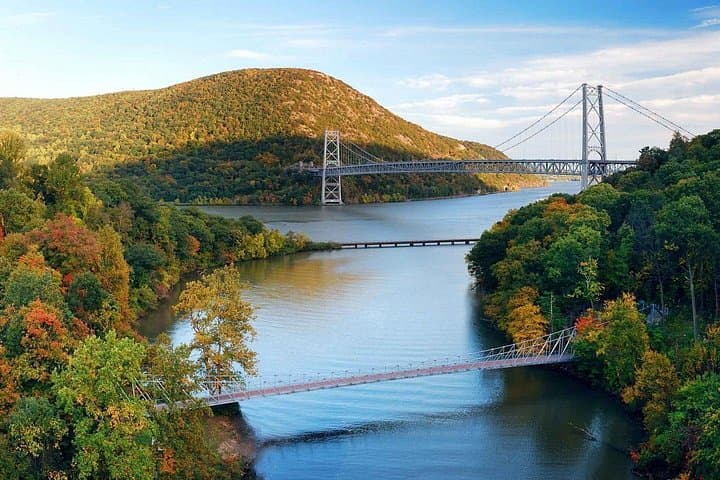
Sleepy Hollow’s Old Dutch Church and burial ground read like a short history of early New York: Dutch settlers, Revolutionary echoes, and a folklore that still skitters across the river wind. Geology here is simple—glacial‑smoothed bedrock, steep river bluffs, and the wide, tidal Hudson that has guided commerce and migration for centuries. In Poughkeepsie you climb by elevator onto the Walkway Over the Hudson, a converted railroad span 212 feet above the water where the river dares you to look both upstream to the Catskills and downstream to the city you left behind.
Finish in Cold Spring beneath Storm King and the West Point cliffs—granite faces that once resisted quarrying and now frame a village of antique shops and riverside cafés. Practicalities: the day is mostly gentle walking and train time—expect 6–7 hours total, exposed sections on the Walkway, and short stair/elevator transfers.
Plan for variable weather, wear sturdy walking shoes, and carry water; trains run both ways on Metro‑North, so you can extend the day in Cold Spring or return to the city. This trip mixes literary history, river engineering, and roadside geology into an accessible day outside the urban grid.
moderate.
7 hours.
Moderate fitness; able to stand and walk for several hours and handle short stair/elevator transitions.
Yes — Metro‑North train travel used during the guided segments is included with the tour.
Yes — the elevator in Poughkeepsie provides access to the Walkway’s surface, though some sections of the tour include stairs.
Yes — the tour ends in Cold Spring and Metro‑North runs frequent service back to NYC if you choose to return later.
Expect several short walks in villages and about a mile on the Walkway; total on‑foot distance is moderate and suitable for most travelers with average mobility.
The tour follows routes made famous by Washington Irving and uses the Walkway, a former railroad bridge repurposed as a state park walkway opened in 2009.
The Hudson Valley relies on volunteers and park partners to maintain trails and the Walkway; follow Leave No Trace principles and pack out trash to protect river habitats.
Bobby’s City Tours operates guided outdoor trips and adventures with an emphasis on safety, stewardship, and memorable experiences.

You step out of Grand Central into the hum of Midtown and, within an hour, find the Hudson River pulling you toward the edge of the map. The train climbs past old river towns, and by Tarrytown the trees lean over the track as if pointing the way to Sleepy Hollow. The village streets creak with the same 19th‑century bones that held Washington Irving’s imagination.
You step out of Grand Central into the hum of Midtown and, within an hour, find the Hudson River pulling you toward the edge of the map. The train climbs past old river towns, and by Tarrytown the trees lean over the track as if pointing the way to Sleepy Hollow. The village streets creak with the same 19th‑century bones that held Washington Irving’s imagination.
Sleepy Hollow’s Old Dutch Church and burial ground read like a short history of early New York: Dutch settlers, Revolutionary echoes, and a folklore that still skitters across the river wind. Geology here is simple—glacial‑smoothed bedrock, steep river bluffs, and the wide, tidal Hudson that has guided commerce and migration for centuries. In Poughkeepsie you climb by elevator onto the Walkway Over the Hudson, a converted railroad span 212 feet above the water where the river dares you to look both upstream to the Catskills and downstream to the city you left behind.
Finish in Cold Spring beneath Storm King and the West Point cliffs—granite faces that once resisted quarrying and now frame a village of antique shops and riverside cafés. Practicalities: the day is mostly gentle walking and train time—expect 6–7 hours total, exposed sections on the Walkway, and short stair/elevator transfers.
Plan for variable weather, wear sturdy walking shoes, and carry water; trains run both ways on Metro‑North, so you can extend the day in Cold Spring or return to the city. This trip mixes literary history, river engineering, and roadside geology into an accessible day outside the urban grid.