THE ADVENTURE COLLECTIVE® · Independent discovery and booking for outdoor travel

Hike through a starry East Java night to witness Ijen’s rare blue fire and a turquoise acid crater lake. This 5–6 hour guided trek from Banyuwangi pairs volcanic spectacle with an intimate look at the lives of local sulfur miners.
Hike through a starry East Java night to witness Ijen’s rare blue fire and a turquoise acid crater lake. This 5–6 hour guided trek from Banyuwangi pairs volcanic spectacle with an intimate look at the lives of local sulfur miners.
Under a scatter of southern stars you step from the van into a sharp, cool wind at Paltuding, the trailhead for Mount Ijen. Headlamps cut rings in the dark as your group begins a steady climb—breathing the cold air, picking a rhythm against the crunch of volcanic scree, headed toward a light few places on Earth can claim: blue fire.
Verified experiences and guided adventures in the surrounding area.
Operated by Good Feeling Adventure · Banyuwangi, East Java
Under a scatter of southern stars you step from the van into a sharp, cool wind at Paltuding, the trailhead for Mount Ijen. Headlamps cut rings in the dark as your group begins a steady climb—breathing the cold air, picking a rhythm against the crunch of volcanic scree, headed toward a light few places on Earth can claim: blue fire.
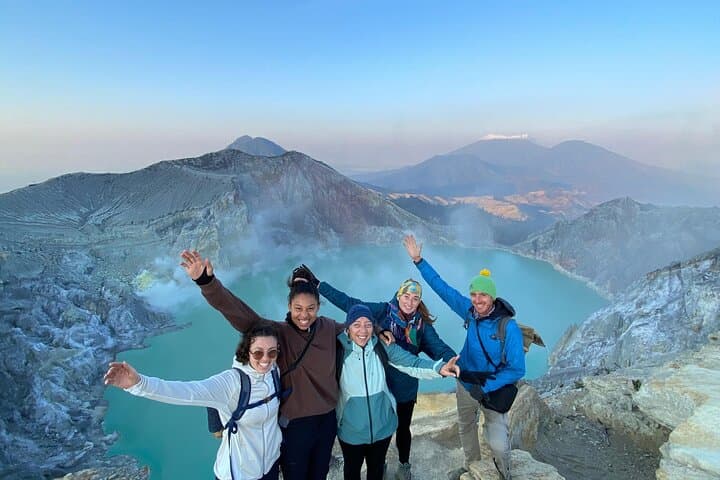
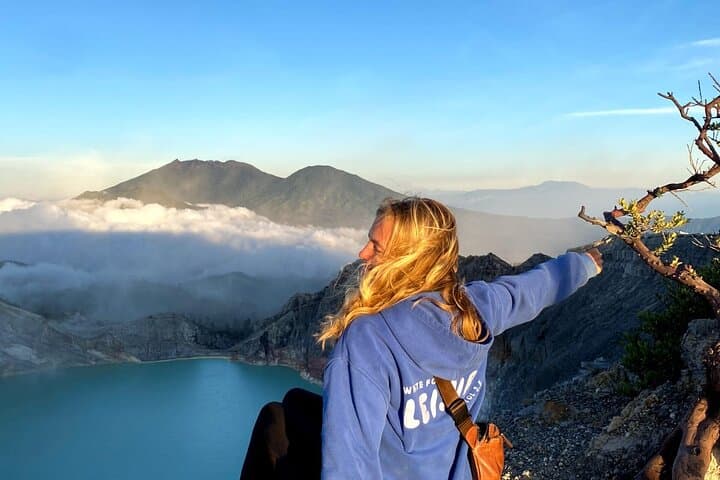
Ijen’s crater is defined by geological extremes: an acid turquoise lake rimmed by sulfur-stained cliffs and vents that exhale yellow smoke. Burning sulfur gases, ignited as they emerge, produce the eerie electric-blue flames that draw travelers before dawn. For generations local miners have worked these slopes by hand, cutting sulfur and carrying heavy loads down narrow paths to markets below; their presence is as much part of the story as the geology.
Expect a 3–3.5 km, one-way climb on uneven volcanic soil with loose stones and occasional steep pitches—roughly 400–700 m of ascent depending on where you start. The whole outing typically runs 5–6 hours door-to-door: midnight pickup, a 1.5–3 hour ascent, time at the rim and crater rim descent at sunrise. Guides provide headlamps and gas masks; still, bring warm layered clothing, sturdy boots, and 1–2 liters of water. Keep distance from sulfur vents, respect miners’ workspace, and avoid touching the lake; its acidity is dangerous.
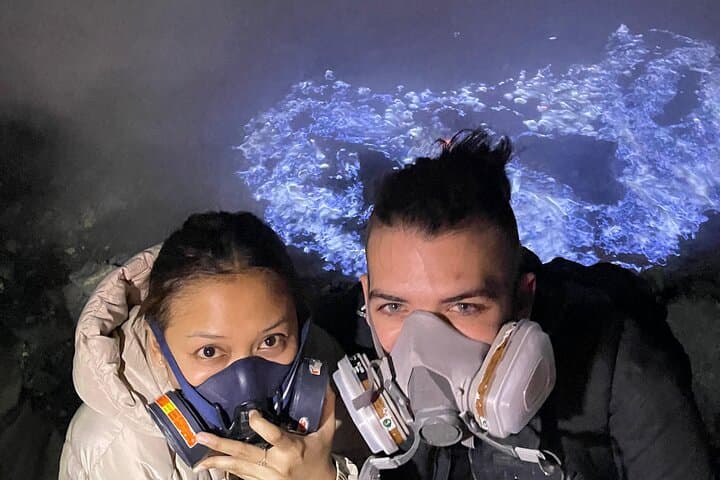
Seen in the half-light, the blue fire is immediate and physical—flames that seem to move across the ground—followed by a sunrise that turns the crater into a raw, unforgettable landscape. This is a night hike that rewards early fatigue with otherworldly views and a close look at the human side of volcanic life.
moderate.
5–6 hours.
Good aerobic base and comfort on uneven, uphill terrain for 1.5–3 hours; not suitable for those with serious respiratory or cardiovascular issues.
Blue fire depends on sulfur emissions and darkness—it’s commonly visible on most clear nights before sunrise, but intensity varies and cannot be guaranteed.
Expect 1.5–3 hours of uphill on uneven volcanic terrain; a moderate fitness level is recommended and those with serious heart or back issues should avoid it.
Guides usually provide masks and headlamps; sulfur fumes can irritate eyes and lungs, so masks and keeping distance from vents are important.
You can descend to view the blue fire; however, respect miners’ workspace, follow your guide, and avoid touching sulfur or the acid lake—both are hazardous.
Ijen’s sulfur extraction has been a local industry for generations; miners still haul fragmented ore in baskets by hand along steep trails.
The crater’s acid lake and fragile volcanic soils are sensitive—stay on trails, avoid littering, and follow guides’ directions to minimize impact.
Good Feeling Adventure operates guided outdoor trips and adventures with an emphasis on safety, stewardship, and memorable experiences.

Under a scatter of southern stars you step from the van into a sharp, cool wind at Paltuding, the trailhead for Mount Ijen. Headlamps cut rings in the dark as your group begins a steady climb—breathing the cold air, picking a rhythm against the crunch of volcanic scree, headed toward a light few places on Earth can claim: blue fire.
Under a scatter of southern stars you step from the van into a sharp, cool wind at Paltuding, the trailhead for Mount Ijen. Headlamps cut rings in the dark as your group begins a steady climb—breathing the cold air, picking a rhythm against the crunch of volcanic scree, headed toward a light few places on Earth can claim: blue fire.
Ijen’s crater is defined by geological extremes: an acid turquoise lake rimmed by sulfur-stained cliffs and vents that exhale yellow smoke. Burning sulfur gases, ignited as they emerge, produce the eerie electric-blue flames that draw travelers before dawn. For generations local miners have worked these slopes by hand, cutting sulfur and carrying heavy loads down narrow paths to markets below; their presence is as much part of the story as the geology.
Expect a 3–3.5 km, one-way climb on uneven volcanic soil with loose stones and occasional steep pitches—roughly 400–700 m of ascent depending on where you start. The whole outing typically runs 5–6 hours door-to-door: midnight pickup, a 1.5–3 hour ascent, time at the rim and crater rim descent at sunrise. Guides provide headlamps and gas masks; still, bring warm layered clothing, sturdy boots, and 1–2 liters of water. Keep distance from sulfur vents, respect miners’ workspace, and avoid touching the lake; its acidity is dangerous.
Seen in the half-light, the blue fire is immediate and physical—flames that seem to move across the ground—followed by a sunrise that turns the crater into a raw, unforgettable landscape. This is a night hike that rewards early fatigue with otherworldly views and a close look at the human side of volcanic life.