THE ADVENTURE COLLECTIVE® · Independent discovery and booking for outdoor travel

Run Class IV rapids through the canyon of the Middle Fork American River on a full-day guided rafting trip out of Auburn, California. Expect long continuous rapids, steep granite walls, and a soundtrack of rushing water — best for confident swimmers and paddle-ready participants.
Run Class IV rapids through the canyon of the Middle Fork American River on a full-day guided rafting trip out of Auburn, California. Expect long continuous rapids, steep granite walls, and a soundtrack of rushing water — best for confident swimmers and paddle-ready participants.
Standing at the put-in, the river sounds like a challenge: a narrow throat of whitewater cutting through high, exposed rock as sunlight skitters off froth. The Middle Fork dares you downstream, pulling rafts into narrows and sending spray against your helmet while canyon walls hold the echoes of each shout.
Verified experiences and guided adventures in the surrounding area.
Standing at the put-in, the river sounds like a challenge: a narrow throat of whitewater cutting through high, exposed rock as sunlight skitters off froth. The Middle Fork dares you downstream, pulling rafts into narrows and sending spray against your helmet while canyon walls hold the echoes of each shout.
This stretch sits inside Auburn State Recreation Area, carved into the western Sierra Nevada foothills. Granite and metamorphic rock frame a corridor shaped by glacial runoff and millennia of seasonal floods; placer gold discovered here in the 1840s brought miners and rough camps, and remnants of that era still dot some side slopes. Today, the river’s culture is rafting-first — local guides read currents like maps and run classic Class III–IV drops that test timing and teamwork.
Expect a full-day program: safety briefing, on-water instruction, long continuous rapids and calmer reaches to regroup. Terrain alternates between steep canyon ledges and sun-exposed gravel bars; banks offer brief hikes if the trip stops for lunch. Wildlife is present but unobtrusive — raptors, deer and the occasional mink watch from the trees.
Practical guidance: come with solid swimming ability, layered quick-dry clothing, closed-toe water shoes and a willingness to paddle hard. Sunscreen, a small dry bag for essentials and hydration are musts. Spring runoff raises difficulty and spectacle; late summer lowers flows and exposes more rocks. Guides handle scouting and safety, but personal preparedness changes the day from scary to confidently exhilarating. For anyone comfortable in the water and looking to push their whitewater limits, the Middle Fork delivers a raw, river-first experience.
challenging.
8 hours.
Good cardiovascular fitness and core strength recommended; must be comfortable swimming in moving water.
Minimum age on this run is 14; operators enforce this strictly for safety reasons.
Yes — all participants must be competent swimmers able to stay afloat in moving water and follow self-rescue instructions.
Guides monitor river conditions; trips may be modified for safety, rescheduled, or canceled if flows exceed safe thresholds.
No — basic instruction is provided, but the Class IV sections require comfort with dynamic water and quick reactions.
The Middle Fork corridor saw a Gold Rush boom in the 1840s and 1850s; old placer sites and mining scars remain visible from the river and trails.
The Recreation Area balances recreation with habitat protection—stay on designated access points, pack out trash, and avoid disturbing banks to reduce erosion.
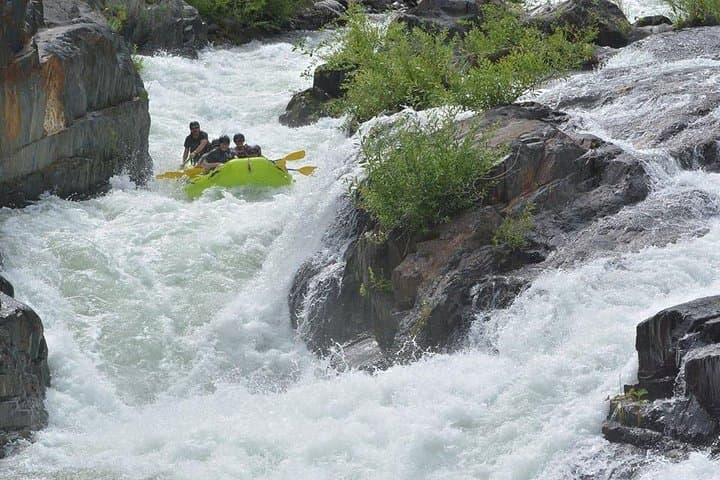
Standing at the put-in, the river sounds like a challenge: a narrow throat of whitewater cutting through high, exposed rock as sunlight skitters off froth. The Middle Fork dares you downstream, pulling rafts into narrows and sending spray against your helmet while canyon walls hold the echoes of each shout.
Standing at the put-in, the river sounds like a challenge: a narrow throat of whitewater cutting through high, exposed rock as sunlight skitters off froth. The Middle Fork dares you downstream, pulling rafts into narrows and sending spray against your helmet while canyon walls hold the echoes of each shout.
This stretch sits inside Auburn State Recreation Area, carved into the western Sierra Nevada foothills. Granite and metamorphic rock frame a corridor shaped by glacial runoff and millennia of seasonal floods; placer gold discovered here in the 1840s brought miners and rough camps, and remnants of that era still dot some side slopes. Today, the river’s culture is rafting-first — local guides read currents like maps and run classic Class III–IV drops that test timing and teamwork.
Expect a full-day program: safety briefing, on-water instruction, long continuous rapids and calmer reaches to regroup. Terrain alternates between steep canyon ledges and sun-exposed gravel bars; banks offer brief hikes if the trip stops for lunch. Wildlife is present but unobtrusive — raptors, deer and the occasional mink watch from the trees.
Practical guidance: come with solid swimming ability, layered quick-dry clothing, closed-toe water shoes and a willingness to paddle hard. Sunscreen, a small dry bag for essentials and hydration are musts. Spring runoff raises difficulty and spectacle; late summer lowers flows and exposes more rocks. Guides handle scouting and safety, but personal preparedness changes the day from scary to confidently exhilarating. For anyone comfortable in the water and looking to push their whitewater limits, the Middle Fork delivers a raw, river-first experience.