THE ADVENTURE COLLECTIVE® · Independent discovery and booking for outdoor travel

Escape Fez for a 6–8 hour circuit through the Middle Atlas: Spanish-style Ifrane, the reed-lined Dayet Aoua, cedar groves and Azrou’s mountain market. Expect easy walks, wildlife sightings and highland views within a day.
Escape Fez for a 6–8 hour circuit through the Middle Atlas: Spanish-style Ifrane, the reed-lined Dayet Aoua, cedar groves and Azrou’s mountain market. Expect easy walks, wildlife sightings and highland views within a day.
You climb into the cool of the Middle Atlas before lunch—Fez shrinking behind narrow lanes as the road winds upward and the air smells of cedar and damp earth.
Verified experiences and guided adventures in the surrounding area.
Operated by Moroccan Roll Travel · Fez, Fès-Meknès
You climb into the cool of the Middle Atlas before lunch—Fez shrinking behind narrow lanes as the road winds upward and the air smells of cedar and damp earth.
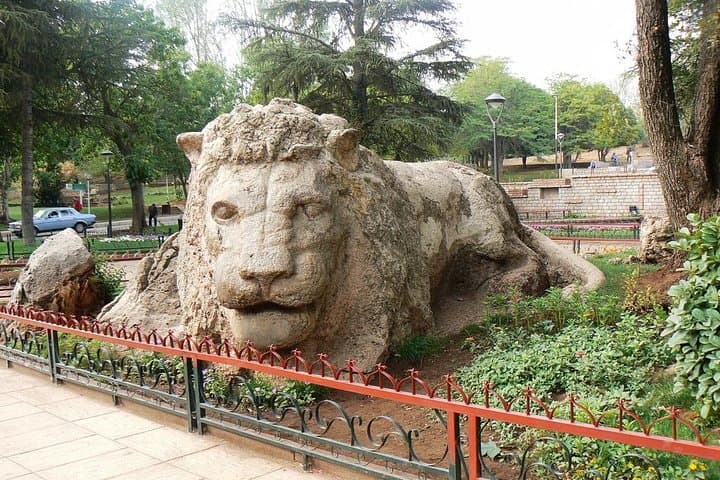
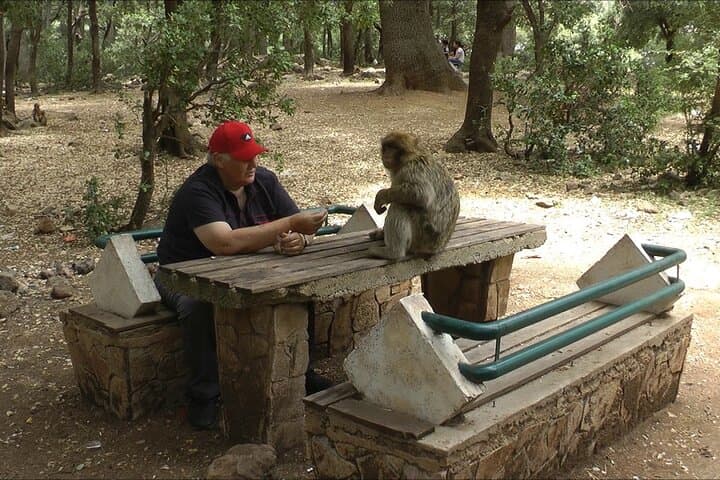
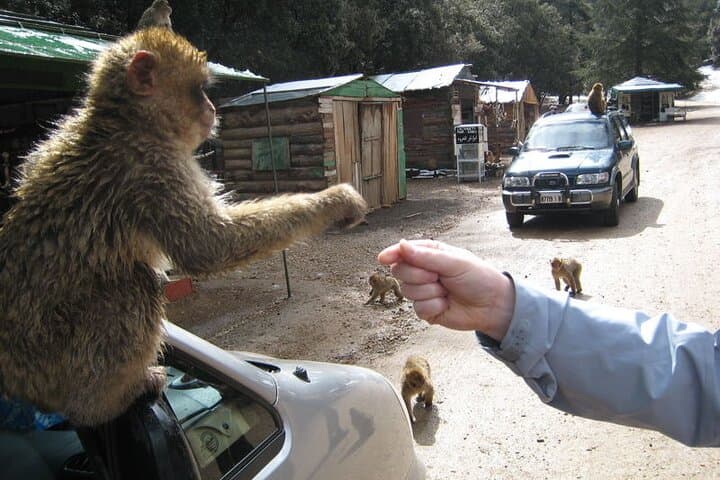
The day trip moves from city to mountain: a 6–8 hour loop that follows RN24 toward Ifrane, threads through small Berber villages and opens into cedar groves where Barbary macaques watch from branch and boulder. Geologically the Middle Atlas is older, folded terrain with pockets of volcanic rock and high plateaus; its cedar (Cedrus atlantica) stands are a defining sign of elevation and moisture. Near Ifrane you’ll encounter Dayet Aoua, a shallow mountain lake whose marsh edges host reeds, poplar, and willow—water levels vary seasonally and depth averages 4–5 m in places.
Culturally the route crosses towns shaped by Berber life and 20th-century European influence—Ifrane’s red-tile roofs and planned avenues earned it the nickname “Switzerland of Morocco.” Azrou sits lower (≈1,250 m), a market and meeting point where local sellers display honey, carpets, and seasonal fruit.
Practical guidance: expect paved mountain roads and short, easy walks (firm boots or trail shoes recommended). Elevation rises from Fez (~410 m) to Ifrane (~1,665 m), so bring layers and hydrate; the walking is low-impact but uneven near lake shores and forest paths. The tour generally includes private air-conditioned transport and a guide/driver—pack sunscreen, a refillable water bottle, camera, and small cash for markets. Start times are mid-morning; allow 6–8 hours for stops and photo breaks.
easy.
6–8 hours.
Suitable for most fitness levels; participants should be comfortable with short uneven walks and a day of sitting in a vehicle between stops.
The excursion lasts roughly 6–8 hours with typical pickup around 10:00 AM from Fez accommodations.
Walks are short and easy—mostly gentle trails around the lake and through cedar stands; the trip is suitable for most ages and fitness levels.
Yes, macaques are commonly seen in the cedar forests near Azrou, though sightings can’t be guaranteed—always observe from a distance.
Inclusions vary by operator; this tour generally provides private transport and stops but not necessarily meals, so bring snacks or plan for lunch locally.
The Middle Atlas is home to long-established Berber communities; Ifrane’s European-style planning dates to early 20th-century colonial influences that shaped its alpine look.
Cedar forests face pressure from overgrazing, fires and climate stress; visitors should stay on trails, avoid feeding wildlife and support local guides who practice low-impact tourism.
Moroccan Roll Travel operates guided outdoor trips and adventures with an emphasis on safety, stewardship, and memorable experiences.

You climb into the cool of the Middle Atlas before lunch—Fez shrinking behind narrow lanes as the road winds upward and the air smells of cedar and damp earth.
You climb into the cool of the Middle Atlas before lunch—Fez shrinking behind narrow lanes as the road winds upward and the air smells of cedar and damp earth.
The day trip moves from city to mountain: a 6–8 hour loop that follows RN24 toward Ifrane, threads through small Berber villages and opens into cedar groves where Barbary macaques watch from branch and boulder. Geologically the Middle Atlas is older, folded terrain with pockets of volcanic rock and high plateaus; its cedar (Cedrus atlantica) stands are a defining sign of elevation and moisture. Near Ifrane you’ll encounter Dayet Aoua, a shallow mountain lake whose marsh edges host reeds, poplar, and willow—water levels vary seasonally and depth averages 4–5 m in places.
Culturally the route crosses towns shaped by Berber life and 20th-century European influence—Ifrane’s red-tile roofs and planned avenues earned it the nickname “Switzerland of Morocco.” Azrou sits lower (≈1,250 m), a market and meeting point where local sellers display honey, carpets, and seasonal fruit.
Practical guidance: expect paved mountain roads and short, easy walks (firm boots or trail shoes recommended). Elevation rises from Fez (~410 m) to Ifrane (~1,665 m), so bring layers and hydrate; the walking is low-impact but uneven near lake shores and forest paths. The tour generally includes private air-conditioned transport and a guide/driver—pack sunscreen, a refillable water bottle, camera, and small cash for markets. Start times are mid-morning; allow 6–8 hours for stops and photo breaks.