THE ADVENTURE COLLECTIVE® · Independent discovery and booking for outdoor travel

A full-day drive from Fez introduces cedar forests, friendly Berber villages and Barbary macaques. This easy cultural and nature outing mixes short walks with scenic drives and local encounters.
A full-day drive from Fez introduces cedar forests, friendly Berber villages and Barbary macaques. This easy cultural and nature outing mixes short walks with scenic drives and local encounters.
You leave Fez as the city’s tilework recedes and the road climbs toward the Middle Atlas, where forests tighten and the air cools.
Verified experiences and guided adventures in the surrounding area.
Operated by Marvels Tours · Ifrane, Fès-Meknès
You leave Fez as the city’s tilework recedes and the road climbs toward the Middle Atlas, where forests tighten and the air cools.
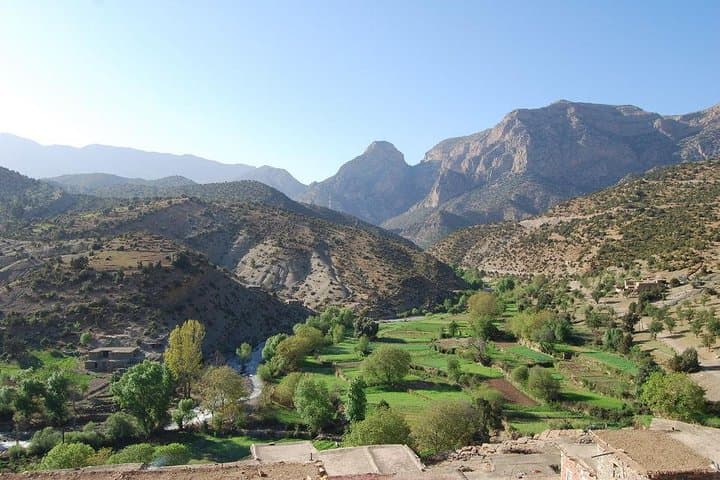
Mountains here wear cedar like a coat; the road threads small Berber villages with flat-roofed houses and goat-herd silhouettes. Geologically the Middle Atlas is an uplifted plateau of limestone and marl with rounded peaks at 1,600–2,200 m, carved by streams that dare you to follow them down to hidden springs. Villages you’ll visit keep strong Amazigh (Berber) traditions—handwoven rugs, terraced gardens and communal tea ritual—evidence of a living, local culture shaped by altitude and snow as much as by trade.
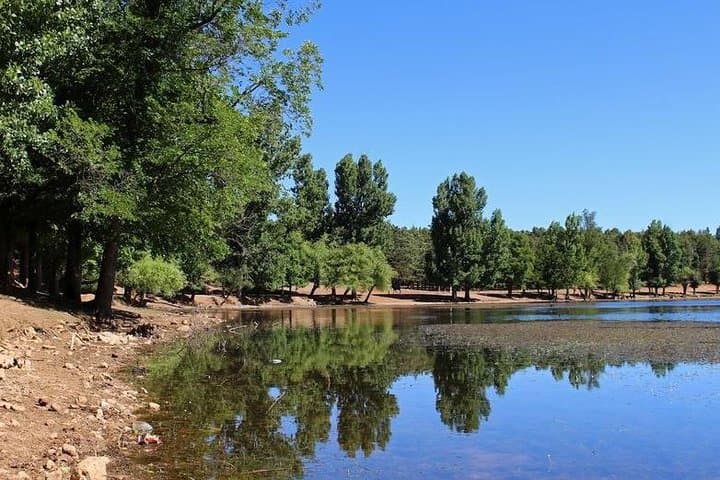
Wildlife is immediate: Barbary macaques move through cedar branches and raptors circle the ridgelines. Azrou’s cedar forest is a standout—a good place to see monkeys and old cedars whose resin-scented bark tells a quiet history of seasonal grazing and past timber use.
Practical guidance: plan for a full day of driving and short walks—Fez to Ifrane is roughly 70 km (about 1.5 hours each way), with stops spaced by 20–60 minutes of driving. Expect light elevation change on trails around villages but bring sturdy walking shoes for rocky paths and forest duff. Hydrate frequently; mountain air is dry. Midday is best for clear views; early morning or late afternoon brings softer light and more active wildlife.
Respect local homes—ask before photographing—and never feed wild macaques. A guided driver who speaks English and French will ease logistics and local etiquette, leaving you free to focus on the landscape and the people who live there.
easy.
8–10 hours.
Suitable for travelers comfortable with several hours in a vehicle and short, uneven walks at moderate altitude.
Expect roughly 70 km to Ifrane—about 1.5 to 2 hours each way depending on traffic and stops.
Yes—view from a distance. Do not feed or touch them; keep bags closed and avoid eye contact if they approach.
Parts of the itinerary (vehicle transport and some viewpoints) are wheelchair accessible, but village lanes and forest paths are uneven and may be difficult for wheelchair users.
This tour typically includes bottled water and transportation; meals are not usually included—plan to buy food at village cafés or bring snacks.
The Middle Atlas is home to Amazigh (Berber) communities with centuries-old traditions; highland cedar forests were historically used for grazing, firewood and seasonal routes.
Cedar forests and macaque populations face pressure from logging, tourism feeding and grazing; stick to trails, avoid feeding wildlife and use local guides who support conservation-minded practices.
Marvels Tours operates guided outdoor trips and adventures with an emphasis on safety, stewardship, and memorable experiences.
You leave Fez as the city’s tilework recedes and the road climbs toward the Middle Atlas, where forests tighten and the air cools.
You leave Fez as the city’s tilework recedes and the road climbs toward the Middle Atlas, where forests tighten and the air cools.
Mountains here wear cedar like a coat; the road threads small Berber villages with flat-roofed houses and goat-herd silhouettes. Geologically the Middle Atlas is an uplifted plateau of limestone and marl with rounded peaks at 1,600–2,200 m, carved by streams that dare you to follow them down to hidden springs. Villages you’ll visit keep strong Amazigh (Berber) traditions—handwoven rugs, terraced gardens and communal tea ritual—evidence of a living, local culture shaped by altitude and snow as much as by trade.
Wildlife is immediate: Barbary macaques move through cedar branches and raptors circle the ridgelines. Azrou’s cedar forest is a standout—a good place to see monkeys and old cedars whose resin-scented bark tells a quiet history of seasonal grazing and past timber use.
Practical guidance: plan for a full day of driving and short walks—Fez to Ifrane is roughly 70 km (about 1.5 hours each way), with stops spaced by 20–60 minutes of driving. Expect light elevation change on trails around villages but bring sturdy walking shoes for rocky paths and forest duff. Hydrate frequently; mountain air is dry. Midday is best for clear views; early morning or late afternoon brings softer light and more active wildlife.
Respect local homes—ask before photographing—and never feed wild macaques. A guided driver who speaks English and French will ease logistics and local etiquette, leaving you free to focus on the landscape and the people who live there.