THE ADVENTURE COLLECTIVE® · Independent discovery and booking for outdoor travel

Three days of coastal hiking from Miyako to Hachinohe along the Michinoku Coastal Trail, featuring Kitayamazaki cliffs, salt-making, Tanesashi grassy shores and a mix of hotel and tent-camp nights. Ideal for fit hikers who want varied coastal terrain and local cultural experiences.
Three days of coastal hiking from Miyako to Hachinohe along the Michinoku Coastal Trail, featuring Kitayamazaki cliffs, salt-making, Tanesashi grassy shores and a mix of hotel and tent-camp nights. Ideal for fit hikers who want varied coastal terrain and local cultural experiences.
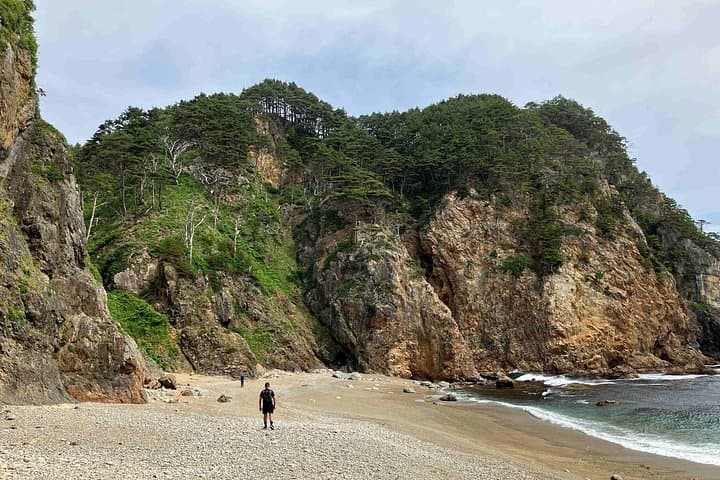
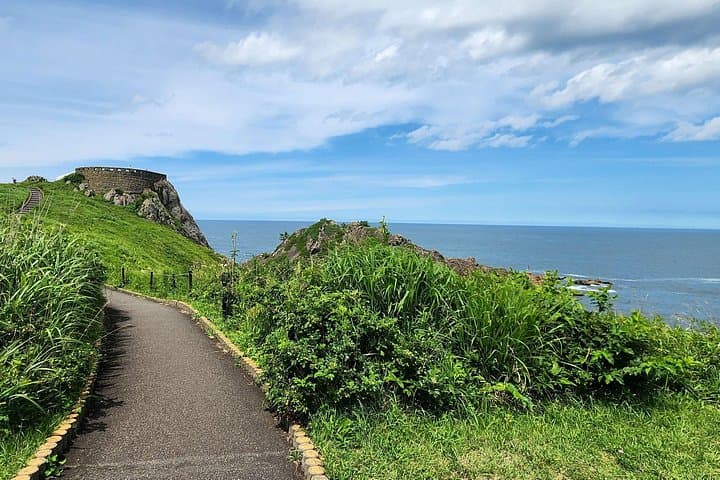
A wind-driven morning on the Kitayamazaki cliffs opens the trip—black volcanic faces dropping into foamy surf, gulls angling through spray as the trail narrows along coastal ledges. Hikers set off from Miyako Station and move north across headlands, small fishing ports and grassy seashores where the ocean insists on being noticed.
Verified experiences and guided adventures in the surrounding area.
Operated by H.I.S.Co., Ltd. · Miyako, Iwate
A wind-driven morning on the Kitayamazaki cliffs opens the trip—black volcanic faces dropping into foamy surf, gulls angling through spray as the trail narrows along coastal ledges. Hikers set off from Miyako Station and move north across headlands, small fishing ports and grassy seashores where the ocean insists on being noticed.
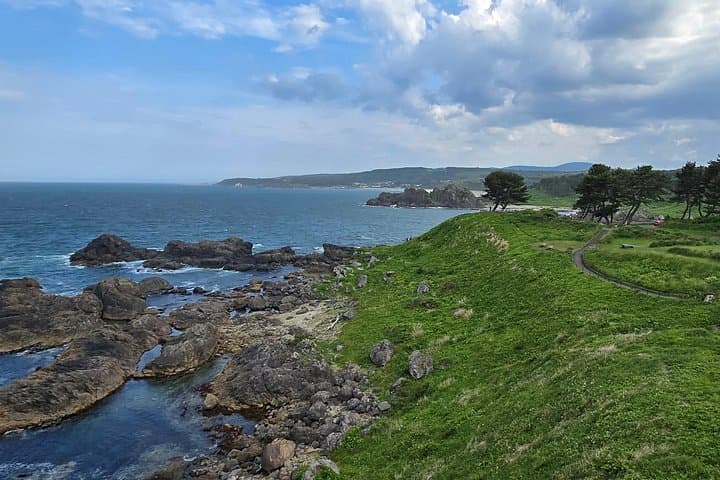
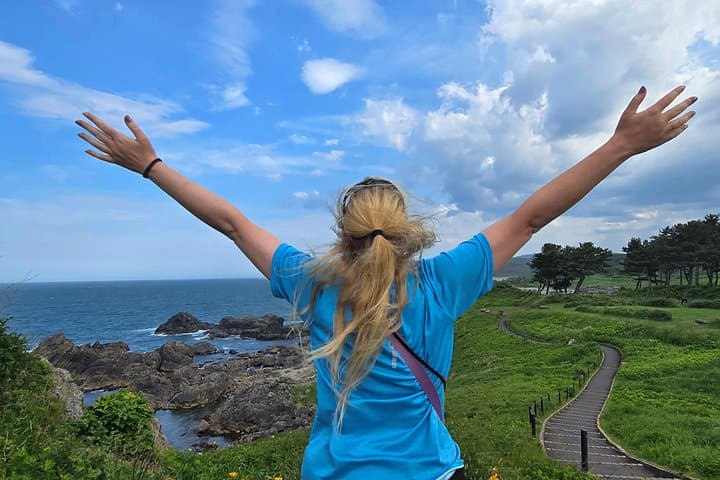
This three-day northern route threads through landscapes shaped by volcanic flows and sea erosion: columnar basalt at Kitayamazaki, pebble beaches at Samurai Beach, and the wide Tanesashi grassy coast used historically for seasonal grazing and local festivals. Cultural touches arrive as salt-making demonstrations, Itsukushima Shrine in Kuji and kaiseki dinners that make local seafood the day’s punctuation. The route traces parts of the Michinoku Coastal Trail, Japan’s long coastal route created after 2011 to reconnect communities to their shoreline.
Expect varied terrain: rocky cliff paths, short steep pitches, wooden steps and sandy stretches. Daily hiking segments average 3–5 hours (roughly 8–15 km per day) with modest cumulative elevation—most climbs are short but occasionally exposed. Accommodation alternates between twin-share hotel rooms and a retreat-style tent camp at Tanesashi Lawn.
Practical notes: start in Miyako, finish at Hachinohe Station; public transport links are available for arrival/departure. Weather changes quickly—bring waterproof layers, insect repellent and a daypack with water and snacks. Physical fitness and steady footing are required; a licensed guide accompanies the group and baggage/transport between trail endpoints is provided.
challenging.
3 days (approx. 12–14 hours hiking total).
Good aerobic endurance and experience with uneven coastal trails; able to hike 10–15 km and manage short ascents each day.
Travelers should have a high level of fitness—expect multiple days of 3–5 hour hiking segments over uneven coastal terrain with short climbs.
Yes—twin-share hotel rooms are provided for two nights and a retreat-style tent camp at Tanesashi Lawn for one night; bedding standards are roughly 2–3 star and some rooms may be Japanese-style.
Yes—notify the operator at booking so guides and accommodations can accommodate dietary restrictions during lunches, dinners and bento meals.
The tour begins at Miyako Station and finishes at Hachinohe Station with transport provided between the route endpoints; public transport is available for independent arrival/departure.
The northern Tohoku coast carries deep fishing traditions and was affected by the 2011 tsunami; the Michinoku Coastal Trail was developed to reconnect communities to the shore and support regional recovery.
Stick to marked trails to protect fragile coastal vegetation and nesting birds; local operators emphasize low-impact camping and encourage carrying out waste.
H.I.S.Co., Ltd. operates guided outdoor trips and adventures with an emphasis on safety, stewardship, and memorable experiences.
A wind-driven morning on the Kitayamazaki cliffs opens the trip—black volcanic faces dropping into foamy surf, gulls angling through spray as the trail narrows along coastal ledges. Hikers set off from Miyako Station and move north across headlands, small fishing ports and grassy seashores where the ocean insists on being noticed.
A wind-driven morning on the Kitayamazaki cliffs opens the trip—black volcanic faces dropping into foamy surf, gulls angling through spray as the trail narrows along coastal ledges. Hikers set off from Miyako Station and move north across headlands, small fishing ports and grassy seashores where the ocean insists on being noticed.
This three-day northern route threads through landscapes shaped by volcanic flows and sea erosion: columnar basalt at Kitayamazaki, pebble beaches at Samurai Beach, and the wide Tanesashi grassy coast used historically for seasonal grazing and local festivals. Cultural touches arrive as salt-making demonstrations, Itsukushima Shrine in Kuji and kaiseki dinners that make local seafood the day’s punctuation. The route traces parts of the Michinoku Coastal Trail, Japan’s long coastal route created after 2011 to reconnect communities to their shoreline.
Expect varied terrain: rocky cliff paths, short steep pitches, wooden steps and sandy stretches. Daily hiking segments average 3–5 hours (roughly 8–15 km per day) with modest cumulative elevation—most climbs are short but occasionally exposed. Accommodation alternates between twin-share hotel rooms and a retreat-style tent camp at Tanesashi Lawn.
Practical notes: start in Miyako, finish at Hachinohe Station; public transport links are available for arrival/departure. Weather changes quickly—bring waterproof layers, insect repellent and a daypack with water and snacks. Physical fitness and steady footing are required; a licensed guide accompanies the group and baggage/transport between trail endpoints is provided.