THE ADVENTURE COLLECTIVE® · Independent discovery and booking for outdoor travel

Lift off at dawn and watch Teotihuacan’s pyramids glow from a hot-air balloon, then land for a cave breakfast and traditional toast. This half-day experience pairs a 30–45 minute flight with local history and a visit to the archaeological zone.
Lift off at dawn and watch Teotihuacan’s pyramids glow from a hot-air balloon, then land for a cave breakfast and traditional toast. This half-day experience pairs a 30–45 minute flight with local history and a visit to the archaeological zone.
Before the sun clears the eastern horizon you stand on a field as crews inflate a giant, patterned envelope. The morning air tastes of dust and coffee; the burner’s roar is sudden and intimate. As the balloon lifts, the flat expanse of the Basin of Mexico opens beneath you — checkerboard fields, low volcanic cones and, unmistakably, the long spine of Teotihuacan’s Avenue of the Dead with the Pyramids of the Sun and Moon catching first light.
Verified experiences and guided adventures in the surrounding area.
Operated by Alas en globo al amanecer · San Martín de las Pirámides, Estado de México
Before the sun clears the eastern horizon you stand on a field as crews inflate a giant, patterned envelope. The morning air tastes of dust and coffee; the burner’s roar is sudden and intimate. As the balloon lifts, the flat expanse of the Basin of Mexico opens beneath you — checkerboard fields, low volcanic cones and, unmistakably, the long spine of Teotihuacan’s Avenue of the Dead with the Pyramids of the Sun and Moon catching first light.
Teotihuacan was a major urban center in pre-Columbian Mesoamerica, its pyramids built between roughly 100–700 CE. Geologically, the valley is a high plateau ringed by extinct volcanos; the volcanic soils shaped agriculture and the dramatic relief visible from the air.
Local culture arrives in small ways during the tour: a bilingual host who shares myths about the city, a traditional toast after landing, and a cave breakfast that highlights regional flavors. Operators follow strict safety protocols and usually include entrance to the archaeological zone so the aerial view connects directly to the ruins on the ground.
Practical details: expect a 6–8 hour outing with roughly 30–45 minutes aloft. Dress in layers—mornings are cold and warm quickly—and bring a stable camera. Weight limits and health restrictions apply; children often ride on laps. Flights depend on weather and can be rescheduled for safety. Plan transportation time from Mexico City if you’re staying there, and budget extra time at the archaeological site if you want to climb the pyramids after the flight.
easy.
6–8 hours.
Suitable for most visitors; should be able to stand and step into a basket and walk on uneven ground briefly.
The airborne portion typically lasts 30–45 minutes; the full outing including transit, briefing, and post-flight activities takes about 6–8 hours.
Operators ask for passenger weights and have limits for balance and safety; infants may need to sit on a lap and pregnant travelers are not recommended to fly.
Flights are weather-dependent—if winds or visibility make flying unsafe the operator will reschedule or offer a refund according to their policy (full refund if cancelled 24+ hours prior).
Most bookings include air-conditioned transfer from central pickup points in Mexico City; confirm exact pickup location and time at booking.
Teotihuacan was one of the largest cities of pre-Columbian America, famous for its monumental pyramids and urban grid built between roughly 100–700 CE.
The archaeological zone is protected; visitors should follow paths, avoid climbing closed structures, and operators emphasize low-impact landings and waste removal.
Alas en globo al amanecer operates guided outdoor trips and adventures with an emphasis on safety, stewardship, and memorable experiences.
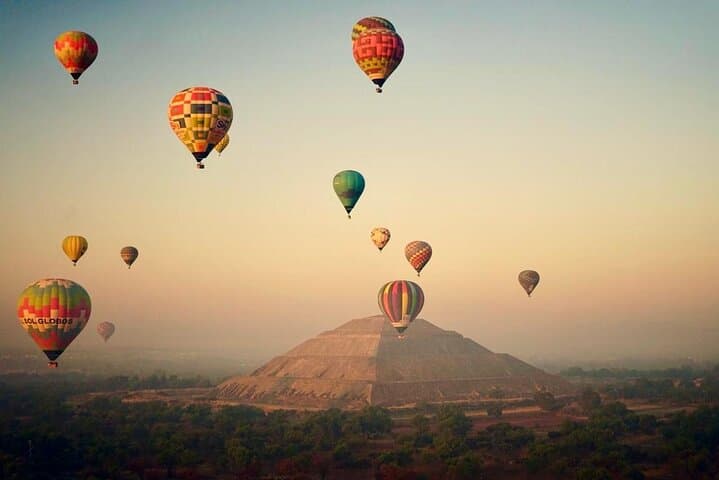
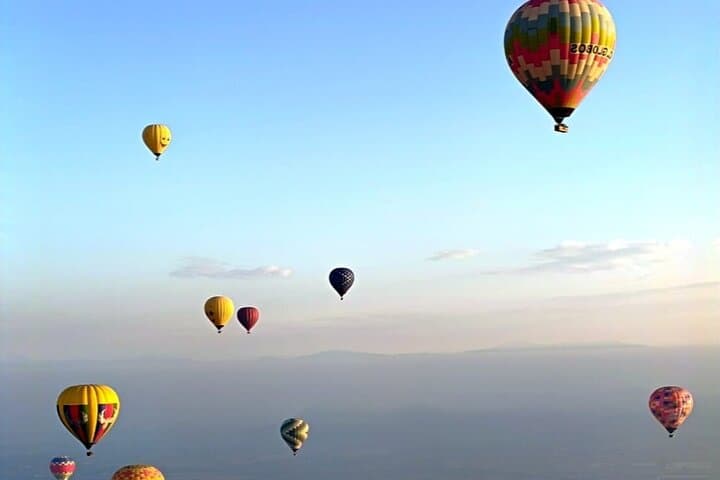
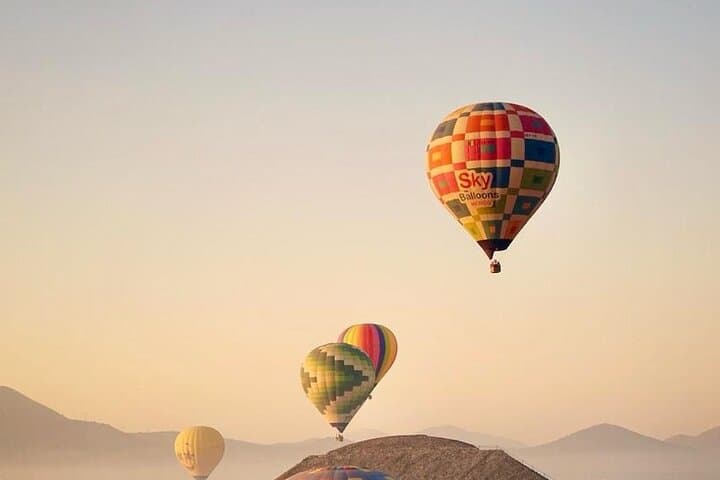
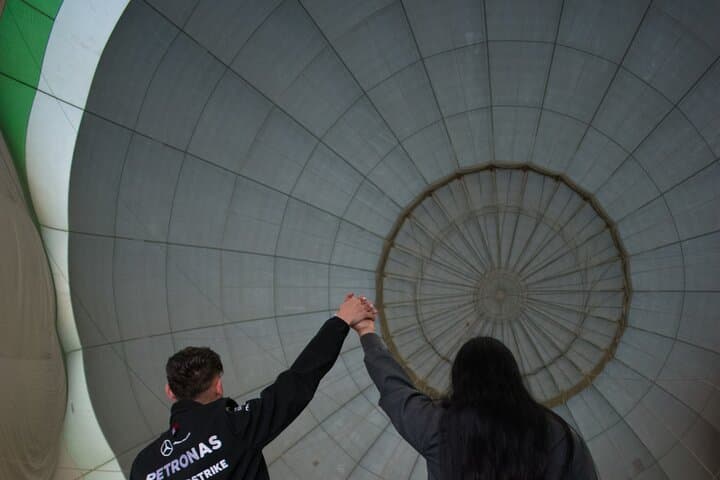
Before the sun clears the eastern horizon you stand on a field as crews inflate a giant, patterned envelope. The morning air tastes of dust and coffee; the burner’s roar is sudden and intimate. As the balloon lifts, the flat expanse of the Basin of Mexico opens beneath you — checkerboard fields, low volcanic cones and, unmistakably, the long spine of Teotihuacan’s Avenue of the Dead with the Pyramids of the Sun and Moon catching first light.
Before the sun clears the eastern horizon you stand on a field as crews inflate a giant, patterned envelope. The morning air tastes of dust and coffee; the burner’s roar is sudden and intimate. As the balloon lifts, the flat expanse of the Basin of Mexico opens beneath you — checkerboard fields, low volcanic cones and, unmistakably, the long spine of Teotihuacan’s Avenue of the Dead with the Pyramids of the Sun and Moon catching first light.
Teotihuacan was a major urban center in pre-Columbian Mesoamerica, its pyramids built between roughly 100–700 CE. Geologically, the valley is a high plateau ringed by extinct volcanos; the volcanic soils shaped agriculture and the dramatic relief visible from the air.
Local culture arrives in small ways during the tour: a bilingual host who shares myths about the city, a traditional toast after landing, and a cave breakfast that highlights regional flavors. Operators follow strict safety protocols and usually include entrance to the archaeological zone so the aerial view connects directly to the ruins on the ground.
Practical details: expect a 6–8 hour outing with roughly 30–45 minutes aloft. Dress in layers—mornings are cold and warm quickly—and bring a stable camera. Weight limits and health restrictions apply; children often ride on laps. Flights depend on weather and can be rescheduled for safety. Plan transportation time from Mexico City if you’re staying there, and budget extra time at the archaeological site if you want to climb the pyramids after the flight.