THE ADVENTURE COLLECTIVE® · Independent discovery and booking for outdoor travel

Board an early train from Athens and arrive in Kalambaka to explore Meteora’s dramatic rock pillars and centuries-old monasteries. This two-day rail tour combines sunset viewpoints, guided monastery visits, and an overnight in town for relaxed exploration.
Board an early train from Athens and arrive in Kalambaka to explore Meteora’s dramatic rock pillars and centuries-old monasteries. This two-day rail tour combines sunset viewpoints, guided monastery visits, and an overnight in town for relaxed exploration.
The day begins on a platform at Athens’ Larissa station as dawn light lifts the city and the 7:20 train slips into the Greek countryside. Carriages thread through olive groves and folded plains; by late morning the skyline changes—massive grey pillars rise, as if the earth itself decided to stack cliffs into towers. Kalambaka sits at their base, a compact town that serves as the gateway to Meteora’s monasteries.
Verified experiences and guided adventures in the surrounding area.
Operated by Let's Book Travel · Kalambaka, Thessaly
The day begins on a platform at Athens’ Larissa station as dawn light lifts the city and the 7:20 train slips into the Greek countryside. Carriages thread through olive groves and folded plains; by late morning the skyline changes—massive grey pillars rise, as if the earth itself decided to stack cliffs into towers. Kalambaka sits at their base, a compact town that serves as the gateway to Meteora’s monasteries.
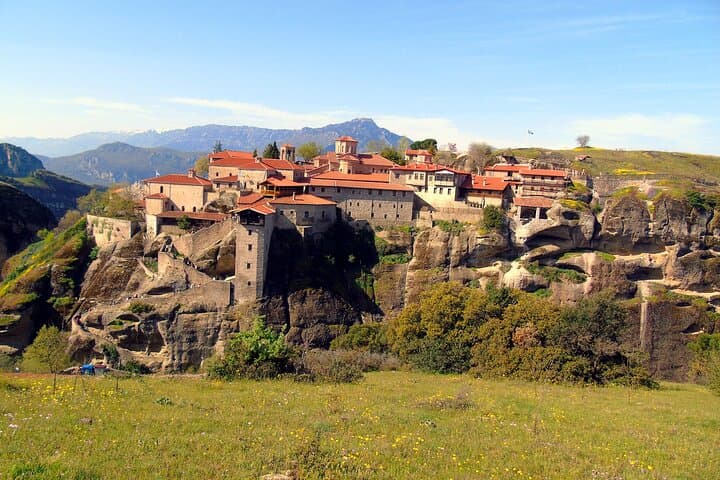
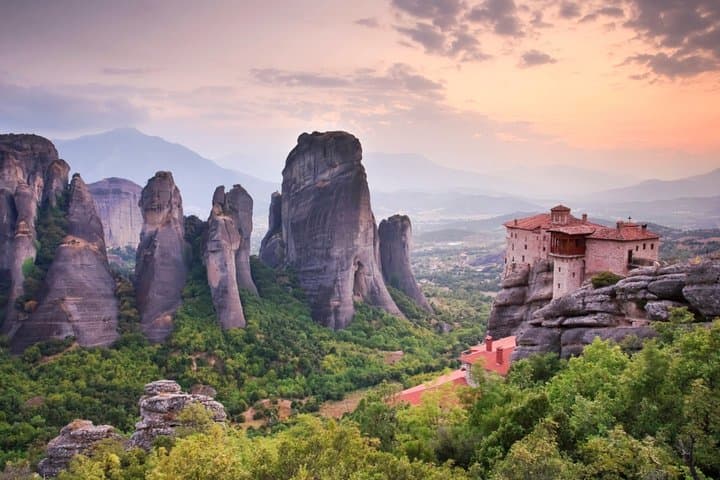
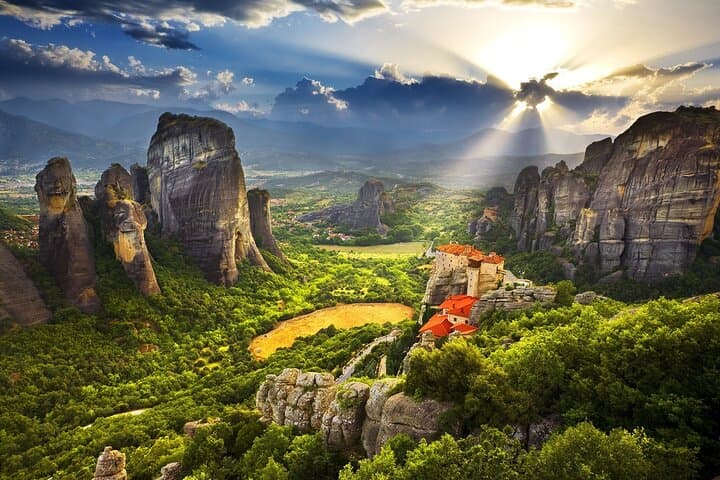
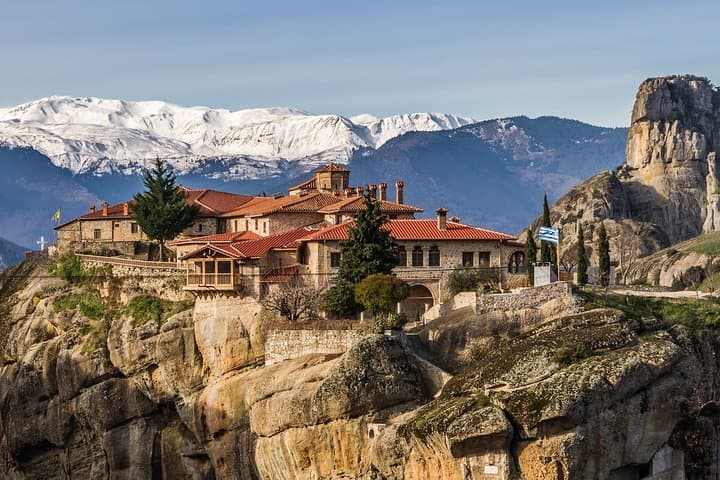
Geologically, Meteora is a playground of sandstone and conglomerate carved by water and wind over millions of years. The monks arrived in the medieval era, hauling materials and steps into improbable positions to build their hermitages; several monasteries remain active and UNESCO-listed, their frescoed interiors and steep access routes very much a part of the visit’s character.
Culturally the place feels lived-in: shepherds still guide flocks across lower terraces, local tavernas serve robust mountain food, and guides share oral histories of ascetic life. Expect short walks between viewpoints—1–4 km per stop—with cumulative elevation gains up to 200 m on uneven stone steps and paved switchbacks. Trails can be dusty, shaded in places, and dramatic at sunset when the rocks redden and the wind seems to push you closer to the ledges.
Practical notes: this is a two-day itinerary with hotel in Kalambaka, transfer logistics included, and a small-group sunset tour plus morning monastery visits. Bring sturdy shoes, layers, sun protection, and modest clothing for religious sites. Trains run to schedule—confirm times—and allow a half day for relaxed exploration or photography. The tour balances easy travel with moderate walking and expansive views.
moderate.
2 days.
Participants should be comfortable with several short hikes, climbing stairs, and up to a few hundred metres of cumulative elevation gain over the day.
Admission to active monasteries is typically not included and is paid on-site; fees are small but vary by monastery.
Expect 1–4 km of walking between viewpoints and monastery entries each half-day, with stair climbs up to a few hundred metres cumulative.
The Larissa–Kalambaka train is a regional service; seats are basic but the route is scenic—book tickets early for preferred seats.
Some viewpoints and monastery access include steep steps and uneven paths; travelers with restricted mobility should check specific site access and inform the operator in advance.
Hermits occupied Meteora’s cliffs from around the 14th century; several monasteries were constructed by hauling supplies up ropes and ladders, creating the unique monastic cluster seen today.
Meteora is protected under UNESCO and Greek regulations; stick to marked trails, avoid climbing unapproved routes, and respect restricted areas to reduce erosion and disturbance.
Let's Book Travel operates guided outdoor trips and adventures with an emphasis on safety, stewardship, and memorable experiences.
The day begins on a platform at Athens’ Larissa station as dawn light lifts the city and the 7:20 train slips into the Greek countryside. Carriages thread through olive groves and folded plains; by late morning the skyline changes—massive grey pillars rise, as if the earth itself decided to stack cliffs into towers. Kalambaka sits at their base, a compact town that serves as the gateway to Meteora’s monasteries.
The day begins on a platform at Athens’ Larissa station as dawn light lifts the city and the 7:20 train slips into the Greek countryside. Carriages thread through olive groves and folded plains; by late morning the skyline changes—massive grey pillars rise, as if the earth itself decided to stack cliffs into towers. Kalambaka sits at their base, a compact town that serves as the gateway to Meteora’s monasteries.
Geologically, Meteora is a playground of sandstone and conglomerate carved by water and wind over millions of years. The monks arrived in the medieval era, hauling materials and steps into improbable positions to build their hermitages; several monasteries remain active and UNESCO-listed, their frescoed interiors and steep access routes very much a part of the visit’s character.
Culturally the place feels lived-in: shepherds still guide flocks across lower terraces, local tavernas serve robust mountain food, and guides share oral histories of ascetic life. Expect short walks between viewpoints—1–4 km per stop—with cumulative elevation gains up to 200 m on uneven stone steps and paved switchbacks. Trails can be dusty, shaded in places, and dramatic at sunset when the rocks redden and the wind seems to push you closer to the ledges.
Practical notes: this is a two-day itinerary with hotel in Kalambaka, transfer logistics included, and a small-group sunset tour plus morning monastery visits. Bring sturdy shoes, layers, sun protection, and modest clothing for religious sites. Trains run to schedule—confirm times—and allow a half day for relaxed exploration or photography. The tour balances easy travel with moderate walking and expansive views.