THE ADVENTURE COLLECTIVE® · Independent discovery and booking for outdoor travel

A private full‑day from Athens that pairs the narrow pass of Thermopylae with the vertiginous monasteries of Meteora. Expect long drives, short steep climbs and unparalleled cliff‑top views.
A private full‑day from Athens that pairs the narrow pass of Thermopylae with the vertiginous monasteries of Meteora. Expect long drives, short steep climbs and unparalleled cliff‑top views.
You step out of the air‑conditioned vehicle onto cracked limestone at the foot of vertical columns that climb like stone towers into the blue; wind pushes through the valley and the monasteries above seem to hang between sky and rock. The guide opens a map, and the day stretches: a 30‑minute stop at Thermopylae, then hours among Meteora’s cliffs and cloistered courtyards.
Verified experiences and guided adventures in the surrounding area.
Operated by Best Tours In Greece · Kalambaka, Thessaly
You step out of the air‑conditioned vehicle onto cracked limestone at the foot of vertical columns that climb like stone towers into the blue; wind pushes through the valley and the monasteries above seem to hang between sky and rock. The guide opens a map, and the day stretches: a 30‑minute stop at Thermopylae, then hours among Meteora’s cliffs and cloistered courtyards.
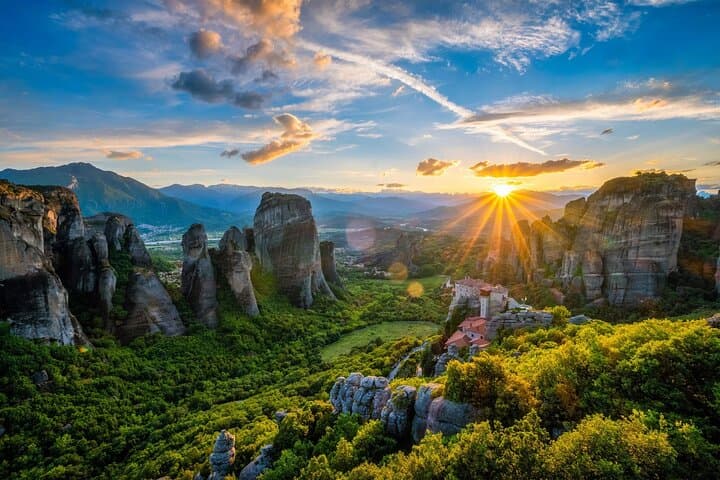
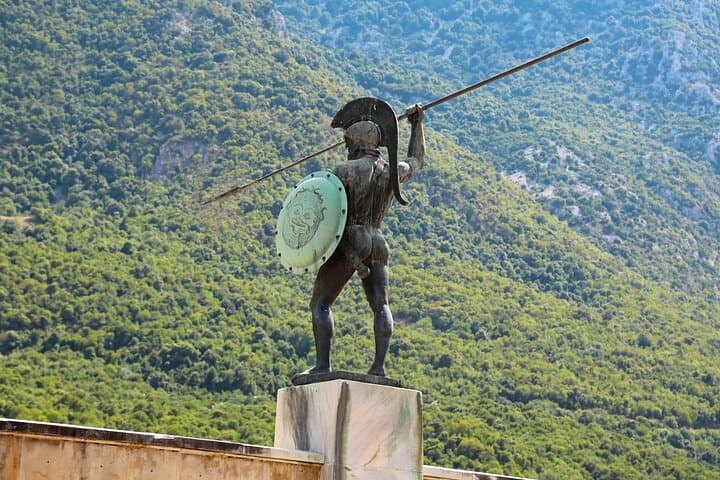
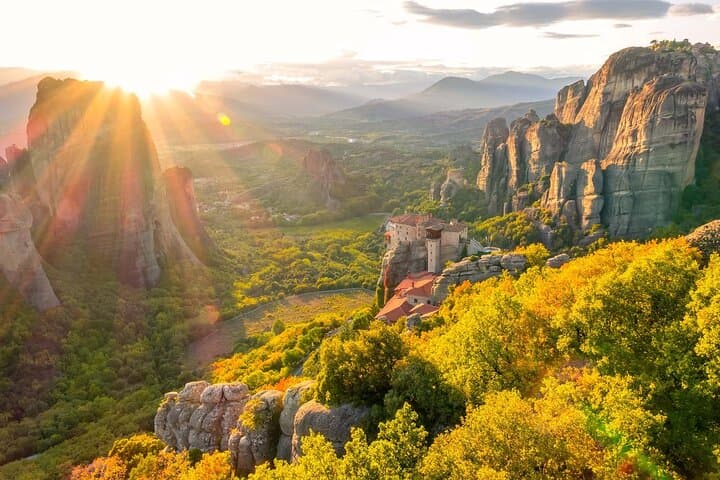
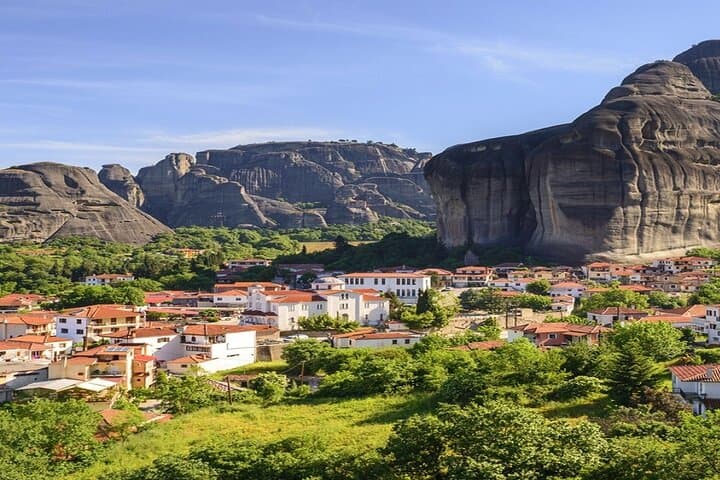
Geology here is blunt: sandstone and conglomerate sculpted over millions of years into 300–400m pillars. History is sharper—Thermopylae recalls a 480 BC stand where a small Greek force slowed a vast invading army, while Meteora preserves Byzantine monastic life that moved to the rocks for solitude and defense from the 14th century onward. The local villages—Kastraki and Kalambaka—offer straightforward tavernas and regional hospitality.
Practically, expect 10–12 hours total including travel; sightseeing at the monasteries is roughly 4½ hours split between a few 45–60 minute visits, with short but steep stair climbs at sites like Varlaam and Roussanou. Wear sturdy shoes, bring sun protection and modest clothing for monastery entry. Carry water and a small daypack; mobility limitations may restrict access to some upper terraces. Photography is allowed in many exterior spaces but follow signs inside chapels and respect quiet zones.
Timing matters: arrive mid‑morning at Meteora for softer light and cooler climbs. If traveling from Athens, plan for about 4–5 hours of driving each way; if staying in Kalambaka you’ll have more flexibility to explore quieter trails and viewpoints after the main visits.
easy.
10–12 hours.
Minimal overall fitness required, but be prepared for repeated short stair climbs and uneven surfaces at monastery sites
Most private tours depart from Athens with pickup arranged by the operator; itinerary returns to the original pickup point after 10–12 hours.
Admissions are typically paid on site; this tour includes sightseeing time but not formal monastery entrance fees unless specified.
Yes—this tour is rated suitable for all fitness levels, but visitors should be able to manage stairs and short uphill walks; infant seats are available for vehicles.
Exterior photography is generally allowed; interior photography is restricted in many chapels—look for posted signs and follow staff instructions.
Meteora’s monasteries were established by ascetic monks from the 14th century seeking isolation; Thermopylae is famed for the 480 BC stand where Greek forces delayed a Persian advance.
Meteora is a protected area—stay on marked paths, avoid littering, and respect restricted zones to help preserve fragile rock and cultural heritage.
Best Tours In Greece operates guided outdoor trips and adventures with an emphasis on safety, stewardship, and memorable experiences.
You step out of the air‑conditioned vehicle onto cracked limestone at the foot of vertical columns that climb like stone towers into the blue; wind pushes through the valley and the monasteries above seem to hang between sky and rock. The guide opens a map, and the day stretches: a 30‑minute stop at Thermopylae, then hours among Meteora’s cliffs and cloistered courtyards.
You step out of the air‑conditioned vehicle onto cracked limestone at the foot of vertical columns that climb like stone towers into the blue; wind pushes through the valley and the monasteries above seem to hang between sky and rock. The guide opens a map, and the day stretches: a 30‑minute stop at Thermopylae, then hours among Meteora’s cliffs and cloistered courtyards.
Geology here is blunt: sandstone and conglomerate sculpted over millions of years into 300–400m pillars. History is sharper—Thermopylae recalls a 480 BC stand where a small Greek force slowed a vast invading army, while Meteora preserves Byzantine monastic life that moved to the rocks for solitude and defense from the 14th century onward. The local villages—Kastraki and Kalambaka—offer straightforward tavernas and regional hospitality.
Practically, expect 10–12 hours total including travel; sightseeing at the monasteries is roughly 4½ hours split between a few 45–60 minute visits, with short but steep stair climbs at sites like Varlaam and Roussanou. Wear sturdy shoes, bring sun protection and modest clothing for monastery entry. Carry water and a small daypack; mobility limitations may restrict access to some upper terraces. Photography is allowed in many exterior spaces but follow signs inside chapels and respect quiet zones.
Timing matters: arrive mid‑morning at Meteora for softer light and cooler climbs. If traveling from Athens, plan for about 4–5 hours of driving each way; if staying in Kalambaka you’ll have more flexibility to explore quieter trails and viewpoints after the main visits.