THE ADVENTURE COLLECTIVE® · Independent discovery and booking for outdoor travel

Ride a horse along Meteora’s cliff-edge trails as the rock pinnacles and monasteries burn orange at sunset. This 90-minute small-group tour combines gentle trail riding with a panoramic sunset stop—ideal for photographers and first-time riders.
Ride a horse along Meteora’s cliff-edge trails as the rock pinnacles and monasteries burn orange at sunset. This 90-minute small-group tour combines gentle trail riding with a panoramic sunset stop—ideal for photographers and first-time riders.
A western wind pushes through the pines as your horse pads close to the cliff edge. Below, the plain around Kalambaka spreads out in soft shadow while the tall, honey-colored pinnacles of Meteora drink the last light. For 90 minutes you move along dirt tracks and scrubby ridgelines, slowing at a high vantage where the sky and the monasteries both seem to tilt toward the same orange horizon.
Verified experiences and guided adventures in the surrounding area.
Operated by Meteora horse riding · Kalambaka, Thessaly
A western wind pushes through the pines as your horse pads close to the cliff edge. Below, the plain around Kalambaka spreads out in soft shadow while the tall, honey-colored pinnacles of Meteora drink the last light. For 90 minutes you move along dirt tracks and scrubby ridgelines, slowing at a high vantage where the sky and the monasteries both seem to tilt toward the same orange horizon.
Geology here reads like a slow-motion drama: conglomerate sandstone formed in the Miocene was carved by water and frost into the steep pillars that made Meteora a refuge for monks from the 14th century. The monasteries—UNESCO-listed—peek from ledges and cliff hollows, and local shepherding traditions still thread the valleys. Riders often feel small and deliberate in an environment shaped by deep time and human persistence.
The guided loop is short but intentional: small groups (max three) keep the pace calm, and a 30-minute stop gives time for photos and quiet watching as the light falls. Trails are mostly gentle; expect packed dirt, some loose stones, and a few narrow sections where attention and a steady mount matter. Helmets are provided; the operator screens for weight and health restrictions and advises against participation for pregnant travelers or those with spinal injuries.
Practical notes: arrive 30–45 minutes before sunset, wear long pants and closed-toe shoes, and layer for cooling temperatures after sundown. Bring water, a light headlamp for the return, and a charged camera—Meteora turns cinematic quickly.
easy.
1–1.5 hours.
Suitable for people in basic physical shape who can mount/dismount and sit for short periods; not strenuous.
The full experience is about 90 minutes with roughly a 30-minute panoramic stop for photos and viewing the sunset.
Yes—helmets are provided and the horses are saddled and handled by guides; bring your own helmet only if you prefer it.
Riders of basic ability are welcome; the tour is rated easy, but operators screen for safety and have weight/age considerations—confirm when booking.
The operator cancels in unsafe weather for a full refund if you cancel at least 24 hours in advance; rides may be rescheduled or refunded if conditions are poor.
Meteora’s monasteries were established by ascetics in the 14th century on towering sandstone pillars, chosen for isolation and defense.
Foot traffic is managed around fragile rock ledges and monastery access; stay on marked trails and avoid leaving waste to protect local flora and archaeological sites.
Meteora horse riding operates guided outdoor trips and adventures with an emphasis on safety, stewardship, and memorable experiences.
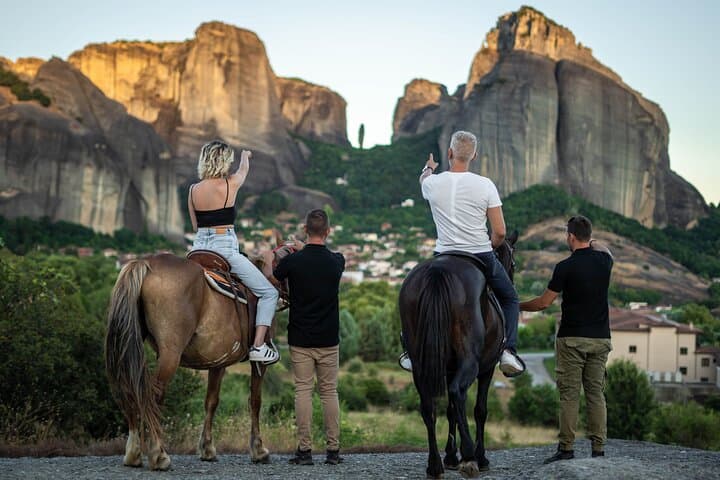
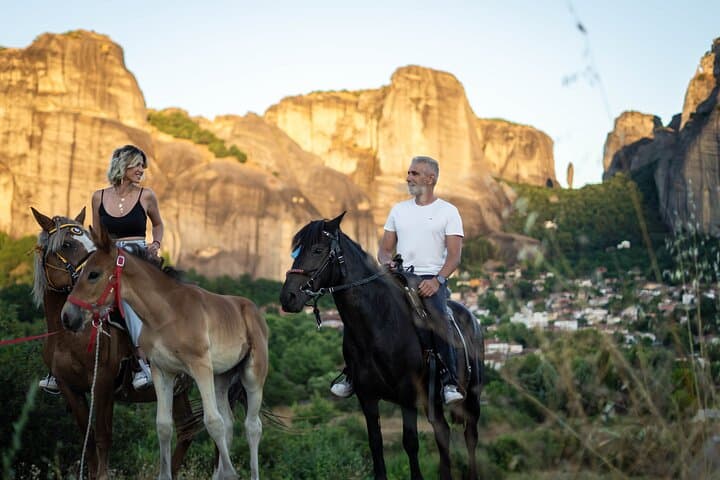
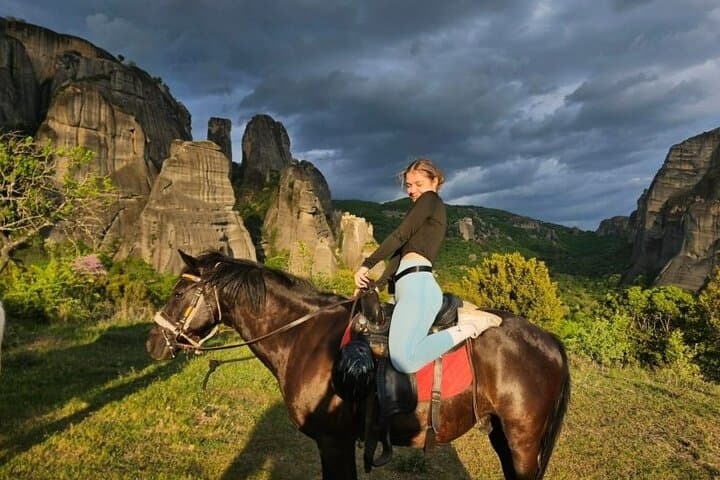
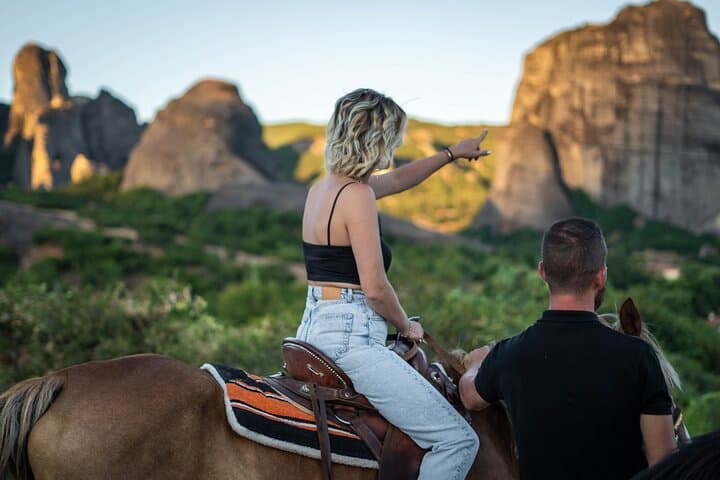
A western wind pushes through the pines as your horse pads close to the cliff edge. Below, the plain around Kalambaka spreads out in soft shadow while the tall, honey-colored pinnacles of Meteora drink the last light. For 90 minutes you move along dirt tracks and scrubby ridgelines, slowing at a high vantage where the sky and the monasteries both seem to tilt toward the same orange horizon.
A western wind pushes through the pines as your horse pads close to the cliff edge. Below, the plain around Kalambaka spreads out in soft shadow while the tall, honey-colored pinnacles of Meteora drink the last light. For 90 minutes you move along dirt tracks and scrubby ridgelines, slowing at a high vantage where the sky and the monasteries both seem to tilt toward the same orange horizon.
Geology here reads like a slow-motion drama: conglomerate sandstone formed in the Miocene was carved by water and frost into the steep pillars that made Meteora a refuge for monks from the 14th century. The monasteries—UNESCO-listed—peek from ledges and cliff hollows, and local shepherding traditions still thread the valleys. Riders often feel small and deliberate in an environment shaped by deep time and human persistence.
The guided loop is short but intentional: small groups (max three) keep the pace calm, and a 30-minute stop gives time for photos and quiet watching as the light falls. Trails are mostly gentle; expect packed dirt, some loose stones, and a few narrow sections where attention and a steady mount matter. Helmets are provided; the operator screens for weight and health restrictions and advises against participation for pregnant travelers or those with spinal injuries.
Practical notes: arrive 30–45 minutes before sunset, wear long pants and closed-toe shoes, and layer for cooling temperatures after sundown. Bring water, a light headlamp for the return, and a charged camera—Meteora turns cinematic quickly.