THE ADVENTURE COLLECTIVE® · Independent discovery and booking for outdoor travel

Experience Meteora beyond postcards: a private day that pairs up-close monastery visits with a prime sunset overlook. This guided tour blends geology, Byzantine history, and practical local tips for a seamless, memorable day.
Experience Meteora beyond postcards: a private day that pairs up-close monastery visits with a prime sunset overlook. This guided tour blends geology, Byzantine history, and practical local tips for a seamless, memorable day.
You arrive at the rim of the Thessalian plain as afternoon light washes the sandstone towers in warm gold. Wind moves along the narrow road, carrying the distant clack of wooden shutters and the faint bell toll from a monastery high above. The air feels thin and ancient; the cliffs look less like stone than the pages of a long-lived book.
Verified experiences and guided adventures in the surrounding area.
Operated by The Greek Taxi · Kalambaka, Thessaly
You arrive at the rim of the Thessalian plain as afternoon light washes the sandstone towers in warm gold. Wind moves along the narrow road, carrying the distant clack of wooden shutters and the faint bell toll from a monastery high above. The air feels thin and ancient; the cliffs look less like stone than the pages of a long-lived book.
Meteora’s monasteries began rising in the 14th century when ascetics clung to the rock pillars to escape raids and worldly control. Geologically, the stacks are conglomerate sandstone—river deposits stitched and sculpted over millions of years by water and wind—now punctuated by monasteries that appear to spring from the stone itself.
Culturally, Meteora remains a living religious landscape. Active monastic communities preserve Byzantine frescoes and centuries-old liturgical practice; visitors should expect modest dress and quiet, reverent spaces. Nearby towns—Kastraki’s cobbled lanes and Kalambaka’s tavernas—offer a counterpoint of everyday life and simple, regional cuisine.
Practically: this private scenic tour is a long day (12–14 hours) that balances guided access with photography stops and a sunset overlook. Expect walking on stone steps and terraces; entrances and licensed guides are typically included, but interiors forbid flash photography. Bring water, layered clothing for the temperature drop at sunset, sturdy shoes for uneven steps, and patience for narrow viewing areas.
Timing matters—arrive at viewpoints before golden hour for the best light, and respect closures when monasteries limit visitor numbers. The payoff is memorable: rock, ritual, and sky aligning as the sun slides below Meteora’s dramatic skyline.
easy.
12–14 hours.
Suitable for most fitness levels but requires stamina for a long day and mobility for stairs and uneven paths
Many private tours include standard entrance fees and a licensed guide inside the monasteries—confirm at booking as policies can vary.
Yes; knees and shoulders must be covered for both men and women. Guides often have wraps but bringing your own speeds entry.
Yes—roads and parking are available at main stops, and this tour uses an air-conditioned vehicle to shuttle between sites and the sunset overlook.
The tour is family-friendly but monastery interiors involve steep steps and uneven surfaces; those with limited mobility may not be able to access all areas.
Monastic life at Meteora expanded in the 14th–16th centuries as monks sought refuge from political turmoil; the site is a UNESCO World Heritage Site for its cultural and natural values.
Visitor pressure and natural erosion are managed through restricted access at certain monasteries and marked paths—stay on trails and follow local guidance to protect the rock and frescoes.
The Greek Taxi operates guided outdoor trips and adventures with an emphasis on safety, stewardship, and memorable experiences.
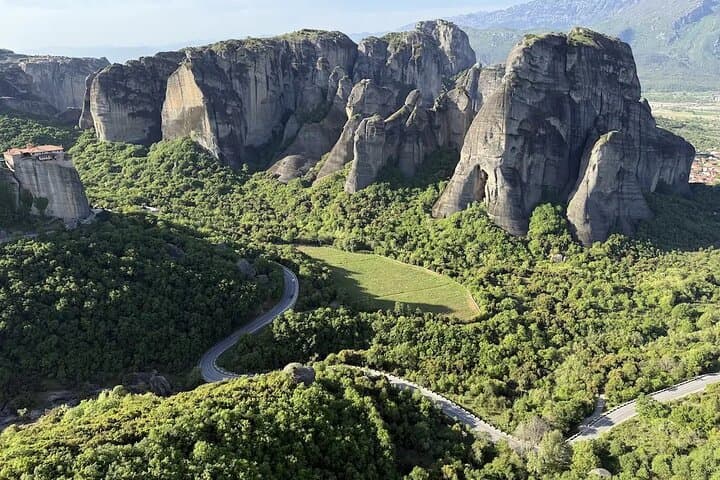
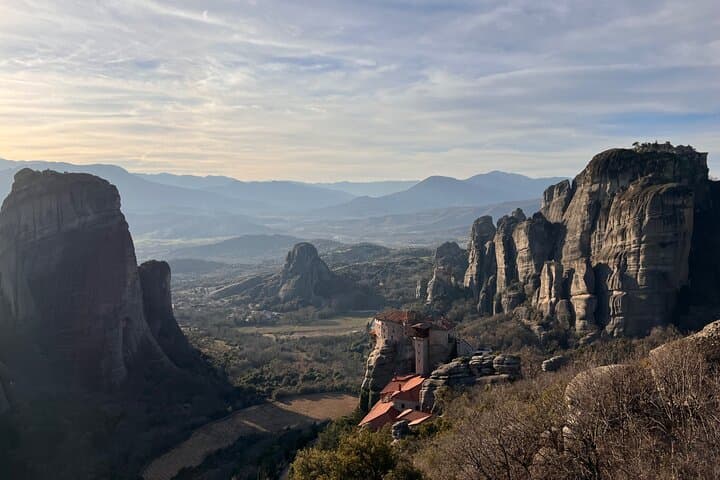
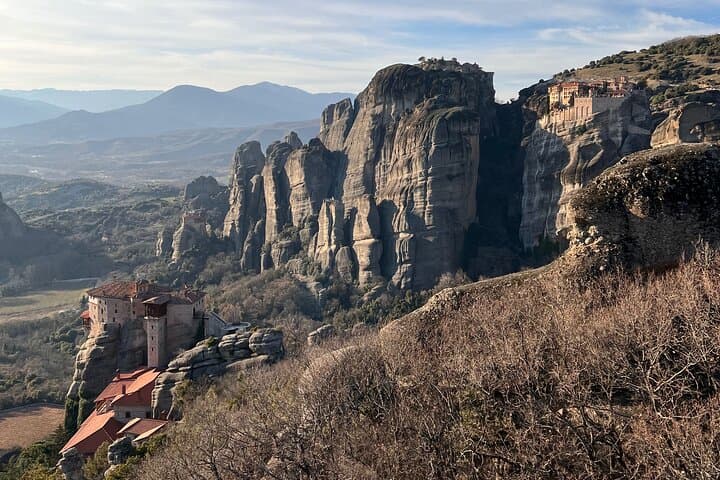
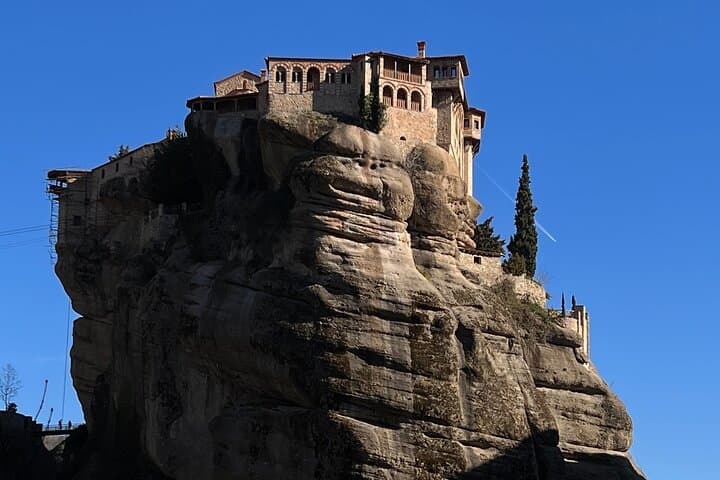
You arrive at the rim of the Thessalian plain as afternoon light washes the sandstone towers in warm gold. Wind moves along the narrow road, carrying the distant clack of wooden shutters and the faint bell toll from a monastery high above. The air feels thin and ancient; the cliffs look less like stone than the pages of a long-lived book.
You arrive at the rim of the Thessalian plain as afternoon light washes the sandstone towers in warm gold. Wind moves along the narrow road, carrying the distant clack of wooden shutters and the faint bell toll from a monastery high above. The air feels thin and ancient; the cliffs look less like stone than the pages of a long-lived book.
Meteora’s monasteries began rising in the 14th century when ascetics clung to the rock pillars to escape raids and worldly control. Geologically, the stacks are conglomerate sandstone—river deposits stitched and sculpted over millions of years by water and wind—now punctuated by monasteries that appear to spring from the stone itself.
Culturally, Meteora remains a living religious landscape. Active monastic communities preserve Byzantine frescoes and centuries-old liturgical practice; visitors should expect modest dress and quiet, reverent spaces. Nearby towns—Kastraki’s cobbled lanes and Kalambaka’s tavernas—offer a counterpoint of everyday life and simple, regional cuisine.
Practically: this private scenic tour is a long day (12–14 hours) that balances guided access with photography stops and a sunset overlook. Expect walking on stone steps and terraces; entrances and licensed guides are typically included, but interiors forbid flash photography. Bring water, layered clothing for the temperature drop at sunset, sturdy shoes for uneven steps, and patience for narrow viewing areas.
Timing matters—arrive at viewpoints before golden hour for the best light, and respect closures when monasteries limit visitor numbers. The payoff is memorable: rock, ritual, and sky aligning as the sun slides below Meteora’s dramatic skyline.