THE ADVENTURE COLLECTIVE® · Independent discovery and booking for outdoor travel

Walk between ancient sandstone pillars and centuries-old monasteries on a full-day tour of Meteora. Expect short climbs, strict dress codes at religious sites, and unforgettable viewpoints above the Thessalian plain.
Walk between ancient sandstone pillars and centuries-old monasteries on a full-day tour of Meteora. Expect short climbs, strict dress codes at religious sites, and unforgettable viewpoints above the Thessalian plain.
A late-afternoon sun slices across towering pillars of dark sandstone as you step from the shuttle onto a narrow overlook; a cool wind seems to push you closer to the cliff edge. The rock columns of Meteora rise like island towers out of the Thessalian plain, and walking here means threading through geological time—rounded columns sculpted by riverine abrasion and ancient sea beds.
Verified experiences and guided adventures in the surrounding area.
Operated by Greece Athens Taxi GAT · Kalambaka, Thessaly
A late-afternoon sun slices across towering pillars of dark sandstone as you step from the shuttle onto a narrow overlook; a cool wind seems to push you closer to the cliff edge. The rock columns of Meteora rise like island towers out of the Thessalian plain, and walking here means threading through geological time—rounded columns sculpted by riverine abrasion and ancient sea beds.
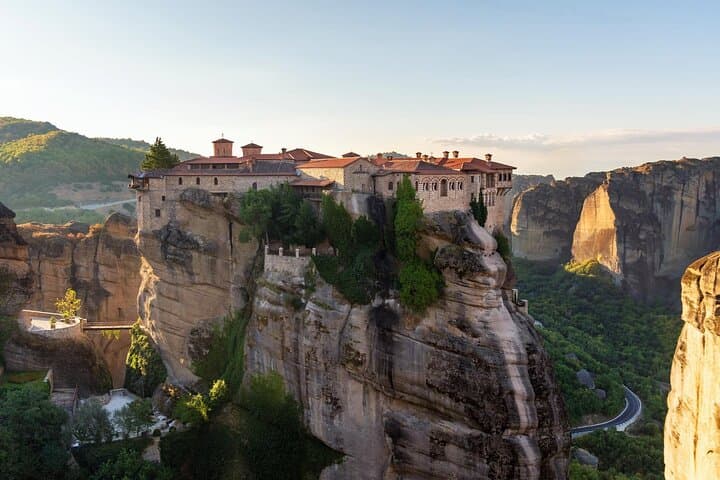
Monastic life arrived centuries ago. From the 11th to the 14th century, hermits and monks built precarious retreats on the summits, carving stairways and community cells into the stone. Great Meteoron and Varlaam still wear frescoed walls and carved thresholds that speak to Byzantine craft and a relentless will to withdraw from the world.
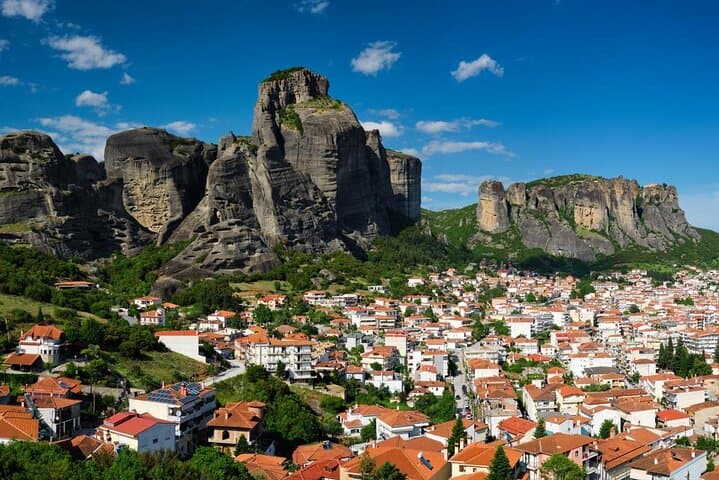
Culturally, Meteora sits between Kalambaka and Kastraki: Kalambaka supplies tavernas and history, Kastraki offers narrow lanes and quieter viewpoints. The site is UNESCO protected; visitation follows strict dress and entry rules to preserve both art and stone.
Practically, expect paved viewpoints, short stair climbs into monasteries, and narrow walking paths between overlooks. Wear grippy shoes; bring sun protection and a reusable water bottle. Monasteries close on different days—check openings before you go—and mornings or late afternoons thin the crowds and sharpen the light for photography.
This is a full-day rhythm: moving from viewpoint to monastery, pausing for local food in Kalambaka, then watching shadows crawl across the pinnacles. The experience is part geology lesson, part historical pilgrimage, and wholly a walk where the landscape seems to respond to your passage.
moderate.
10–12 hours.
Good for travelers who can handle repeated short stair climbs and sustained walking across uneven ground; suitable for most fitness levels with mobility adjustments.
Admission fees to individual monasteries are separate and payable on site; the tour provides transport and viewpoint stops but not internal admission fees.
No—some monasteries are closed certain days and visiting every monastery in a single day is impractical; guides plan a selection based on openings and accessibility.
Some viewpoints and one monastery (Agios Stefanos) are more accessible, but many sites require stairs—check accessibility details with the operator ahead of booking.
Conservative dress is required: shoulders covered, and men should avoid shorts; some monasteries provide wrap garments if needed.
Meteora’s monasteries grew from 11th–14th century ascetic communities and later flourished as Byzantine monastic centers; the complex is a UNESCO World Heritage Site.
Visitor limits and preservation rules protect frescoes and fragile rock; stay on marked paths and avoid touching historic masonry to minimize impact.
Greece Athens Taxi GAT operates guided outdoor trips and adventures with an emphasis on safety, stewardship, and memorable experiences.
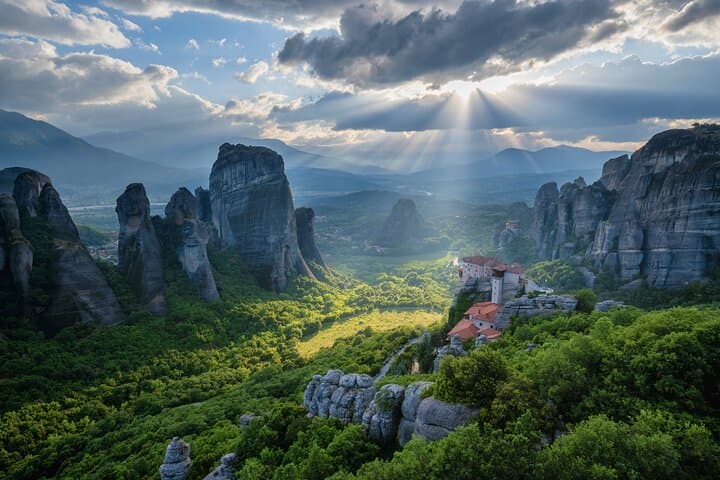
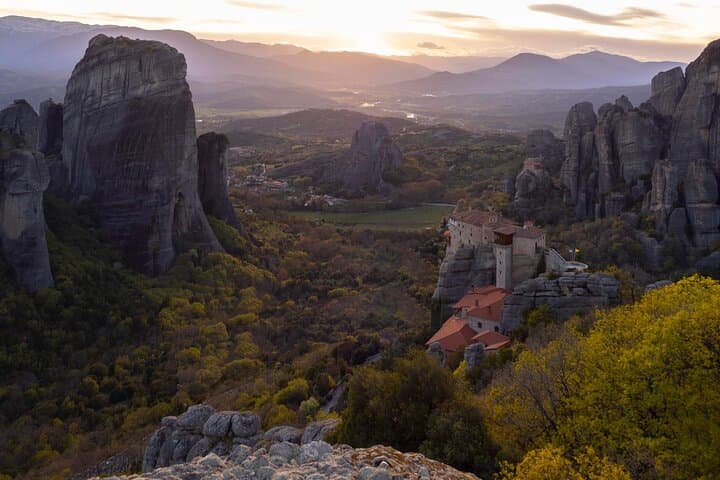
A late-afternoon sun slices across towering pillars of dark sandstone as you step from the shuttle onto a narrow overlook; a cool wind seems to push you closer to the cliff edge. The rock columns of Meteora rise like island towers out of the Thessalian plain, and walking here means threading through geological time—rounded columns sculpted by riverine abrasion and ancient sea beds.
A late-afternoon sun slices across towering pillars of dark sandstone as you step from the shuttle onto a narrow overlook; a cool wind seems to push you closer to the cliff edge. The rock columns of Meteora rise like island towers out of the Thessalian plain, and walking here means threading through geological time—rounded columns sculpted by riverine abrasion and ancient sea beds.
Monastic life arrived centuries ago. From the 11th to the 14th century, hermits and monks built precarious retreats on the summits, carving stairways and community cells into the stone. Great Meteoron and Varlaam still wear frescoed walls and carved thresholds that speak to Byzantine craft and a relentless will to withdraw from the world.
Culturally, Meteora sits between Kalambaka and Kastraki: Kalambaka supplies tavernas and history, Kastraki offers narrow lanes and quieter viewpoints. The site is UNESCO protected; visitation follows strict dress and entry rules to preserve both art and stone.
Practically, expect paved viewpoints, short stair climbs into monasteries, and narrow walking paths between overlooks. Wear grippy shoes; bring sun protection and a reusable water bottle. Monasteries close on different days—check openings before you go—and mornings or late afternoons thin the crowds and sharpen the light for photography.
This is a full-day rhythm: moving from viewpoint to monastery, pausing for local food in Kalambaka, then watching shadows crawl across the pinnacles. The experience is part geology lesson, part historical pilgrimage, and wholly a walk where the landscape seems to respond to your passage.