THE ADVENTURE COLLECTIVE® · Independent discovery and booking for outdoor travel

Travel from Volos to Meteora on a private full-day tour that blends geology, Byzantine history and local culture. Visit two or three monasteries, explore dramatic viewpoints and enjoy taverna recommendations from a local English-speaking driver.
Travel from Volos to Meteora on a private full-day tour that blends geology, Byzantine history and local culture. Visit two or three monasteries, explore dramatic viewpoints and enjoy taverna recommendations from a local English-speaking driver.
You leave Volos before dawn, the harbor receding in your rear-view as the road threads the low hills toward Thessaly.
Verified experiences and guided adventures in the surrounding area.
Operated by Golden Fleece Excursions · Kalabaka, Thessaly
You leave Volos before dawn, the harbor receding in your rear-view as the road threads the low hills toward Thessaly.
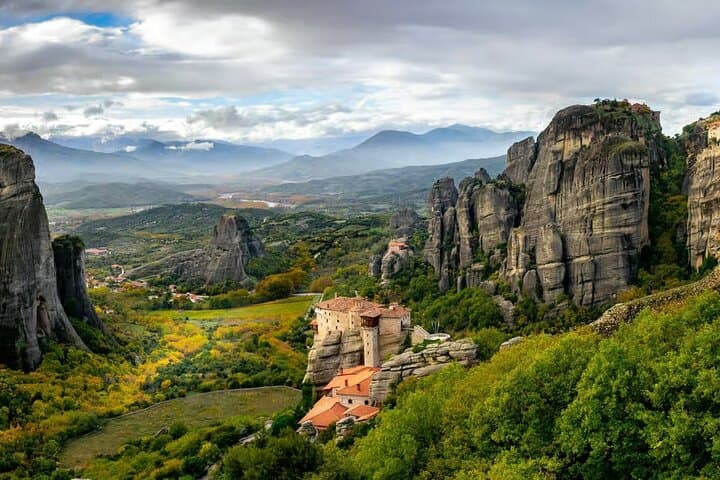
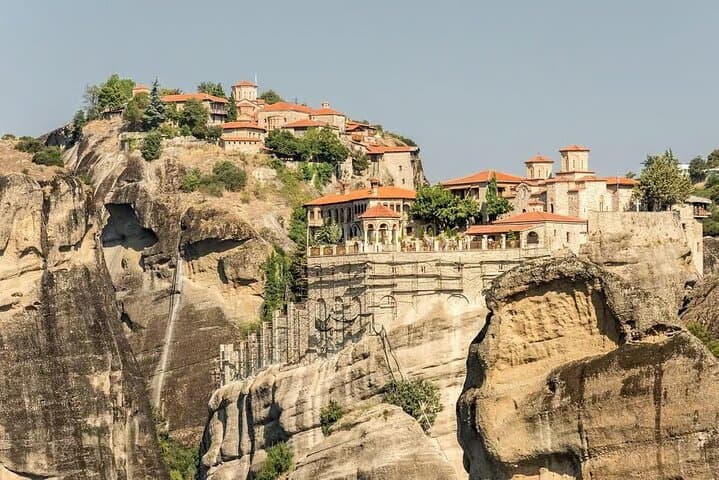
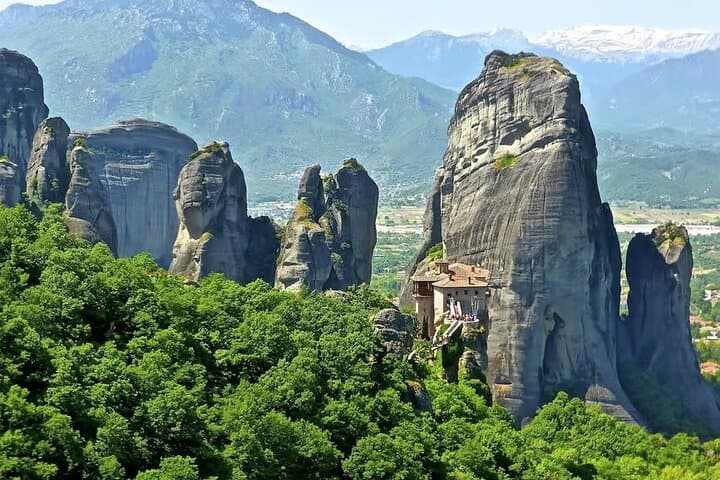
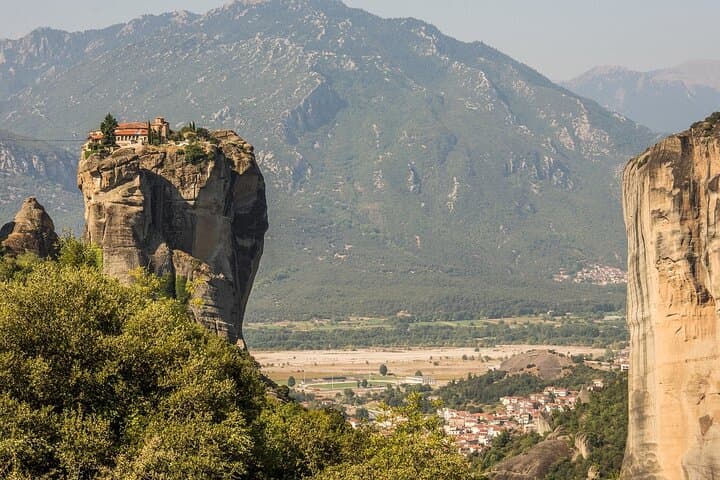
After roughly a 90–100 minute drive the world changes: flat farmland gives way to steep, vertical sandstone pillars. These columns of stone rise up to about 300–400 meters, their sheer faces punctuated by terraces and tiny monasteries clinging to ledges. The air feels drier here; wind finds the rocks and carries the sparse scent of pine and sun-baked earth.
Meteora’s rocks are the product of Miocene river and delta deposits that later uplifted and eroded into towers. Monastic life took root in the 14th century, when monks sought solitude and safety; today six monasteries remain active and the whole complex is a UNESCO World Heritage Site praised for its religious and geological significance.
On a private full-day tour from Volos you’ll mix short walks, viewpoint stops, and climbs up stone steps to monastery doors—most visitors opt for two or three monasteries to keep a steady pace. The local driver-guide fills gaps with history, geology, and taverna recommendations, and will point out quieter photo angles away from the main overlooks.
Practical notes: expect 7–9 hours door-to-door, uneven stone steps and switchbacks, small entrance fees paid on-site, and a modest-dress policy at monastic sites. Bring water, sturdy shoes, sun protection, and a light layer for wind-exposed ridgelines. Start early to avoid mid-day crowds and give yourself time at viewpoints; leave no trace on this fragile, sacred landscape.
easy.
7–9 hours.
Light walking and stair climbs; suitable for travelers in average health who can manage steps and short uneven trails.
Most operators don’t include monastery admission; bring small cash to pay entry fees at each monastery you visit.
Typical private tours include time to visit two to three active monasteries plus several scenic viewpoints, but the itinerary can be tailored to your pace.
Yes—the tour is family-friendly, but note that some monasteries require climbing many steps and have narrow paths; mobility issues may limit access to certain sites.
Yes—private tours are scheduled and often require advance booking; confirm pickup details and any special requests when you reserve.
Monastic communities settled Meteora in the 14th century to escape Ottoman raids; the site’s blend of Byzantine frescoes and hermit cells reflects centuries of Orthodox monastic practice.
The rock formations and monasteries are fragile; stick to marked paths, avoid climbing unapproved routes, and respect monastery rules to reduce wear on the site.
Golden Fleece Excursions operates guided outdoor trips and adventures with an emphasis on safety, stewardship, and memorable experiences.
You leave Volos before dawn, the harbor receding in your rear-view as the road threads the low hills toward Thessaly.
You leave Volos before dawn, the harbor receding in your rear-view as the road threads the low hills toward Thessaly.
After roughly a 90–100 minute drive the world changes: flat farmland gives way to steep, vertical sandstone pillars. These columns of stone rise up to about 300–400 meters, their sheer faces punctuated by terraces and tiny monasteries clinging to ledges. The air feels drier here; wind finds the rocks and carries the sparse scent of pine and sun-baked earth.
Meteora’s rocks are the product of Miocene river and delta deposits that later uplifted and eroded into towers. Monastic life took root in the 14th century, when monks sought solitude and safety; today six monasteries remain active and the whole complex is a UNESCO World Heritage Site praised for its religious and geological significance.
On a private full-day tour from Volos you’ll mix short walks, viewpoint stops, and climbs up stone steps to monastery doors—most visitors opt for two or three monasteries to keep a steady pace. The local driver-guide fills gaps with history, geology, and taverna recommendations, and will point out quieter photo angles away from the main overlooks.
Practical notes: expect 7–9 hours door-to-door, uneven stone steps and switchbacks, small entrance fees paid on-site, and a modest-dress policy at monastic sites. Bring water, sturdy shoes, sun protection, and a light layer for wind-exposed ridgelines. Start early to avoid mid-day crowds and give yourself time at viewpoints; leave no trace on this fragile, sacred landscape.