THE ADVENTURE COLLECTIVE® · Independent discovery and booking for outdoor travel

A long day’s drive from Athens rewards visitors with towering sandstone pillars, centuries-old monasteries and a reflective stop at Thermopylae. This day tour compresses geology, Byzantine history and local culture into one practical, photo-rich outing.
A long day’s drive from Athens rewards visitors with towering sandstone pillars, centuries-old monasteries and a reflective stop at Thermopylae. This day tour compresses geology, Byzantine history and local culture into one practical, photo-rich outing.
By midmorning the road from Athens gives up the lowlands and the first blunt spires of Meteora appear—sheer sandstone columns rising from the Thessalian plain like islands of stone daring a closer look.
By midmorning the road from Athens gives up the lowlands and the first blunt spires of Meteora appear—sheer sandstone columns rising from the Thessalian plain like islands of stone daring a closer look.
These giants were shaped over millions of years by river erosion and tectonic rise; their flat crowns became a refuge for Orthodox hermits and, from the 14th century on, monastic communities who hauled themselves and their supplies up on ropes and ladders. Visiting three active monasteries in a day, travelers walk narrow courtyards, pass frescoed chapels and look down over hairpin roads into the valley below. Kastraki village, with its low stone houses and tavernas, offers a practical pause for lunch and local crafts.
The tour often includes a stop at Thermopylae on the return: a flat coastal pass remembered for Leonidas and the 300, where a simple monument marks a large historical footprint.
Practical guidance: expect a long day—Athens to Meteora is roughly four hours each way by road—so plan for a 12-hour outing, modest clothing for monastery entry, and sturdy shoes for steps and uneven paths. Photography is allowed in most outdoor areas but obey interior restrictions. Carry cash for small entry fees and market purchases, and allow buffer time for traffic and short hikes between viewpoints. The landscape is dramatic but fragile—stick to marked trails and respect monastic rules to keep the place accessible for future visitors.
moderate.
12 hours.
Moderate fitness: able to walk several short uphill sections, climb steps, and tolerate long vehicle transfers.
Yes; a typical private day tour visits several monasteries, but interiors may be skipped or timed to respect opening hours and religious services.
Most monasteries charge a small entry fee and enforce modest dress—shoulders and knees covered; some provide wraps if needed.
Expect roughly four hours each way by road between Athens and Meteora, making this a 12-hour day with walking at multiple stops.
By midmorning the road from Athens gives up the lowlands and the first blunt spires of Meteora appear—sheer sandstone columns rising from the Thessalian plain like islands of stone daring a closer look.
By midmorning the road from Athens gives up the lowlands and the first blunt spires of Meteora appear—sheer sandstone columns rising from the Thessalian plain like islands of stone daring a closer look.
Verified experiences and guided adventures in the surrounding area.
Short outdoor viewpoints are family-friendly, but many monastery interiors and paths involve steps; limited mobility visitors should check accessibility in advance.
Meteora’s monasteries grew from 14th-century ascetic communities that used ropes and ladders to reach cliff tops; today a handful of active monasteries preserve Byzantine art and traditions.
Visitor pressure can erode trails and disturb wildlife—stay on marked paths, follow monastery rules, and support local businesses to help the community maintain sites.
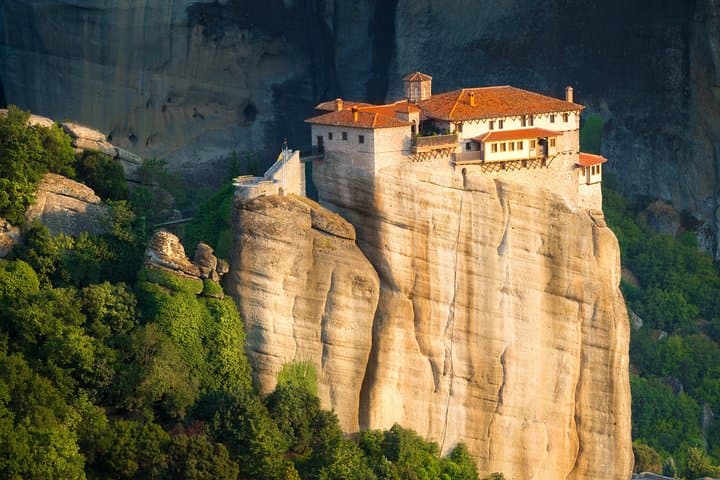
These giants were shaped over millions of years by river erosion and tectonic rise; their flat crowns became a refuge for Orthodox hermits and, from the 14th century on, monastic communities who hauled themselves and their supplies up on ropes and ladders. Visiting three active monasteries in a day, travelers walk narrow courtyards, pass frescoed chapels and look down over hairpin roads into the valley below. Kastraki village, with its low stone houses and tavernas, offers a practical pause for lunch and local crafts.
The tour often includes a stop at Thermopylae on the return: a flat coastal pass remembered for Leonidas and the 300, where a simple monument marks a large historical footprint.
Practical guidance: expect a long day—Athens to Meteora is roughly four hours each way by road—so plan for a 12-hour outing, modest clothing for monastery entry, and sturdy shoes for steps and uneven paths. Photography is allowed in most outdoor areas but obey interior restrictions. Carry cash for small entry fees and market purchases, and allow buffer time for traffic and short hikes between viewpoints. The landscape is dramatic but fragile—stick to marked trails and respect monastic rules to keep the place accessible for future visitors.