THE ADVENTURE COLLECTIVE® · Independent discovery and booking for outdoor travel

A full‑day off‑road journey from Mestia to Ushguli that delivers high‑alpine panoramas, medieval Svan towers and a compact introduction to Svaneti’s landscape and culture. Expect unpaved roads, river crossings, and rewarding viewpoints with limited facilities.
A full‑day off‑road journey from Mestia to Ushguli that delivers high‑alpine panoramas, medieval Svan towers and a compact introduction to Svaneti’s landscape and culture. Expect unpaved roads, river crossings, and rewarding viewpoints with limited facilities.
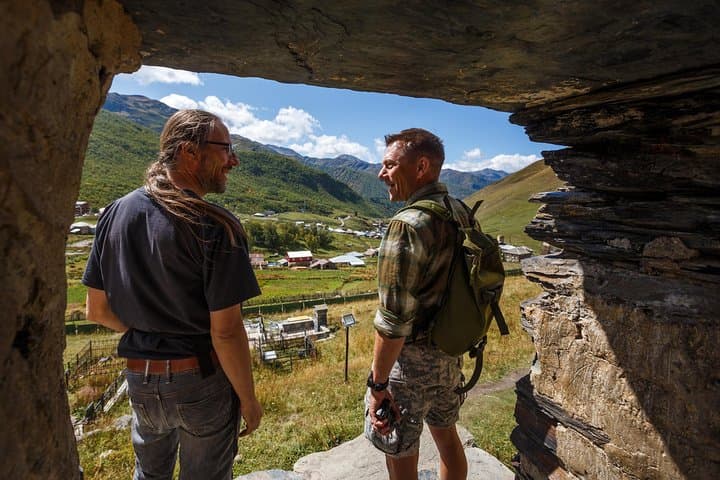
The morning air in Svaneti bites with the clarity of altitude as a convoy of 4x4s peels away from Mestia and follows a rising ribbon of gravel toward Ushguli. Snow-bright peaks watch from the horizon while a glacial river dares the road to keep to its banks; every turn opens a new view of stacked stone towers and fields where cows graze like punctuation marks on the hills.
Verified experiences and guided adventures in the surrounding area.
Operated by Budget Georgia · Ushguli, Svaneti
The morning air in Svaneti bites with the clarity of altitude as a convoy of 4x4s peels away from Mestia and follows a rising ribbon of gravel toward Ushguli. Snow-bright peaks watch from the horizon while a glacial river dares the road to keep to its banks; every turn opens a new view of stacked stone towers and fields where cows graze like punctuation marks on the hills.
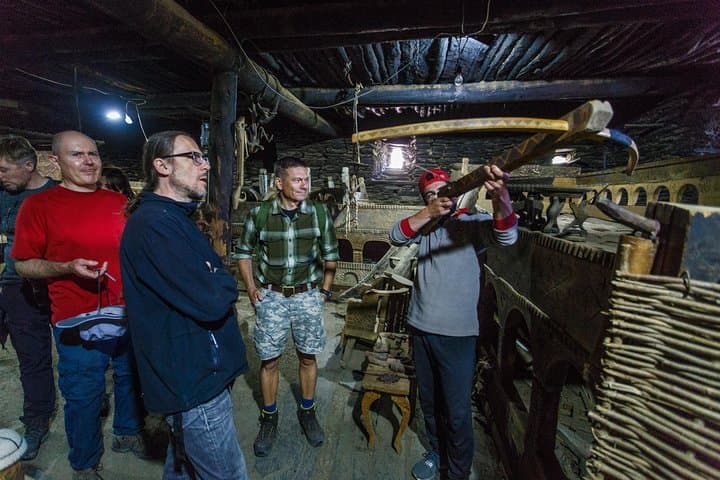
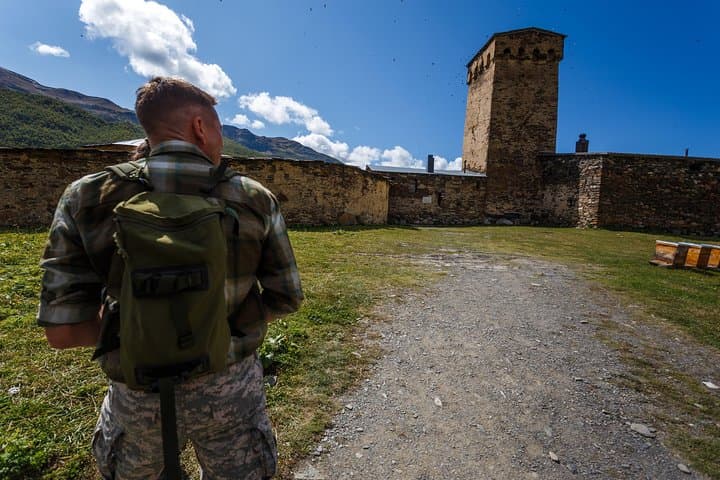
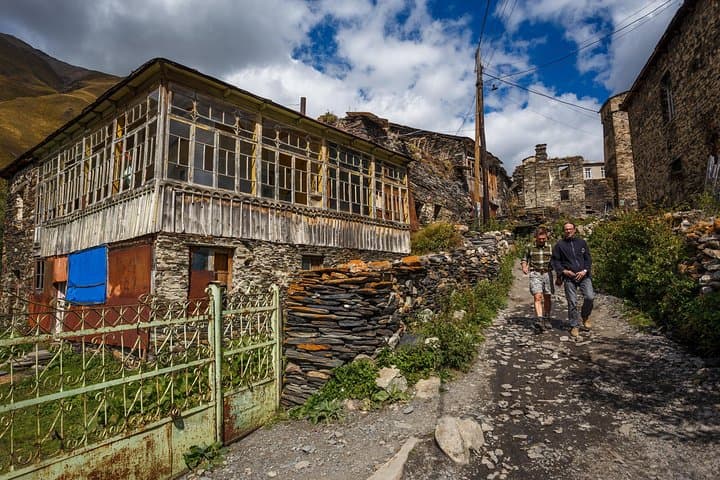
Ushguli’s tower clusters and medieval churches belong to a highland history of defense and family prestige — Svan towers date to the Middle Ages and the village is one of Europe’s highest continuously inhabited settlements. The Greater Caucasus here is young, steep, and glaciated: expect moraines, sharp ridgelines and scattered glacial streams that shape both route and scenery. Culturally, Svans retain distinct language and customs; guides point out clan towers and local icons while explaining traditions tied to mountaineering, livestock and seasonal haying.
Practically, the drive from Mestia is roughly 45–50 km of unpaved road with river fords and short off‑road sections; altitude rises from ~1,500 m to about 2,200–2,300 m, so pace yourself and account for changing weather. Bring sun protection, warm layers, and a day pack — bathroom stops are limited and phones lose signal. Photography rewards patience: sunset and late‑afternoon light lamp the towers. Tours typically include a guided walk through Chazhashi (Ushguli’s old quarter) and short hikes to viewpoints; moderate fitness and a tolerance for bumpy roads make the day most rewarding.
moderate.
6–7 hours.
Moderate fitness: able to walk short uneven trails and tolerate a few hours in a vehicle on rough roads
The road distance is about 45–50 km; because it’s largely unpaved with rough sections, plan on 1.5–2.5 hours each way depending on conditions.
Yes — the route commonly includes rough gravel, stream crossings and off‑road segments; most operators use 4x4 vehicles.
Yes — the village and Chazhashi (old quarter) are compact and walkable, but paths are uneven and elevation gains are common.
Late spring through early autumn (May–September) offers the most reliable access; winter road closures and deep snow can make the route impassable.
Ushguli’s density of stone defensive towers and churches reflects medieval Svan society where families built multistory towers for defense and status; the region retains unique Svan language and oral traditions.
Ushguli lies within a fragile high‑alpine environment; visitors should stick to paths, avoid trampling fragile vegetation, and minimize waste—locals rely on limited water and removal services.
Budget Georgia operates guided outdoor trips and adventures with an emphasis on safety, stewardship, and memorable experiences.
The morning air in Svaneti bites with the clarity of altitude as a convoy of 4x4s peels away from Mestia and follows a rising ribbon of gravel toward Ushguli. Snow-bright peaks watch from the horizon while a glacial river dares the road to keep to its banks; every turn opens a new view of stacked stone towers and fields where cows graze like punctuation marks on the hills.
The morning air in Svaneti bites with the clarity of altitude as a convoy of 4x4s peels away from Mestia and follows a rising ribbon of gravel toward Ushguli. Snow-bright peaks watch from the horizon while a glacial river dares the road to keep to its banks; every turn opens a new view of stacked stone towers and fields where cows graze like punctuation marks on the hills.
Ushguli’s tower clusters and medieval churches belong to a highland history of defense and family prestige — Svan towers date to the Middle Ages and the village is one of Europe’s highest continuously inhabited settlements. The Greater Caucasus here is young, steep, and glaciated: expect moraines, sharp ridgelines and scattered glacial streams that shape both route and scenery. Culturally, Svans retain distinct language and customs; guides point out clan towers and local icons while explaining traditions tied to mountaineering, livestock and seasonal haying.
Practically, the drive from Mestia is roughly 45–50 km of unpaved road with river fords and short off‑road sections; altitude rises from ~1,500 m to about 2,200–2,300 m, so pace yourself and account for changing weather. Bring sun protection, warm layers, and a day pack — bathroom stops are limited and phones lose signal. Photography rewards patience: sunset and late‑afternoon light lamp the towers. Tours typically include a guided walk through Chazhashi (Ushguli’s old quarter) and short hikes to viewpoints; moderate fitness and a tolerance for bumpy roads make the day most rewarding.