THE ADVENTURE COLLECTIVE® · Independent discovery and booking for outdoor travel

Drive a narrated route through Mesa Verde’s high plateau to see cliff dwellings, overlooks, and short detours to ancient sites. This self-guided audio tour offers 50+ stops over a roughly 30-mile loop — download the app before you arrive and plan for 2–3 hours.
Drive a narrated route through Mesa Verde’s high plateau to see cliff dwellings, overlooks, and short detours to ancient sites. This self-guided audio tour offers 50+ stops over a roughly 30-mile loop — download the app before you arrive and plan for 2–3 hours.
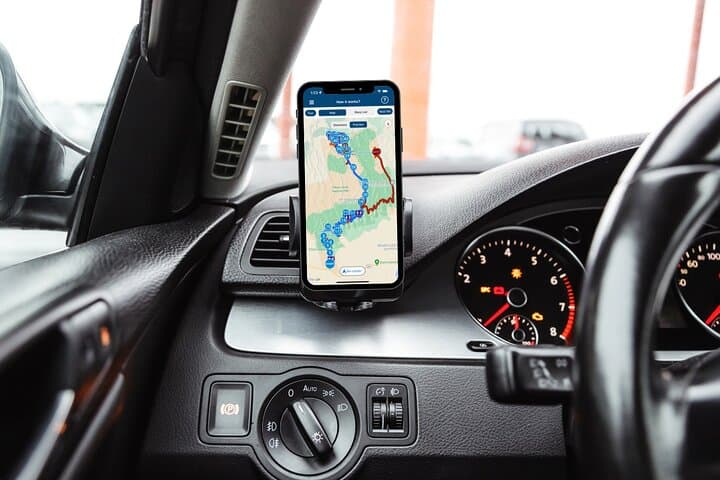
You pull off the two-lane road at the park entrance, the mesa rising like an old wall ahead. Wind moves through scrub and pinyon, pressing cool air against your windows as the audio begins — a calm voice guiding you toward cliff alcoves carved into the canyon. Stops arrive like chapters: overlooks that open to layered rock, small footpaths that lead to kivas, and parking pulls where ancient masonry peers from shadowed niches.
Verified experiences and guided adventures in the surrounding area.
Operated by Guide With Action · Cortez, Colorado
You pull off the two-lane road at the park entrance, the mesa rising like an old wall ahead. Wind moves through scrub and pinyon, pressing cool air against your windows as the audio begins — a calm voice guiding you toward cliff alcoves carved into the canyon. Stops arrive like chapters: overlooks that open to layered rock, small footpaths that lead to kivas, and parking pulls where ancient masonry peers from shadowed niches.
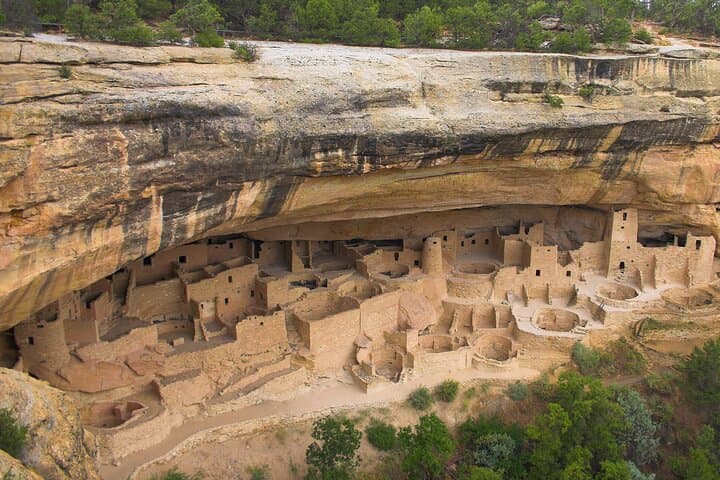
Mesa Verde’s story is visible in stone. Between roughly 600–1300 CE, Ancestral Puebloan communities moved from pithouses to the cliff alcoves that define the park; the result is a remarkable record of social and architectural adaptation. Geologically, the plateau is a stack of sedimentary layers; erosion cut alcoves and carved the cliffs that sheltered these communities. The cultural threads here are immediate — kivas, towers, and communal structures speak to a people who engineered both storage and ceremony into tight spaces.
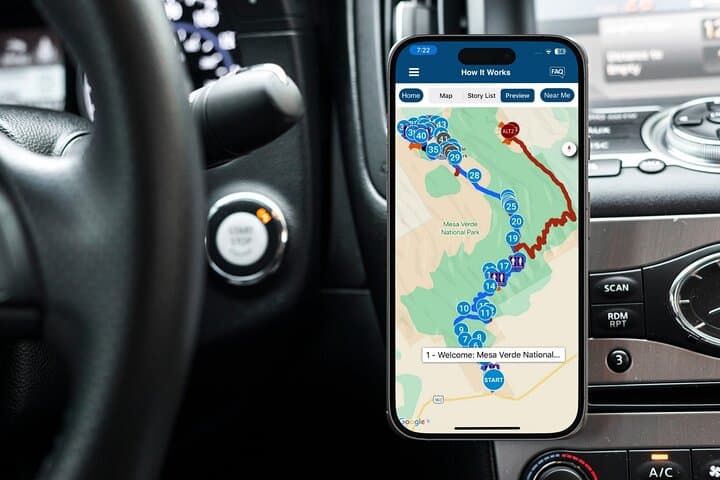
This self-guided driving audio tour maps 30+ miles and more than 50 narrated stops, letting you set the pace while keeping interpretation close at hand. Expect short detours for moderate hikes (Point Lookout, Petroglyph Point) and easy overlooks like Sun Point and Park Point. Cell service is limited; download the Action Tour Guide app and the tour while on Wi‑Fi and carry printed or digital park pass proof.
Practical edge: arrive early for parking, carry layered clothing for high-elevation wind, and plan 2–3 hours for the core loop or longer if you hike. Respect barriers at archaeological sites — these structures are fragile and closed to climbing. With preparation, the driving tour gives you control, context, and a direct line to one of the Southwest’s most intact ancient landscapes.
moderate.
2–3 hours.
Light to moderate — you should be able to walk short uneven trails, climb stairs, and handle brief elevation gains.
Yes — Mesa Verde National Park requires an entrance pass, which is not included with the audio tour; buy it online or at the park entrance.
The narrated route covers roughly 30 miles with 50+ stops and takes about 2–3 hours, but you can pause, detour, and return at any time during the year-long access window.
The app and tour should be downloaded ahead of time and work offline; GPS triggers the audio without cellular service once downloaded.
Most cliff dwellings are protected behind barriers; some sites have ranger-led access by permit — do not climb or touch the ruins and follow all onsite rules.
Mesa Verde preserves extensive Ancestral Puebloan architecture; the park was established in 1906 to protect cliff dwellings and archaeological sites.
These sites are fragile; stay on designated paths, respect signage, and carry out all trash. Limited access and barriers protect both ruins and visitors.
Guide With Action operates guided outdoor trips and adventures with an emphasis on safety, stewardship, and memorable experiences.

You pull off the two-lane road at the park entrance, the mesa rising like an old wall ahead. Wind moves through scrub and pinyon, pressing cool air against your windows as the audio begins — a calm voice guiding you toward cliff alcoves carved into the canyon. Stops arrive like chapters: overlooks that open to layered rock, small footpaths that lead to kivas, and parking pulls where ancient masonry peers from shadowed niches.
You pull off the two-lane road at the park entrance, the mesa rising like an old wall ahead. Wind moves through scrub and pinyon, pressing cool air against your windows as the audio begins — a calm voice guiding you toward cliff alcoves carved into the canyon. Stops arrive like chapters: overlooks that open to layered rock, small footpaths that lead to kivas, and parking pulls where ancient masonry peers from shadowed niches.
Mesa Verde’s story is visible in stone. Between roughly 600–1300 CE, Ancestral Puebloan communities moved from pithouses to the cliff alcoves that define the park; the result is a remarkable record of social and architectural adaptation. Geologically, the plateau is a stack of sedimentary layers; erosion cut alcoves and carved the cliffs that sheltered these communities. The cultural threads here are immediate — kivas, towers, and communal structures speak to a people who engineered both storage and ceremony into tight spaces.
This self-guided driving audio tour maps 30+ miles and more than 50 narrated stops, letting you set the pace while keeping interpretation close at hand. Expect short detours for moderate hikes (Point Lookout, Petroglyph Point) and easy overlooks like Sun Point and Park Point. Cell service is limited; download the Action Tour Guide app and the tour while on Wi‑Fi and carry printed or digital park pass proof.
Practical edge: arrive early for parking, carry layered clothing for high-elevation wind, and plan 2–3 hours for the core loop or longer if you hike. Respect barriers at archaeological sites — these structures are fragile and closed to climbing. With preparation, the driving tour gives you control, context, and a direct line to one of the Southwest’s most intact ancient landscapes.