THE ADVENTURE COLLECTIVE® · Independent discovery and booking for outdoor travel

Experience sunrise over Erg Chebbi and visit Todra Gorges and Aït Ben Haddou on a multi-day route from the High Atlas. This overnight approach gives time for dune activities, mountain panoramas and authentic Berber stops.
Experience sunrise over Erg Chebbi and visit Todra Gorges and Aït Ben Haddou on a multi-day route from the High Atlas. This overnight approach gives time for dune activities, mountain panoramas and authentic Berber stops.
A first light steals across the Erg Chebbi dunes and the desert changes from copper to gold—this is the moment the route rewards you. Travelers arrive from the High Atlas, passing the fortified kasbahs of Aït Ben Haddou and the film-studio town of Ouarzazate before winding through the Dades and Todra gorges; the road itself reads like a geography lesson in stone and wind.
Verified experiences and guided adventures in the surrounding area.
Operated by Dreaming Sands · Merzouga, Drâa-Tafilalet
A first light steals across the Erg Chebbi dunes and the desert changes from copper to gold—this is the moment the route rewards you. Travelers arrive from the High Atlas, passing the fortified kasbahs of Aït Ben Haddou and the film-studio town of Ouarzazate before winding through the Dades and Todra gorges; the road itself reads like a geography lesson in stone and wind.
The region carries millennia of history: ancient trans-Saharan trade routes, rammed-earth ksour (fortified villages) and kasbahs built from local clay. Geologically, the Sahara here is a sweeping erg—shifting sand dunes that can reach 100–150 meters in height—cut by dry riverbeds and backed by volcanic and sedimentary plateaus. Culturally, the area is Berber country; small towns and desert camps maintain tea rituals, carpet weaving and seasonal markets that grew from caravan economies.
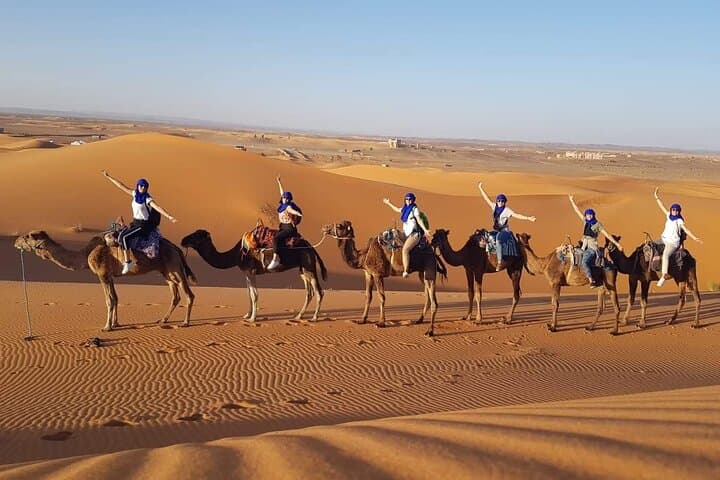
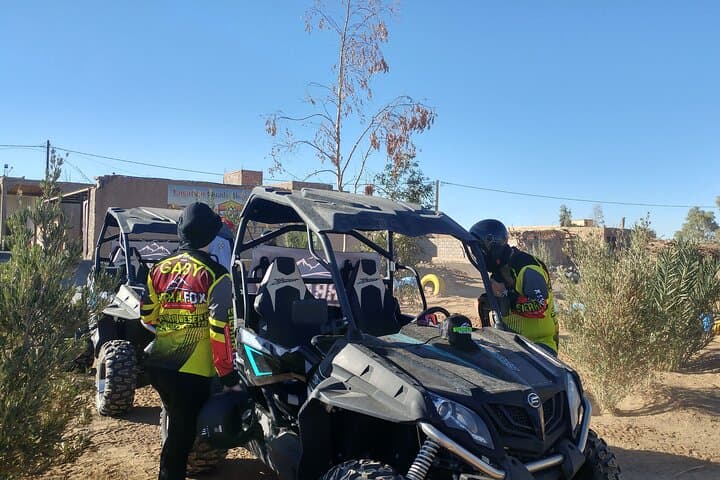
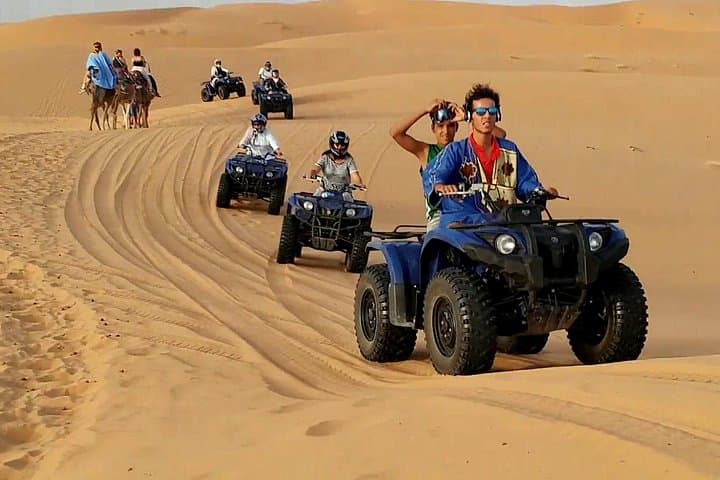
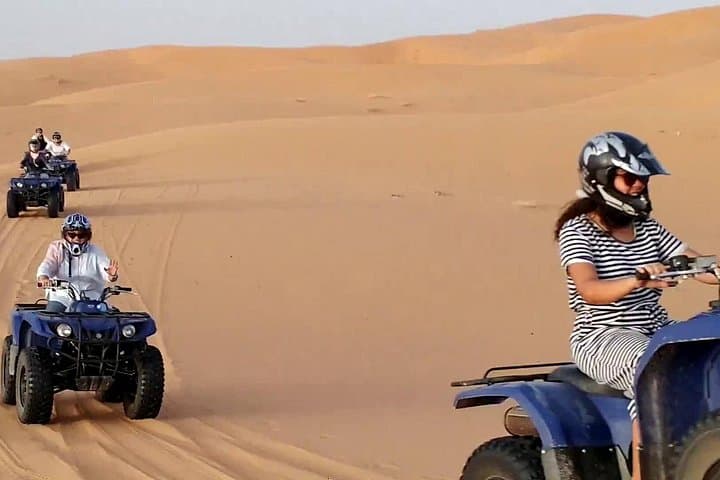
Practical guidance: this is a 2–3 day circuit best done with an overnight in Merzouga to catch both sunset and sunrise. Expect long drives between stops—plan for breaks and a flexible schedule. Dune activities include sandboarding, short 30–60 minute camel treks and 4x4 outings; choose vendors who use marked tracks to limit erosion.
Wear breathable layers, sun protection and sturdy shoes for rocky walks in gorges. Hydrate early and often—the desert dehydrates quickly. Respect local customs (ask before photographing people), pack out waste, and stick to established paths in dunes to protect compacted vegetation and fossilized surfaces. The payoff is clear: wide horizons, quiet nights under stars and the slow theater of light across an ancient landscape.
moderate.
2–3 days.
Suitable for travelers in average fitness; expect long vehicle transfers and short hikes on varied terrain
No—driving time and the number of stops make it impractical as a same-day return; plan at least one overnight on the route to Merzouga.
Many operators include short dromedary rides; choose experienced handlers, limit riding time if you have back issues, and use mounting aids if provided.
Summer brings very high daytime temperatures and cool nights; spring and fall are milder and best for activities; winter nights can drop near freezing.
Overnight stays are typically in desert camps on stabilized areas near the dunes; open-sand camping should be done only with experienced guides and permission to avoid fragile zones.
The route follows sections of former trans-Saharan trade corridors; ksour and kasbahs developed as fortified caravan hubs and film locations have popularized local architecture.
Water scarcity and fragile dune vegetation mean visitors should minimize waste, stick to established tracks and use local guides who practice low-impact desert access.
Dreaming Sands operates guided outdoor trips and adventures with an emphasis on safety, stewardship, and memorable experiences.
A first light steals across the Erg Chebbi dunes and the desert changes from copper to gold—this is the moment the route rewards you. Travelers arrive from the High Atlas, passing the fortified kasbahs of Aït Ben Haddou and the film-studio town of Ouarzazate before winding through the Dades and Todra gorges; the road itself reads like a geography lesson in stone and wind.
A first light steals across the Erg Chebbi dunes and the desert changes from copper to gold—this is the moment the route rewards you. Travelers arrive from the High Atlas, passing the fortified kasbahs of Aït Ben Haddou and the film-studio town of Ouarzazate before winding through the Dades and Todra gorges; the road itself reads like a geography lesson in stone and wind.
The region carries millennia of history: ancient trans-Saharan trade routes, rammed-earth ksour (fortified villages) and kasbahs built from local clay. Geologically, the Sahara here is a sweeping erg—shifting sand dunes that can reach 100–150 meters in height—cut by dry riverbeds and backed by volcanic and sedimentary plateaus. Culturally, the area is Berber country; small towns and desert camps maintain tea rituals, carpet weaving and seasonal markets that grew from caravan economies.
Practical guidance: this is a 2–3 day circuit best done with an overnight in Merzouga to catch both sunset and sunrise. Expect long drives between stops—plan for breaks and a flexible schedule. Dune activities include sandboarding, short 30–60 minute camel treks and 4x4 outings; choose vendors who use marked tracks to limit erosion.
Wear breathable layers, sun protection and sturdy shoes for rocky walks in gorges. Hydrate early and often—the desert dehydrates quickly. Respect local customs (ask before photographing people), pack out waste, and stick to established paths in dunes to protect compacted vegetation and fossilized surfaces. The payoff is clear: wide horizons, quiet nights under stars and the slow theater of light across an ancient landscape.