THE ADVENTURE COLLECTIVE® · Independent discovery and booking for outdoor travel

Traverse the High Atlas, visit Ait Ben Haddou, and ride camels into the vast Erg Chebbi dunes on this packed 3-day loop from Marrakech. Expect dramatic geology, star-filled nights, and practical tips for sand, sun, and slow travel.
Traverse the High Atlas, visit Ait Ben Haddou, and ride camels into the vast Erg Chebbi dunes on this packed 3-day loop from Marrakech. Expect dramatic geology, star-filled nights, and practical tips for sand, sun, and slow travel.
A low sun slants across the plains as the convoy climbs Tizi n’Tichka and Marrakech falls away — red earth, tiny kasbahs, and then the High Atlas opening like a door. By late afternoon the route runs through Ait Ben Haddou, its earthen walls heating to bronze, and beyond that the road loosens into the wide valleys that lead to Merzouga and the great Erg Chebbi dunes.
Verified experiences and guided adventures in the surrounding area.
Operated by Bel Mov Sarl · Merzouga, Drâa-Tafilalet
A low sun slants across the plains as the convoy climbs Tizi n’Tichka and Marrakech falls away — red earth, tiny kasbahs, and then the High Atlas opening like a door. By late afternoon the route runs through Ait Ben Haddou, its earthen walls heating to bronze, and beyond that the road loosens into the wide valleys that lead to Merzouga and the great Erg Chebbi dunes.
This three-day loop blends geology and human history. The High Atlas is a young, folded range of granite and schist; the dunes are recent wind-work on an ancient alluvial plain. Ait Ben Haddou stands where trans-Saharan routes once funneled goods and ideas; Todra Gorge was carved by seasonal rivers that still coax green oases from the cliffs.
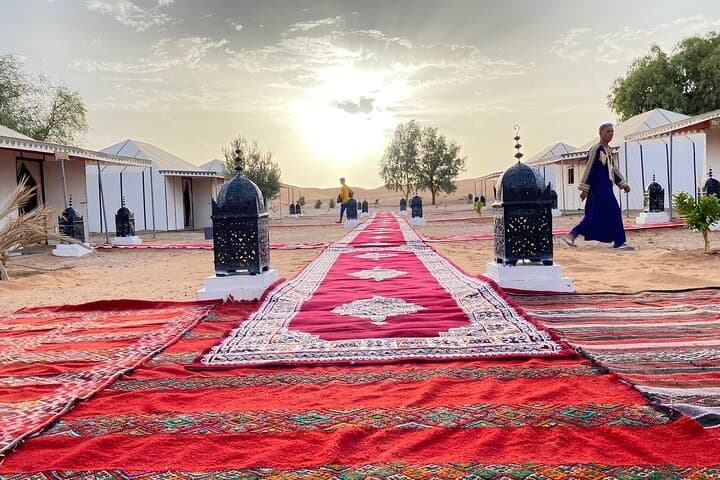
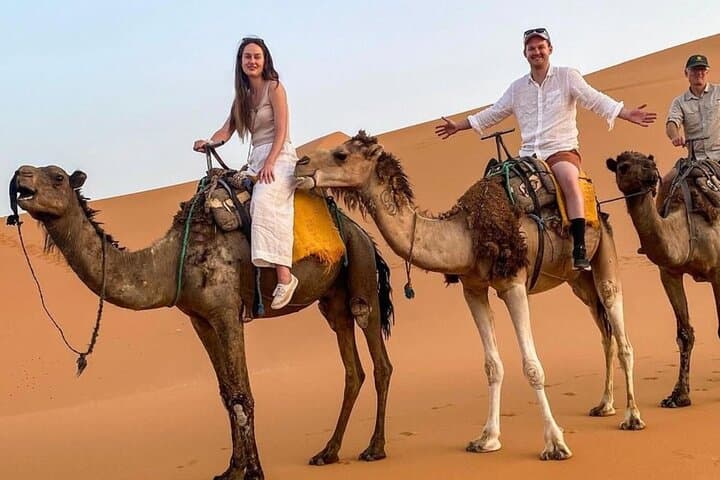
On arrival the desert takes on agency: dunes shift underfoot and the wind writes new slopes overnight. Camel treks across the sand move at a steady, deliberate pace — camels humbly insist you slow down — and sandboarding offers short, sharp bursts of velocity down sun-warmed faces. Nights are starkly clear; the Milky Way feels close enough to touch.
Practical guidance: bring layered clothing for hot days and chilly nights, a sun hat and high-SPF sunscreen, and sturdy closed-toe shoes for walking stiff sand. Hydrate before and during dune walks; carry a daypack with water and ankle support. Plan sunrise and sunset dune time — light is best and temperatures are quieter. Expect long drives between sites; use the travel time to rest and acclimate to the pace of the desert.
moderate.
3 days (≈72 hours).
Suitable for travelers with basic mobility; be able to climb steep sand slopes and mount a camel with minimal assistance.
No — camel treks are guided and suitable for beginners; guides assist mounting and dismounting and set a slow, steady pace.
Options include private tents with internal bathrooms (luxury) or private tents with shared facilities (standard); check your booking selection for specifics.
Expect several hours of driving each day, including the long transfer between Marrakech and Merzouga; the itinerary uses daytime travel with breaks for photos and meals.
Sandboarding is listed as included; local operators usually supply boards and basic instruction, but bring closed-toe shoes and gloves if you prefer your own gear.
Ait Ben Haddou marks medieval trans-Saharan routes and later served as a filming location, while Todra Gorge reflects river-carved limestone cutting through the Atlas.
Erg Chebbi’s dune system is sensitive to vehicle tracks and litter; stick to marked paths, minimize single-use plastics, and support local community tourism to reduce pressure on scarce water resources.
Bel Mov Sarl operates guided outdoor trips and adventures with an emphasis on safety, stewardship, and memorable experiences.
A low sun slants across the plains as the convoy climbs Tizi n’Tichka and Marrakech falls away — red earth, tiny kasbahs, and then the High Atlas opening like a door. By late afternoon the route runs through Ait Ben Haddou, its earthen walls heating to bronze, and beyond that the road loosens into the wide valleys that lead to Merzouga and the great Erg Chebbi dunes.
A low sun slants across the plains as the convoy climbs Tizi n’Tichka and Marrakech falls away — red earth, tiny kasbahs, and then the High Atlas opening like a door. By late afternoon the route runs through Ait Ben Haddou, its earthen walls heating to bronze, and beyond that the road loosens into the wide valleys that lead to Merzouga and the great Erg Chebbi dunes.
This three-day loop blends geology and human history. The High Atlas is a young, folded range of granite and schist; the dunes are recent wind-work on an ancient alluvial plain. Ait Ben Haddou stands where trans-Saharan routes once funneled goods and ideas; Todra Gorge was carved by seasonal rivers that still coax green oases from the cliffs.
On arrival the desert takes on agency: dunes shift underfoot and the wind writes new slopes overnight. Camel treks across the sand move at a steady, deliberate pace — camels humbly insist you slow down — and sandboarding offers short, sharp bursts of velocity down sun-warmed faces. Nights are starkly clear; the Milky Way feels close enough to touch.
Practical guidance: bring layered clothing for hot days and chilly nights, a sun hat and high-SPF sunscreen, and sturdy closed-toe shoes for walking stiff sand. Hydrate before and during dune walks; carry a daypack with water and ankle support. Plan sunrise and sunset dune time — light is best and temperatures are quieter. Expect long drives between sites; use the travel time to rest and acclimate to the pace of the desert.