THE ADVENTURE COLLECTIVE® · Independent discovery and booking for outdoor travel

Cross the High Atlas to reach Erg Chebbi’s towering dunes on this three-day loop from Marrakech. Expect panoramic mountain roads, fossil workshops in Erfoud, a guided camel trek and an overnight in a traditional Berber camp beneath wide Saharan skies.
Cross the High Atlas to reach Erg Chebbi’s towering dunes on this three-day loop from Marrakech. Expect panoramic mountain roads, fossil workshops in Erfoud, a guided camel trek and an overnight in a traditional Berber camp beneath wide Saharan skies.
Dawn slices the dunes into planes of gold and shadow as a line of camels moves steadily across Erg Chebbi. The caravan’s rhythm sets the pace; sand shifts underfoot and the sun edges upward, dressing the Sahara in hard, honest light.
Verified experiences and guided adventures in the surrounding area.
Operated by Daily Trips From Marrakech · Merzouga, Drâa-Tafilalet
Dawn slices the dunes into planes of gold and shadow as a line of camels moves steadily across Erg Chebbi. The caravan’s rhythm sets the pace; sand shifts underfoot and the sun edges upward, dressing the Sahara in hard, honest light.
The route out of Marrakech climbs the High Atlas via Tizi n’Tichka Pass (over 2,200 m), crossing terraced Berber villages and stony plateaus that mark the old caravan corridors to the south. Ait Ben Haddou’s earthen walls recall fortified trading posts, while Erfoud’s workshops point to an even older story: this region was once seabed, fossils preserved in the rock now turned into local craft.
On Day 2, camels carry guests into Erg Chebbi’s towering dunes for a guided trek and a night in a traditional Berber camp. Expect practical comforts—tent bedding, cooked tagine, and clear, unpolluted skies—alongside simple, authentic desert living. Sunrise and sunset are best for photography; midday heat pushes activity toward the edges of habitability.
Practicalities: pack layers for hot days and cold nights, a wide-brim hat, strong sunscreen, plenty of water, and shoes that handle sand and uneven paths. The camel walk demands basic balance and light mobility—guides handle logistics and camp setup, while drivers cover long stretches of scenic road between stops. Respect local customs in villages, carry small bills for purchases and tips, and conserve water. With modest fitness and sensible gear, this three-day loop delivers mountain passes, fossil towns, and the elemental scale of the Sahara in a compact, manageable itinerary.
moderate.
3 days.
Requires moderate fitness: able to mount/ dismount camels, walk short stretches in sand, and endure long vehicle transfers.
The camel ride is gentle and paced; you should be able to get on/off a camel and walk short distances in sand. Moderate mobility is sufficient.
Wear breathable daytime layers and bring an insulated jacket for the night—temperatures can fall below 5°C (41°F) in winter.
Many families and older travelers take this trip; check individual mobility limits and consult tour operators about camel comfort and vehicle accessibility.
Bring dirham cash for small purchases, tips, and village markets—ATMs are limited outside larger towns like Erfoud and Rissani.
The route follows historic trans-Saharan corridors; Ait Ben Haddou and nearby ksars were once stops on trade routes linking the Atlas to southern plains. Erfoud’s fossil deposits record an ancient coastal sea that covered the region.
Dune ecosystems are fragile—avoid disturbing vegetation and do not drive on soft dunes; support local guides and camps that follow water and waste-reduction practices.
Daily Trips From Marrakech operates guided outdoor trips and adventures with an emphasis on safety, stewardship, and memorable experiences.
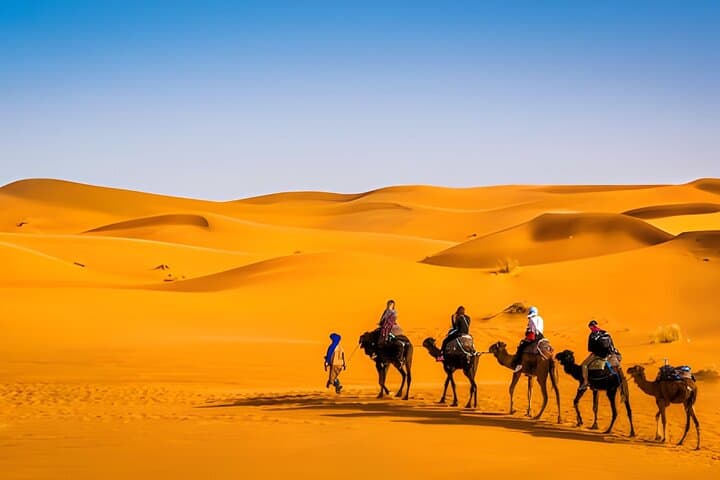
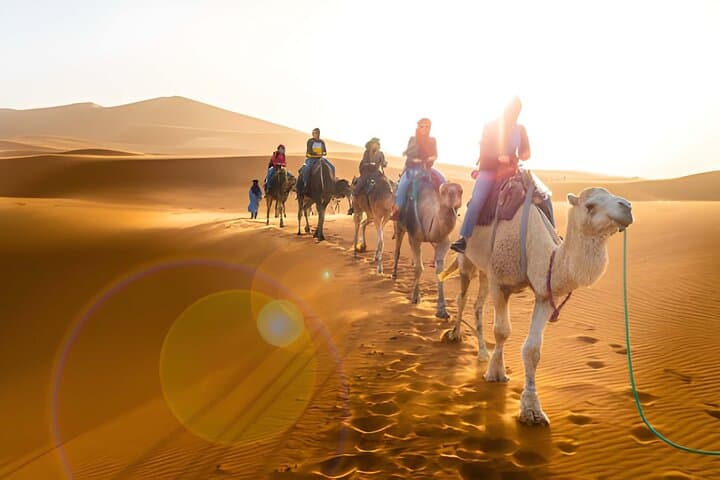
Dawn slices the dunes into planes of gold and shadow as a line of camels moves steadily across Erg Chebbi. The caravan’s rhythm sets the pace; sand shifts underfoot and the sun edges upward, dressing the Sahara in hard, honest light.
Dawn slices the dunes into planes of gold and shadow as a line of camels moves steadily across Erg Chebbi. The caravan’s rhythm sets the pace; sand shifts underfoot and the sun edges upward, dressing the Sahara in hard, honest light.
The route out of Marrakech climbs the High Atlas via Tizi n’Tichka Pass (over 2,200 m), crossing terraced Berber villages and stony plateaus that mark the old caravan corridors to the south. Ait Ben Haddou’s earthen walls recall fortified trading posts, while Erfoud’s workshops point to an even older story: this region was once seabed, fossils preserved in the rock now turned into local craft.
On Day 2, camels carry guests into Erg Chebbi’s towering dunes for a guided trek and a night in a traditional Berber camp. Expect practical comforts—tent bedding, cooked tagine, and clear, unpolluted skies—alongside simple, authentic desert living. Sunrise and sunset are best for photography; midday heat pushes activity toward the edges of habitability.
Practicalities: pack layers for hot days and cold nights, a wide-brim hat, strong sunscreen, plenty of water, and shoes that handle sand and uneven paths. The camel walk demands basic balance and light mobility—guides handle logistics and camp setup, while drivers cover long stretches of scenic road between stops. Respect local customs in villages, carry small bills for purchases and tips, and conserve water. With modest fitness and sensible gear, this three-day loop delivers mountain passes, fossil towns, and the elemental scale of the Sahara in a compact, manageable itinerary.