THE ADVENTURE COLLECTIVE® · Independent discovery and booking for outdoor travel

Ride camels into Erg Chebbi, spend a night in a Berber camp, and wake for sunrise over vast dunes. This overnight offers classic desert rhythms—sunset treks, mint tea, live Gnawa music, and star-filled skies.
Ride camels into Erg Chebbi, spend a night in a Berber camp, and wake for sunrise over vast dunes. This overnight offers classic desert rhythms—sunset treks, mint tea, live Gnawa music, and star-filled skies.
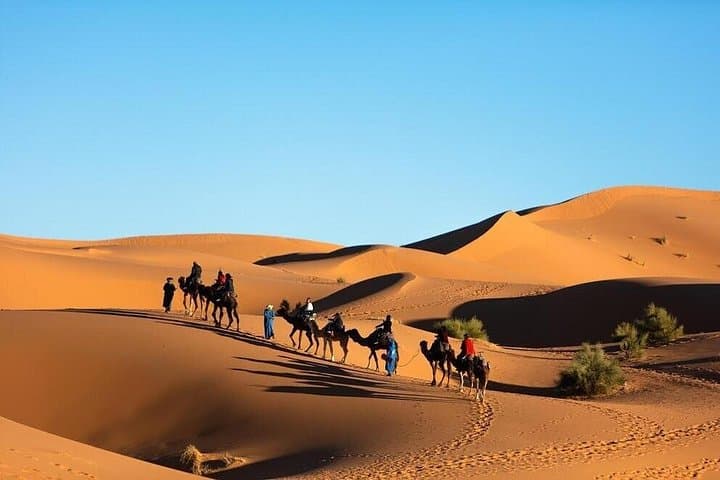
Late afternoon light softens the sand into ridges; a column of camels rocks forward as the sun slides behind the highest dune. You climb onto a broad-backed camel and let the soft sway set the pace — the dunes push and reshape behind you while wind sketches new ridgelines. By night the sky crowds with stars and the camp lanterns hum as musicians begin on hand‑drummed Gnawa songs.
Verified experiences and guided adventures in the surrounding area.
Operated by Top Sahara Trips · Merzouga, Drâa-Tafilalet
Late afternoon light softens the sand into ridges; a column of camels rocks forward as the sun slides behind the highest dune. You climb onto a broad-backed camel and let the soft sway set the pace — the dunes push and reshape behind you while wind sketches new ridgelines. By night the sky crowds with stars and the camp lanterns hum as musicians begin on hand‑drummed Gnawa songs.
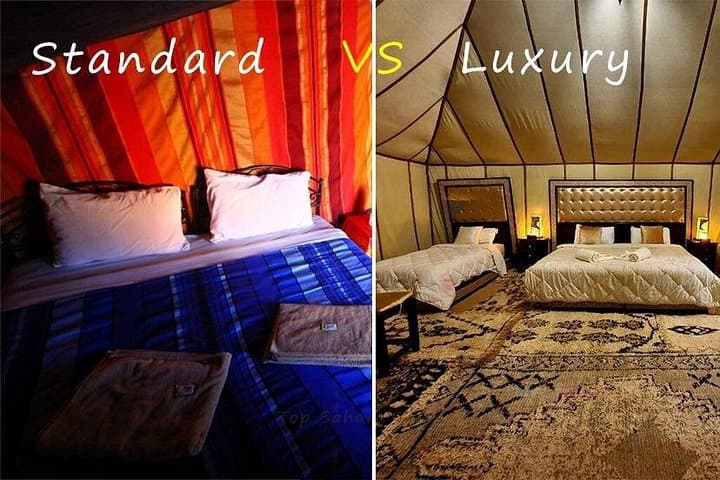
Erg Chebbi is a swept sea of quartz sand at the edge of Morocco’s Saharan expanse, formed by persistent winds that gathered dust and grit over millennia. The Merzouga area is woven with Berber culture: nomadic hospitality, mint tea rituals, and music that arrived with caravan routes through the Tafilalt oasis. Camps range from basic Berber tents to upgraded luxury options with private tents — all typically include a 1.5‑hour camel trek each way, dinner, mint tea, and breakfast.
Expect a practical rhythm: depart around 5pm for sunset, sleep under a cold desert night, rise early for sunrise over the dunes, and return to Merzouga by mid‑morning. The desert demands straightforward preparation — sun protection, layered clothing for large day/night temperature swings, steady footwear for walking on sand, and enough water. Travelers with spinal concerns or pregnancy should avoid mounting camels. Bring cash for tips and small purchases, and consider a longer camp stay if you want more time to walk the dunes or try sandboarding.
This experience is part cultural, part geological, and deeply sensory — quiet wind, granular sand underfoot, and the steady heartbeat of camel travel as your guide through an ancient landscape.
easy.
12–20 hours.
Suitable for most fitness levels; you should be able to mount a camel and walk on soft sand for short stretches.
Each camel trek is typically about 1 hour and 30 minutes one way, timed to reach the camp at sunset and return after sunrise.
Most packages include the camel trek to and from camp, a private tent, dinner, breakfast, mint tea, and basic sleeping arrangements; luxury camps offer upgraded tents and amenities.
Yes, but guests should be able to mount/dismount and sit for the duration; operators can assist, and infants must sit on an adult's lap as noted by the provider.
Inform the operator at booking; local camps can usually accommodate vegetarian diets and some other restrictions if given notice.
The Merzouga region sits on routes that linked Saharan oases and caravan trades; local Berber communities have long adapted to seasonal desert life.
Erg habitats are fragile—stick to established access routes, pack out all waste, and choose operators that minimize motorized impact on dunes.
Top Sahara Trips operates guided outdoor trips and adventures with an emphasis on safety, stewardship, and memorable experiences.
Late afternoon light softens the sand into ridges; a column of camels rocks forward as the sun slides behind the highest dune. You climb onto a broad-backed camel and let the soft sway set the pace — the dunes push and reshape behind you while wind sketches new ridgelines. By night the sky crowds with stars and the camp lanterns hum as musicians begin on hand‑drummed Gnawa songs.
Late afternoon light softens the sand into ridges; a column of camels rocks forward as the sun slides behind the highest dune. You climb onto a broad-backed camel and let the soft sway set the pace — the dunes push and reshape behind you while wind sketches new ridgelines. By night the sky crowds with stars and the camp lanterns hum as musicians begin on hand‑drummed Gnawa songs.
Erg Chebbi is a swept sea of quartz sand at the edge of Morocco’s Saharan expanse, formed by persistent winds that gathered dust and grit over millennia. The Merzouga area is woven with Berber culture: nomadic hospitality, mint tea rituals, and music that arrived with caravan routes through the Tafilalt oasis. Camps range from basic Berber tents to upgraded luxury options with private tents — all typically include a 1.5‑hour camel trek each way, dinner, mint tea, and breakfast.
Expect a practical rhythm: depart around 5pm for sunset, sleep under a cold desert night, rise early for sunrise over the dunes, and return to Merzouga by mid‑morning. The desert demands straightforward preparation — sun protection, layered clothing for large day/night temperature swings, steady footwear for walking on sand, and enough water. Travelers with spinal concerns or pregnancy should avoid mounting camels. Bring cash for tips and small purchases, and consider a longer camp stay if you want more time to walk the dunes or try sandboarding.
This experience is part cultural, part geological, and deeply sensory — quiet wind, granular sand underfoot, and the steady heartbeat of camel travel as your guide through an ancient landscape.