THE ADVENTURE COLLECTIVE® · Independent discovery and booking for outdoor travel

Ride camels into Erg Chebbi for a night in a luxury desert camp, sandboard down moonlit slopes, and dine to drumming under a vast Saharan sky. Practical tips on timing, gear and what to expect from this 2-day Merzouga experience.
Ride camels into Erg Chebbi for a night in a luxury desert camp, sandboard down moonlit slopes, and dine to drumming under a vast Saharan sky. Practical tips on timing, gear and what to expect from this 2-day Merzouga experience.
The sun is a slow-burning coin sinking behind the orange ridges of Erg Chebbi as you mount a camel and begin the soft, rhythmic climb over dune shoulders. Wind drafts the sand into new shapes while the camel’s steady gait carries you toward a luxury camp where canvas rooms wait with ensuite facilities, warm rugs and low lights. After a traditional dinner, drummers circle the fire and the desert seems to breathe with the beat.
Verified experiences and guided adventures in the surrounding area.
Operated by Merzouga Experience · Merzouga, Errachidia Province
The sun is a slow-burning coin sinking behind the orange ridges of Erg Chebbi as you mount a camel and begin the soft, rhythmic climb over dune shoulders. Wind drafts the sand into new shapes while the camel’s steady gait carries you toward a luxury camp where canvas rooms wait with ensuite facilities, warm rugs and low lights. After a traditional dinner, drummers circle the fire and the desert seems to breathe with the beat.
This stretch of the Sahara formed from ancient river deposits and wind-driven sand; Erg Chebbi’s tall starved dunes are relatively young in geological terms, shaped by prevailing northerly winds. Merzouga has long been a crossroads for nomadic Berber groups; guides often weave local folklore and tea rituals into evening gatherings, giving visitors a compact lesson in Saharan culture.
Expect a roughly 90-minute camel ride to reach camp, optional sandboarding on gentler slopes, and a dawn wake-up for sunrise over the dunes. The experience balances quiet solitude with hands-on moments—feeding the camels, climbing a dune summit, and sharing a meal with local hosts.
Practical guidance: book late-afternoon departures to catch sunset and allow cool morning returns, wear sturdy closed-toe shoes for dune scrambling, and bring layered clothing—desert nights can drop sharply. Hydration is essential; carry at least 1.5–2 L per person for the camel transfer. If you have spinal issues or are pregnant, this itinerary is not recommended. For photographers, the hour before sunrise and after sunset offer the richest color and the most flattering light for dune contours.
easy.
1–2 days.
Suitable for most fitness levels; able to mount a camel and walk short dune sections (10–30 minutes)
The camel transfer is typically around 60–90 minutes one way, depending on the group and chosen route to the camp.
This luxury option provides private tents with ensuite facilities; amenities vary by camp but include beds and basic plumbing.
Sandboarding is often offered on gentler dunes at camp and is suitable for beginners; instructors usually provide basic guidance and equipment.
This activity is not recommended for travelers with spinal issues due to camel movement; consider alternative transport or daytime visits instead.
Merzouga sits on historical trans-Saharan routes used by Berber and Tuareg traders; the modern camp experience mixes that heritage with hospitality developed for tourism.
Water is scarce—choose operators who minimize single-use plastics and use local staff; stick to marked paths and avoid disturbing wildlife or vegetation.
Merzouga Experience operates guided outdoor trips and adventures with an emphasis on safety, stewardship, and memorable experiences.
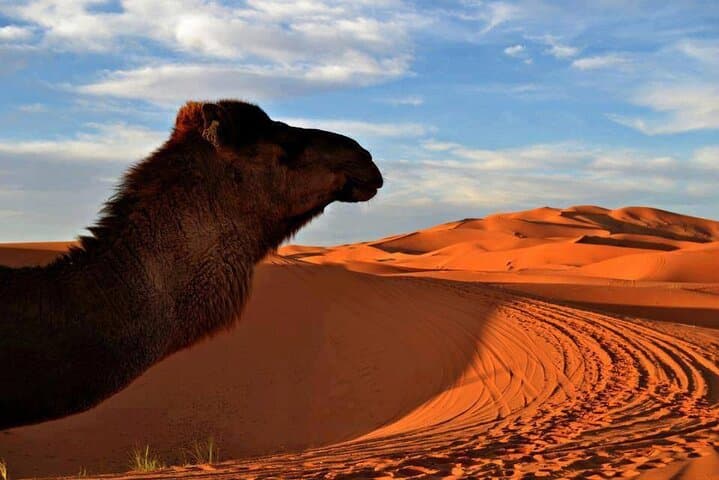
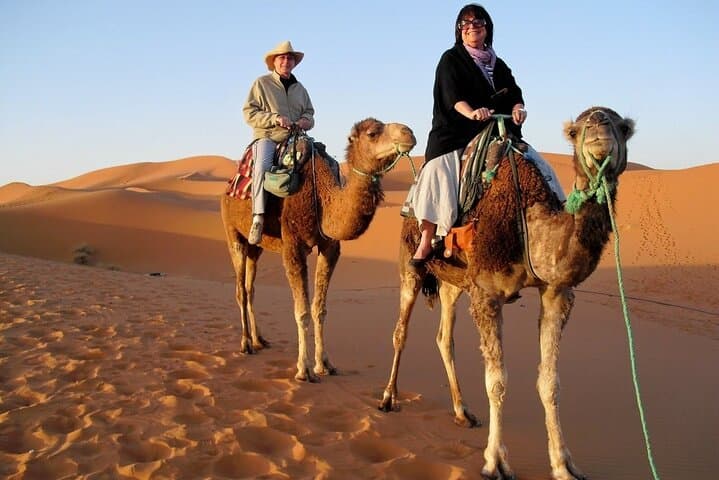
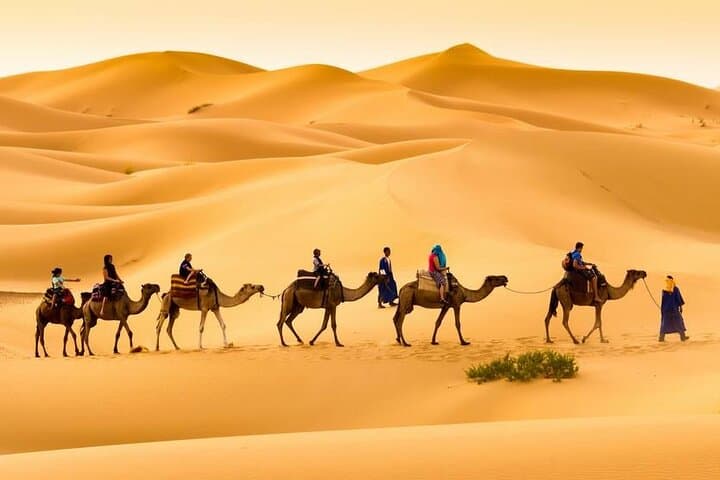
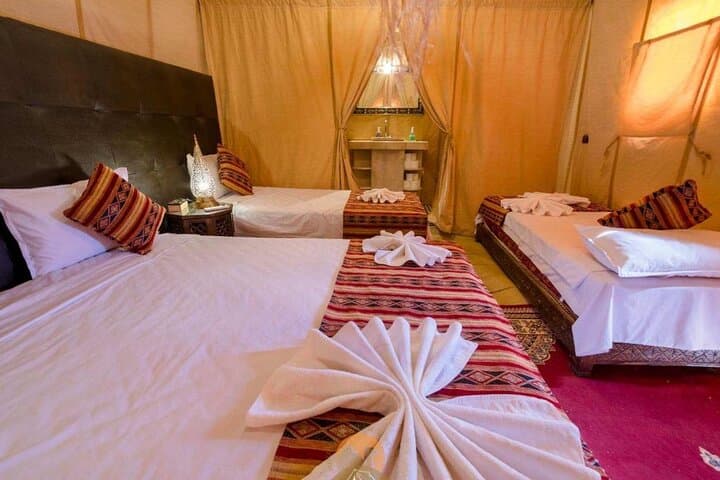
The sun is a slow-burning coin sinking behind the orange ridges of Erg Chebbi as you mount a camel and begin the soft, rhythmic climb over dune shoulders. Wind drafts the sand into new shapes while the camel’s steady gait carries you toward a luxury camp where canvas rooms wait with ensuite facilities, warm rugs and low lights. After a traditional dinner, drummers circle the fire and the desert seems to breathe with the beat.
The sun is a slow-burning coin sinking behind the orange ridges of Erg Chebbi as you mount a camel and begin the soft, rhythmic climb over dune shoulders. Wind drafts the sand into new shapes while the camel’s steady gait carries you toward a luxury camp where canvas rooms wait with ensuite facilities, warm rugs and low lights. After a traditional dinner, drummers circle the fire and the desert seems to breathe with the beat.
This stretch of the Sahara formed from ancient river deposits and wind-driven sand; Erg Chebbi’s tall starved dunes are relatively young in geological terms, shaped by prevailing northerly winds. Merzouga has long been a crossroads for nomadic Berber groups; guides often weave local folklore and tea rituals into evening gatherings, giving visitors a compact lesson in Saharan culture.
Expect a roughly 90-minute camel ride to reach camp, optional sandboarding on gentler slopes, and a dawn wake-up for sunrise over the dunes. The experience balances quiet solitude with hands-on moments—feeding the camels, climbing a dune summit, and sharing a meal with local hosts.
Practical guidance: book late-afternoon departures to catch sunset and allow cool morning returns, wear sturdy closed-toe shoes for dune scrambling, and bring layered clothing—desert nights can drop sharply. Hydration is essential; carry at least 1.5–2 L per person for the camel transfer. If you have spinal issues or are pregnant, this itinerary is not recommended. For photographers, the hour before sunrise and after sunset offer the richest color and the most flattering light for dune contours.