THE ADVENTURE COLLECTIVE® · Independent discovery and booking for outdoor travel

Saddle up for a late-afternoon camel trek across Erg Chebbi, spend a night in a traditional desert camp, and watch dunes change color at sunrise and sunset. Practical tips on timing, gear, and local culture help you prepare for this accessible Sahara experience.
Saddle up for a late-afternoon camel trek across Erg Chebbi, spend a night in a traditional desert camp, and watch dunes change color at sunrise and sunset. Practical tips on timing, gear, and local culture help you prepare for this accessible Sahara experience.
The sun lowers like a slow exhale across Erg Chebbi as riders swing up onto camels and set off over a sea of shifting ridges. Sand tastes like metal in the wind; each camel’s step rocks a steady, ancient rhythm. By dusk the party reaches the camp: low tents, a small fire, and the pulse of Berber drums under a wide, cold sky.
Verified experiences and guided adventures in the surrounding area.
Operated by Erg Chebbi Dunes · Merzouga, Drâa-Tafilalet
The sun lowers like a slow exhale across Erg Chebbi as riders swing up onto camels and set off over a sea of shifting ridges. Sand tastes like metal in the wind; each camel’s step rocks a steady, ancient rhythm. By dusk the party reaches the camp: low tents, a small fire, and the pulse of Berber drums under a wide, cold sky.
Erg Chebbi’s dunes are young geological giants—wind-sculpted quartz and feldspar that can shift meters in a single season. The region has long been a crossroads for Berber and Saharan caravan routes, and local culture centers on hospitality, storytelling, and music. Guides are often from nearby villages and share songs and mint tea that trace the area’s living traditions.
Practical guidance: expect a 15–20 hour window that includes a late-afternoon trek, night in a seasonal camp, and sunrise ride. Temperatures swing hard—hot by day, cold after dark—so layer strategically. Terrain is deep sand with occasional packed tracks; camel riding is low-impact but requires core balance and a willingness to mount and dismount in sandy, uneven ground.
Bring sun protection, a reusable water bottle, and a small daypack for essentials. Arrive in Merzouga or nearby Erfoud with loose cash for tips and small purchases; phone service can be patchy. Respect local customs—ask before photographing people—and follow guides’ instructions to minimize disturbance to dunes and wildlife. The reward is simple: clear desert light, an enormous night sky, and the steady companionship of a camel on a timeless route.
moderate.
15–20 hours.
Basic aerobic fitness and balance; must be able to mount/dismount a camel and walk short stretches on sand.
The riding portion is typically 1–2 hours to camp at sunset and a shorter 30–60 minute sunrise ride back or to viewpoints.
Camps offer both private and shared tent options; this tour lists private transport and can include private arrangements—confirm at booking.
Camel riding involves mounting, dismounting, and a swaying motion; it’s not recommended for those with serious spinal or cardiovascular conditions.
Yes—guides typically provide dinner, tea/coffee, and breakfast, and additional water is supplied at the camp.
Merzouga sits on historical Saharan routes used by Berber and Tuareg caravans; local communities preserved nomadic customs tied to travel and trade.
Dune systems are fragile—stay on established paths, avoid driving on dunes, and use camps that practice waste reduction to reduce impact.
Erg Chebbi Dunes operates guided outdoor trips and adventures with an emphasis on safety, stewardship, and memorable experiences.
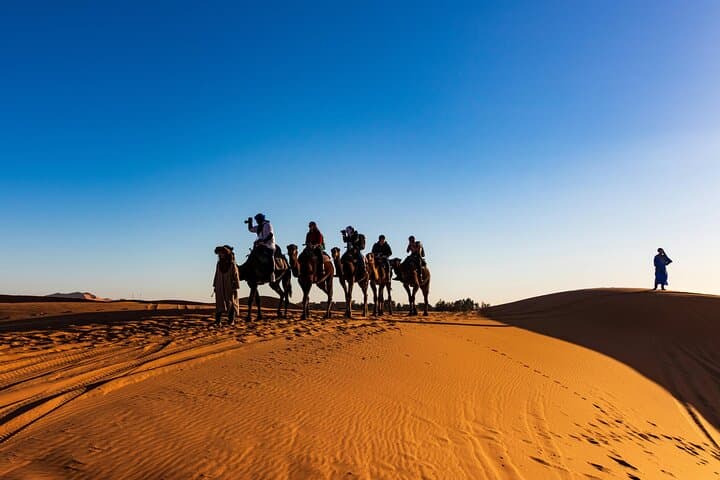
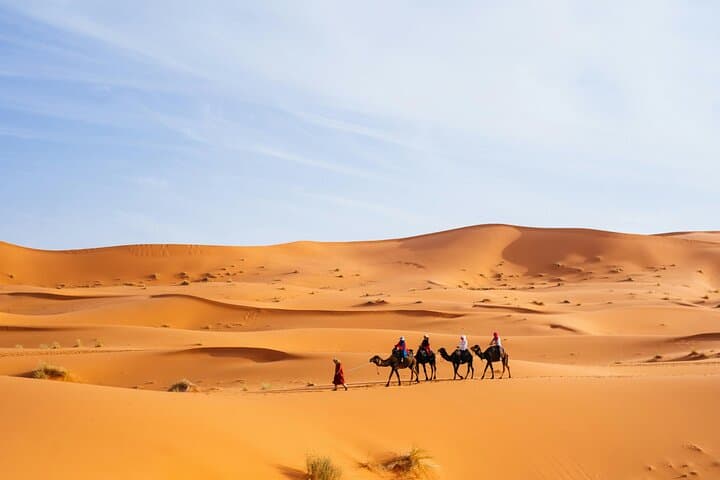
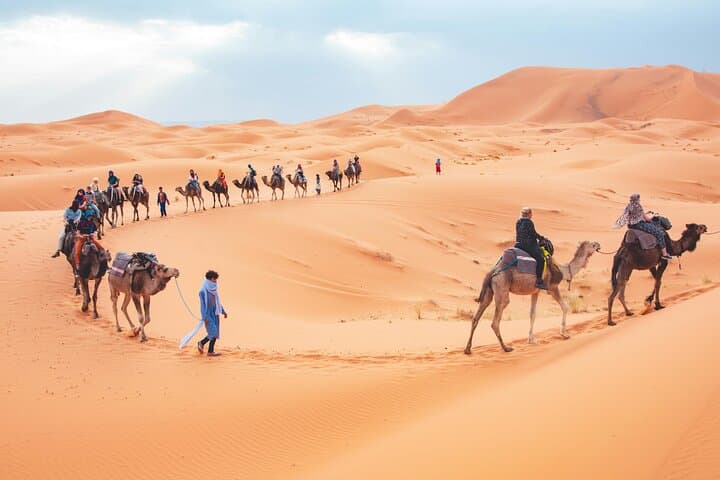
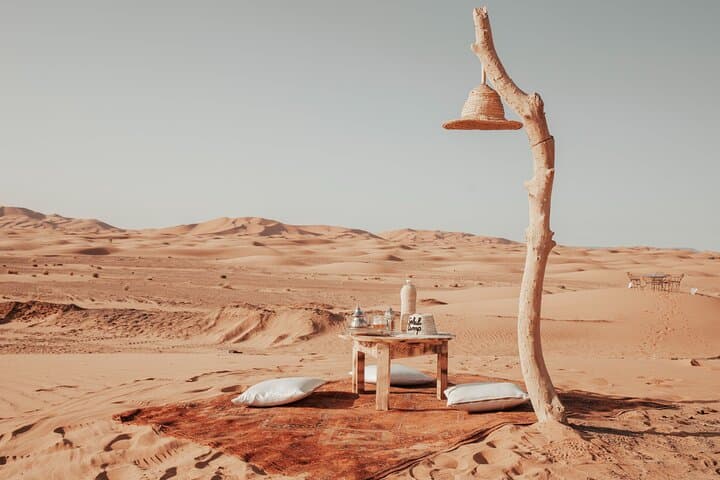
The sun lowers like a slow exhale across Erg Chebbi as riders swing up onto camels and set off over a sea of shifting ridges. Sand tastes like metal in the wind; each camel’s step rocks a steady, ancient rhythm. By dusk the party reaches the camp: low tents, a small fire, and the pulse of Berber drums under a wide, cold sky.
The sun lowers like a slow exhale across Erg Chebbi as riders swing up onto camels and set off over a sea of shifting ridges. Sand tastes like metal in the wind; each camel’s step rocks a steady, ancient rhythm. By dusk the party reaches the camp: low tents, a small fire, and the pulse of Berber drums under a wide, cold sky.
Erg Chebbi’s dunes are young geological giants—wind-sculpted quartz and feldspar that can shift meters in a single season. The region has long been a crossroads for Berber and Saharan caravan routes, and local culture centers on hospitality, storytelling, and music. Guides are often from nearby villages and share songs and mint tea that trace the area’s living traditions.
Practical guidance: expect a 15–20 hour window that includes a late-afternoon trek, night in a seasonal camp, and sunrise ride. Temperatures swing hard—hot by day, cold after dark—so layer strategically. Terrain is deep sand with occasional packed tracks; camel riding is low-impact but requires core balance and a willingness to mount and dismount in sandy, uneven ground.
Bring sun protection, a reusable water bottle, and a small daypack for essentials. Arrive in Merzouga or nearby Erfoud with loose cash for tips and small purchases; phone service can be patchy. Respect local customs—ask before photographing people—and follow guides’ instructions to minimize disturbance to dunes and wildlife. The reward is simple: clear desert light, an enormous night sky, and the steady companionship of a camel on a timeless route.