THE ADVENTURE COLLECTIVE® · Independent discovery and booking for outdoor travel

Ride a caravan across the towering Erg Chebbi dunes on a 3-day journey from Marrakech to Merzouga. Expect long scenic drives, a sunset camel trek to a private bivouac, and nights under a spectacular desert sky.
Ride a caravan across the towering Erg Chebbi dunes on a 3-day journey from Marrakech to Merzouga. Expect long scenic drives, a sunset camel trek to a private bivouac, and nights under a spectacular desert sky.
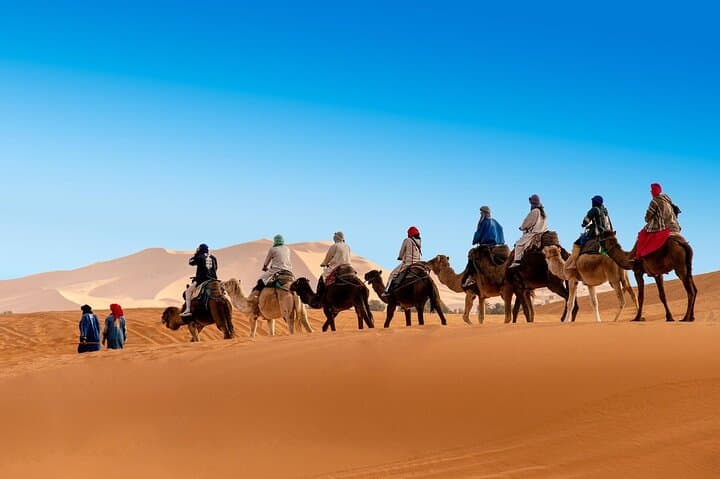
Morning light lifts off the sand as a caravan of camels slips from the palm-shadowed edge of Merzouga, their silhouettes lengthening across ochre dunes. The rhythm of padded feet and the slow sway of the saddle set a pace where time thins and the Atlas Mountains rear on the horizon.
Verified experiences and guided adventures in the surrounding area.
Operated by Samyexcursionsouarzazate · Merzouga, Errachidia Province
Morning light lifts off the sand as a caravan of camels slips from the palm-shadowed edge of Merzouga, their silhouettes lengthening across ochre dunes. The rhythm of padded feet and the slow sway of the saddle set a pace where time thins and the Atlas Mountains rear on the horizon.
This route follows centuries-old trans-Saharan corridors: Berber traders and nomads moved salt, dates and stories between oases. The Erg Chebbi dunes you cross are wind-sculpted sand and gypsum, sometimes rising over 100 meters, a landscape shaped by episodic marine incursions and long-term desertification. Local culture anchors the trip—riads in the towns, evening drumming at the bivouac, and small nomad settlements visible along the tracks.
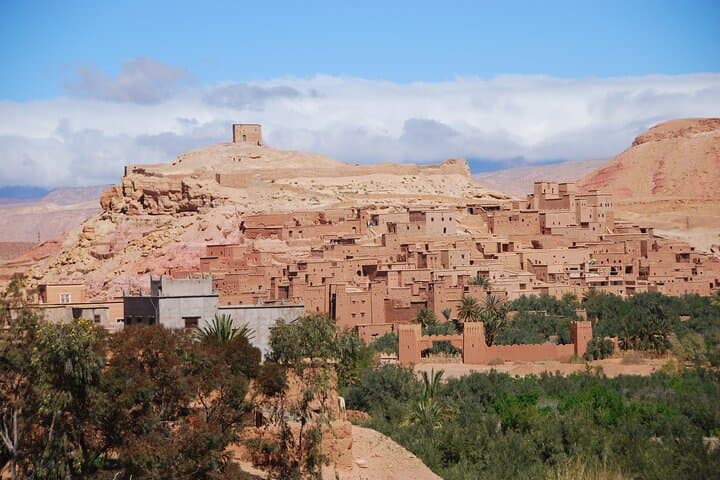
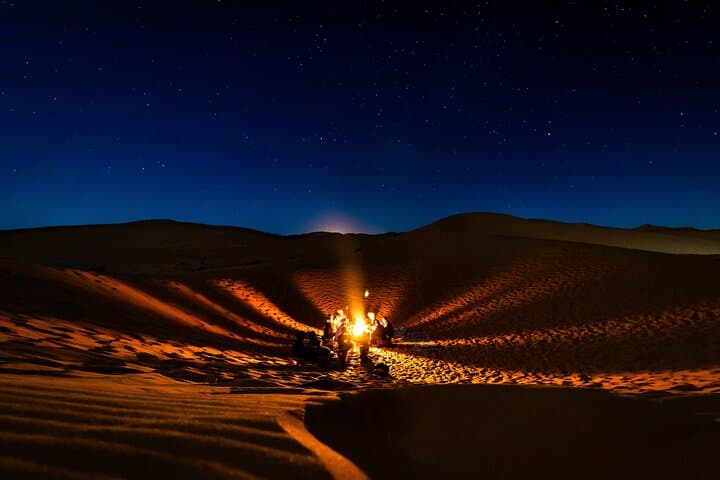
Expect long scenic drives from Marrakech across Tizi n’Tichka, past Aït Ben Haddou, through the Dades and Todgha gorges, then onto the fossil plains near Erfoud before reaching Merzouga. The camel ride to a private bivouac gives a front-row view of sunset on dune crests and an exceptional night sky.
Practical guidance: layer clothing for hot days and cool nights, bring at least 2 liters of water per person for camel segments, and use a headscarf for dust and sun. Physical demand is low to moderate—several hours riding plus short sand climbs—so basic fitness is enough. Mobile reception can be spotty and cash is useful for small purchases. Bookings typically include riad nights, a private bivouac with dinner and Berber entertainment, and breakfasts.
moderate.
2–3 days.
Light to moderate—able to sit for hours in a saddle and to walk short distances on shifting sand
The camel trek to the bivouac is typically 1–2 hours depending on pace; transfers between towns add several hours of driving over the multi-day tour.
Two dinners and two breakfasts are normally included—one dinner in a riad and one at the bivouac; lunches are usually on the road or at planned stops.
The trip is generally suitable for most ages with low physical demand, but it’s not recommended for travelers with serious cardiovascular issues; check camel saddle comfort for very young children.
Riad accommodations offer standard bathrooms; the desert bivouac provides basic facilities—expect limited running water at night and simple, solar-heated washing areas.
The route follows historic trans-Saharan passages used by Berber and Arab traders; Aït Ben Haddou nearby is a fortified ksar that was an important caravan stop.
Dune ecosystems are fragile—avoid off-track driving and pack out all trash; support local guides who employ sustainable bivouac practices.
Samyexcursionsouarzazate operates guided outdoor trips and adventures with an emphasis on safety, stewardship, and memorable experiences.

Morning light lifts off the sand as a caravan of camels slips from the palm-shadowed edge of Merzouga, their silhouettes lengthening across ochre dunes. The rhythm of padded feet and the slow sway of the saddle set a pace where time thins and the Atlas Mountains rear on the horizon.
Morning light lifts off the sand as a caravan of camels slips from the palm-shadowed edge of Merzouga, their silhouettes lengthening across ochre dunes. The rhythm of padded feet and the slow sway of the saddle set a pace where time thins and the Atlas Mountains rear on the horizon.
This route follows centuries-old trans-Saharan corridors: Berber traders and nomads moved salt, dates and stories between oases. The Erg Chebbi dunes you cross are wind-sculpted sand and gypsum, sometimes rising over 100 meters, a landscape shaped by episodic marine incursions and long-term desertification. Local culture anchors the trip—riads in the towns, evening drumming at the bivouac, and small nomad settlements visible along the tracks.
Expect long scenic drives from Marrakech across Tizi n’Tichka, past Aït Ben Haddou, through the Dades and Todgha gorges, then onto the fossil plains near Erfoud before reaching Merzouga. The camel ride to a private bivouac gives a front-row view of sunset on dune crests and an exceptional night sky.
Practical guidance: layer clothing for hot days and cool nights, bring at least 2 liters of water per person for camel segments, and use a headscarf for dust and sun. Physical demand is low to moderate—several hours riding plus short sand climbs—so basic fitness is enough. Mobile reception can be spotty and cash is useful for small purchases. Bookings typically include riad nights, a private bivouac with dinner and Berber entertainment, and breakfasts.