THE ADVENTURE COLLECTIVE® · Independent discovery and booking for outdoor travel

A compact 4x4 circuit from Merzouga that pairs off-road thrills with cultural stops—Gnawa music in Khamlia, visits with nomadic families, fossil sites and the seasonal Dayet Srji lake. Ideal for travelers wanting a full Sahara snapshot in a half-day.
A compact 4x4 circuit from Merzouga that pairs off-road thrills with cultural stops—Gnawa music in Khamlia, visits with nomadic families, fossil sites and the seasonal Dayet Srji lake. Ideal for travelers wanting a full Sahara snapshot in a half-day.
The sun slides low across the ridgelines of Erg Chebbi and the dunes begin to throw long, slow shadows. You’re in a rugged 4x4, tires crunching sand and gravel as the driver threads a course between wind-sculpted dunes, fossil beds and open plains — the desert daring you to pay attention.
Verified experiences and guided adventures in the surrounding area.
Operated by Morocco Trips · Merzouga, Drâa-Tafilalet
The sun slides low across the ridgelines of Erg Chebbi and the dunes begin to throw long, slow shadows. You’re in a rugged 4x4, tires crunching sand and gravel as the driver threads a course between wind-sculpted dunes, fossil beds and open plains — the desert daring you to pay attention.
This corner of southeast Morocco holds layers of history: Berber nomads who followed seasonal pastures, ancient seas that left fossil-rich rock, and Khamlia, a village shaped by Gnawa music and trans-Saharan trade rhythms. Geology is visible at every turn — orange dunes born of wind-driven sand, gravely hammada plains, and the seasonal mirror of Dayet Srji that attracts migratory birds when water returns.
Culturally, the trip centers on human desert life: a live Gnawa performance, a visit with nomadic families, and practical lessons in survival that locals still practice. Guides double as storytellers, translating landscape into livelihoods and lore.
Practical guidance: expect bumpy off-road driving, short walks at stops, and intense sun exposure. Bring ample water, sun protection, closed-toe shoes, and a light layer for sudden desert winds. Photography windows are plentiful — early in the morning and late afternoon offer the best light and cooler temperatures. If you plan to handle fossils, check with your guide about local rules; responsible collecting is essential for preservation.
Timing matters: visit outside the peak heat of summer if you want comfort; winter mornings can be unexpectedly cool. With basic preparation, this half-day 4x4 route offers a compact, sensory introduction to the Sahara’s landscapes and living culture.
easy.
4 hours.
Suitable for most travelers in average health; requires ability to get in/out of a 4x4 and stand for short stops.
The tour departs from Merzouga village with pick-up and drop-off at your accommodation or a designated meeting point.
The route is suitable for most ages, but bumpy sections can be uncomfortable; infants must sit on an adult’s lap and consult the operator if mobility is limited.
Some areas allow small finds, but rules vary—always ask your guide and avoid removing large or scientifically significant specimens.
Spring and fall balance mild temperatures and clearer skies; summer is very hot midday, while winter mornings can be chilly.
The Merzouga area sits on historic routes used by Berber nomads and caravan traffic; fossil-rich deposits preserve remnants of ancient Tethys Sea life.
The Sahara around Merzouga is ecologically fragile—stay on existing tracks, avoid disturbing vegetation, and follow guides’ rules for fossil collection to minimize impact.
Morocco Trips operates guided outdoor trips and adventures with an emphasis on safety, stewardship, and memorable experiences.
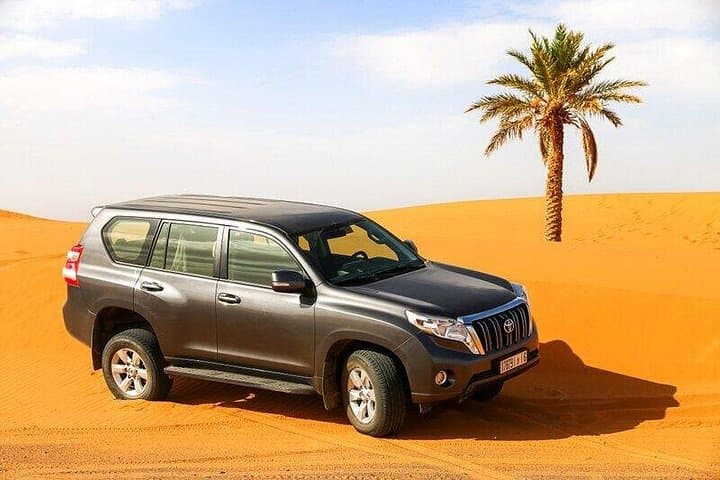
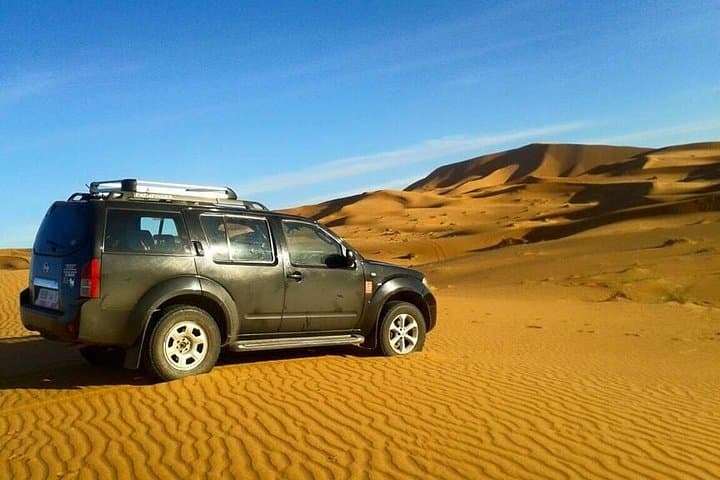
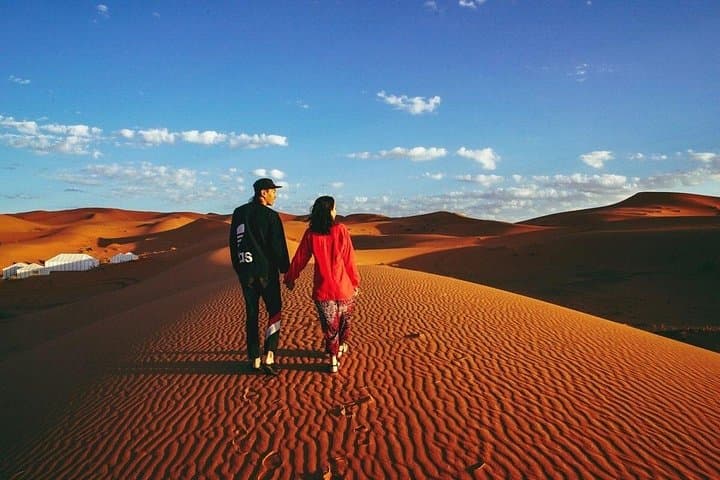
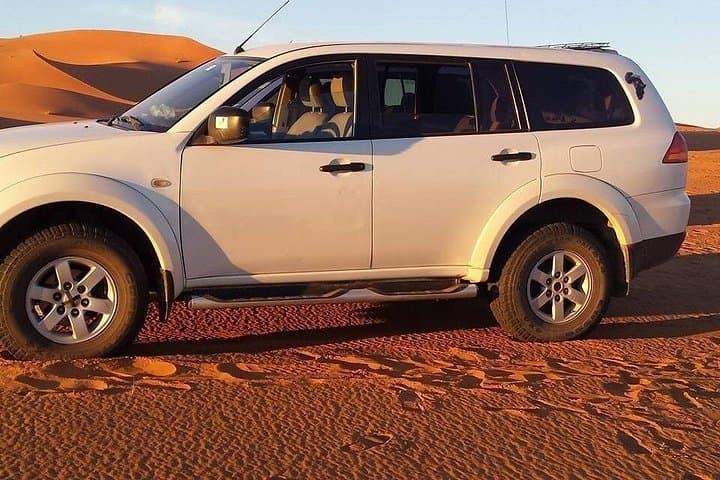
The sun slides low across the ridgelines of Erg Chebbi and the dunes begin to throw long, slow shadows. You’re in a rugged 4x4, tires crunching sand and gravel as the driver threads a course between wind-sculpted dunes, fossil beds and open plains — the desert daring you to pay attention.
The sun slides low across the ridgelines of Erg Chebbi and the dunes begin to throw long, slow shadows. You’re in a rugged 4x4, tires crunching sand and gravel as the driver threads a course between wind-sculpted dunes, fossil beds and open plains — the desert daring you to pay attention.
This corner of southeast Morocco holds layers of history: Berber nomads who followed seasonal pastures, ancient seas that left fossil-rich rock, and Khamlia, a village shaped by Gnawa music and trans-Saharan trade rhythms. Geology is visible at every turn — orange dunes born of wind-driven sand, gravely hammada plains, and the seasonal mirror of Dayet Srji that attracts migratory birds when water returns.
Culturally, the trip centers on human desert life: a live Gnawa performance, a visit with nomadic families, and practical lessons in survival that locals still practice. Guides double as storytellers, translating landscape into livelihoods and lore.
Practical guidance: expect bumpy off-road driving, short walks at stops, and intense sun exposure. Bring ample water, sun protection, closed-toe shoes, and a light layer for sudden desert winds. Photography windows are plentiful — early in the morning and late afternoon offer the best light and cooler temperatures. If you plan to handle fossils, check with your guide about local rules; responsible collecting is essential for preservation.
Timing matters: visit outside the peak heat of summer if you want comfort; winter mornings can be unexpectedly cool. With basic preparation, this half-day 4x4 route offers a compact, sensory introduction to the Sahara’s landscapes and living culture.