THE ADVENTURE COLLECTIVE® · Independent discovery and booking for outdoor travel

Ride a Jeep over black volcanic sand to the foot of Mount Merapi, stopping at bunkers, ruined houses and lava channels left by the 2008–2010 eruptions. Expect rough terrain, strong photo opportunities and field-level interpretation from local guides.
Ride a Jeep over black volcanic sand to the foot of Mount Merapi, stopping at bunkers, ruined houses and lava channels left by the 2008–2010 eruptions. Expect rough terrain, strong photo opportunities and field-level interpretation from local guides.
Dust kicks up behind a convoy of open Jeeps as they thread across dark volcanic sand at the foot of Mount Merapi. The mountain looms—brooding and active—its slopes scarred by past flows; guides point toward collapsed bunkers and charred foundations while the wind seems to push visitors closer to the story of the eruptions.
Verified experiences and guided adventures in the surrounding area.
Operated by JogjaTravels & Group · Yogyakarta, Special Region of Yogyakarta
Dust kicks up behind a convoy of open Jeeps as they thread across dark volcanic sand at the foot of Mount Merapi. The mountain looms—brooding and active—its slopes scarred by past flows; guides point toward collapsed bunkers and charred foundations while the wind seems to push visitors closer to the story of the eruptions.
Merapi is one of Java’s most active stratovolcanoes, rising to about 2,930 meters on the Ring of Fire. Repeated eruptions, most recently in 2006–2010, produced pyroclastic flows and lahars that reshaped flank villages. The Jeep route takes you past observation bunkers, ruined houses and lava-formed channels—physical traces of those events—and through landscapes still used by local farmers who rebuilt alongside the hazard zone. You may hear of Labuhan offerings and community rituals that reflect a pragmatic, centuries-old relationship with the mountain.
Expect rough, off-road terrain: volcanic sand, hardened lava beds and rutted farm tracks. The experience is photographic and interpretive rather than a technical climb; guides will orient you to vantage points and safety distances. Practical notes: morning runs cut dust and heat, bring a dustproof layer and sturdy shoes, carry water and camera protection, and follow the guide’s instructions around unstable ruins. The tour typically lasts 1–4 hours depending on the chosen route, and it’s not suitable for those with serious back problems or limited mobility. Visitors leave with a clearer sense of Merapi’s power—how the landscape pushes back and how communities adapt—and practical, on-the-ground perspective you won’t get from a map.
moderate.
1–4 hours.
Moderate fitness; able to board open Jeeps and walk short uneven stretches around viewing points.
Tours run between roughly 1 and 4 hours depending on route and number of stops; confirm your chosen duration when booking.
Operators run routes outside active exclusion zones and follow monitoring guidance; however, the landscape can be unstable—always heed your guide’s instructions.
Yes, but the ride is bumpy and some stops require short walks on uneven ground; infants aren’t permitted to sit on laps and infant seats aren’t available.
No, Jeep tours explore the volcano’s foot and ruin sites for safety reasons; reaching the crater rim requires a guided ascent and separate permits.
Merapi has been an active volcanic center for centuries; the 2006–2010 eruptive episodes produced destructive pyroclastic flows that reshaped nearby villages and infrastructure.
Stay on established tracks and avoid removing volcanic rocks; supporting local guides funds community resilience and hazard education.
JogjaTravels & Group operates guided outdoor trips and adventures with an emphasis on safety, stewardship, and memorable experiences.
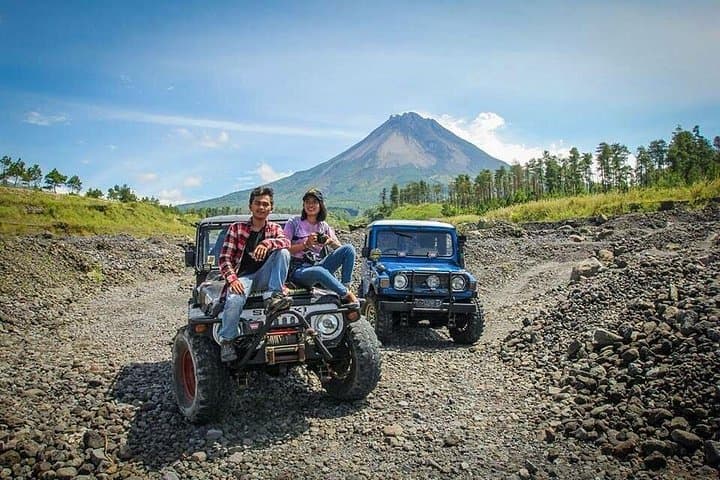
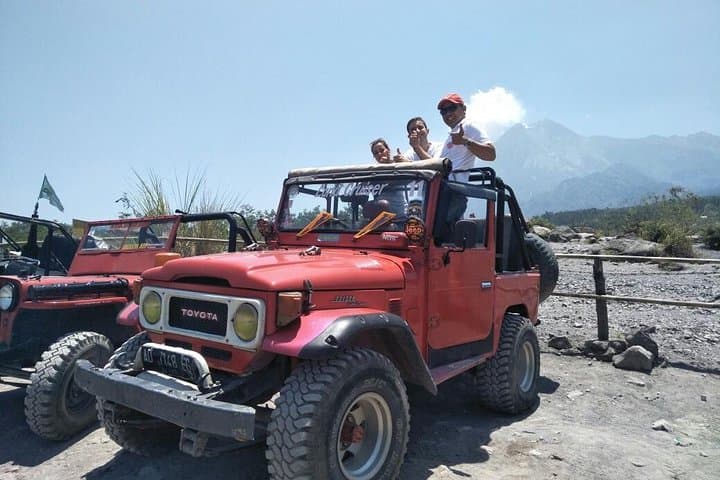
Dust kicks up behind a convoy of open Jeeps as they thread across dark volcanic sand at the foot of Mount Merapi. The mountain looms—brooding and active—its slopes scarred by past flows; guides point toward collapsed bunkers and charred foundations while the wind seems to push visitors closer to the story of the eruptions.
Dust kicks up behind a convoy of open Jeeps as they thread across dark volcanic sand at the foot of Mount Merapi. The mountain looms—brooding and active—its slopes scarred by past flows; guides point toward collapsed bunkers and charred foundations while the wind seems to push visitors closer to the story of the eruptions.
Merapi is one of Java’s most active stratovolcanoes, rising to about 2,930 meters on the Ring of Fire. Repeated eruptions, most recently in 2006–2010, produced pyroclastic flows and lahars that reshaped flank villages. The Jeep route takes you past observation bunkers, ruined houses and lava-formed channels—physical traces of those events—and through landscapes still used by local farmers who rebuilt alongside the hazard zone. You may hear of Labuhan offerings and community rituals that reflect a pragmatic, centuries-old relationship with the mountain.
Expect rough, off-road terrain: volcanic sand, hardened lava beds and rutted farm tracks. The experience is photographic and interpretive rather than a technical climb; guides will orient you to vantage points and safety distances. Practical notes: morning runs cut dust and heat, bring a dustproof layer and sturdy shoes, carry water and camera protection, and follow the guide’s instructions around unstable ruins. The tour typically lasts 1–4 hours depending on the chosen route, and it’s not suitable for those with serious back problems or limited mobility. Visitors leave with a clearer sense of Merapi’s power—how the landscape pushes back and how communities adapt—and practical, on-the-ground perspective you won’t get from a map.