THE ADVENTURE COLLECTIVE® · Independent discovery and booking for outdoor travel

Witness Merapi’s sunrise from jeep tracks, descend into Jomblang’s ‘heavenly light,’ and float the serene underground river at Pindul—all in a single full-day tour from Yogyakarta. Expect early starts, on-site ticketing, and a mix of off-road and cave-based adventure.
Witness Merapi’s sunrise from jeep tracks, descend into Jomblang’s ‘heavenly light,’ and float the serene underground river at Pindul—all in a single full-day tour from Yogyakarta. Expect early starts, on-site ticketing, and a mix of off-road and cave-based adventure.
A pre-dawn jeep rattles up volcanic gravel as the first light skims Mount Merapi’s jagged rim—smoke and steam like a restless animal stretching into the sky. Travelers gather at the bunker viewpoint, breath fogging in cool mountain air, then ride across black sand fields and lava tracks where eruptions have reshaped villages and viewpoints alike.
Verified experiences and guided adventures in the surrounding area.
Operated by Aan · Yogyakarta, Special Region of Yogyakarta
A pre-dawn jeep rattles up volcanic gravel as the first light skims Mount Merapi’s jagged rim—smoke and steam like a restless animal stretching into the sky. Travelers gather at the bunker viewpoint, breath fogging in cool mountain air, then ride across black sand fields and lava tracks where eruptions have reshaped villages and viewpoints alike.
By mid-morning the scene changes: a harness clip, a controlled descent into Jomblang’s vertical sinkhole and a cathedral of light. Sunbeams puncture the cavity, illuminating an ancient forest floor where roots and limestone seem to keep their own slow time. Later the tone softens again underground at Pindul, where a slow river carries tubes through cavern passages, light filtering through skylights to paint the rock in quiet colors.
Geology and human history are constant companions: Merapi is one of Indonesia’s most active volcanoes with frequent eruptions that have molded local culture and emergency architecture; Jomblang and Pindul sit within the Gunungkidul karst system—limestone shaped by water over millennia. Local guides run these sites, and community-based enterprises supply safety gear and simple meals.
Practical notes: start very early for Merapi’s sunrise, allow the full day for travel between sites, and expect ticketing and safety briefings at each attraction. Bring a headlamp, sturdy shoes, a dry bag for the tubing segment and a light jacket for mountain winds. Visitors with back, heart, or pregnancy concerns should skip the descent. Book with a guide to streamline transfers and on-site ticket purchases—this day stacks high-adrenaline vistas with accessible cave-sourced calm.
moderate.
8–10 hours.
Moderate fitness—comfortable with stairs, short hikes, and a vertical descent; basic swimming ability helpful for tubing.
No — Merapi jeep tickets and Jomblang/Pindul admission are paid on-site; guides assist with the purchase.
Yes — visitors are lowered about 60 meters in a controlled descent with experienced local staff and safety equipment.
Generally yes for older children; it’s calm and guided, but check local age/weight limits and ensure life jackets fit properly.
Warm layers, a windproof jacket, camera, headlamp, and small snacks—temperatures can be cool pre-dawn and windier on ridgelines.
Mount Merapi’s eruptions have shaped local settlement patterns and created lava fields and bunkers used for observation and shelter; the karst caves of Gunungkidul preserve millennia of limestone drainage and local cave-use traditions.
Stick to marked paths, avoid touching cave formations, and follow guide instructions—visitor impact is managed by local communities that benefit directly from sustainable tourism.
Aan operates guided outdoor trips and adventures with an emphasis on safety, stewardship, and memorable experiences.
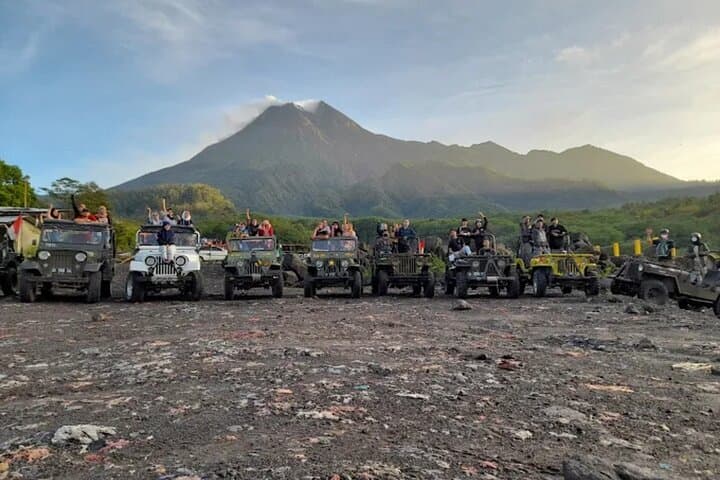
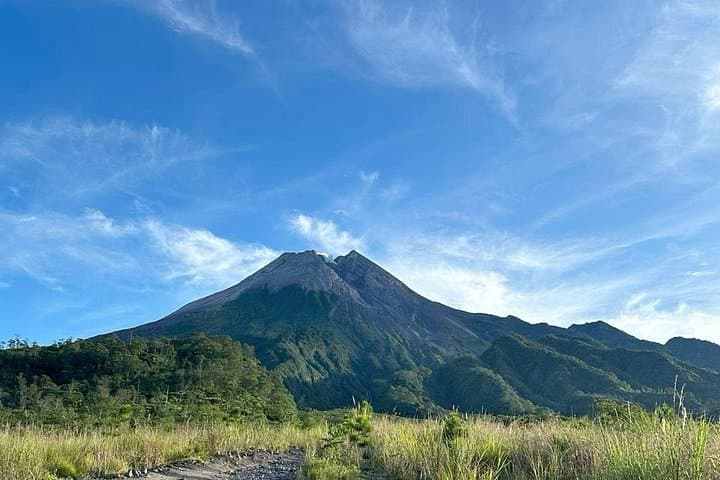
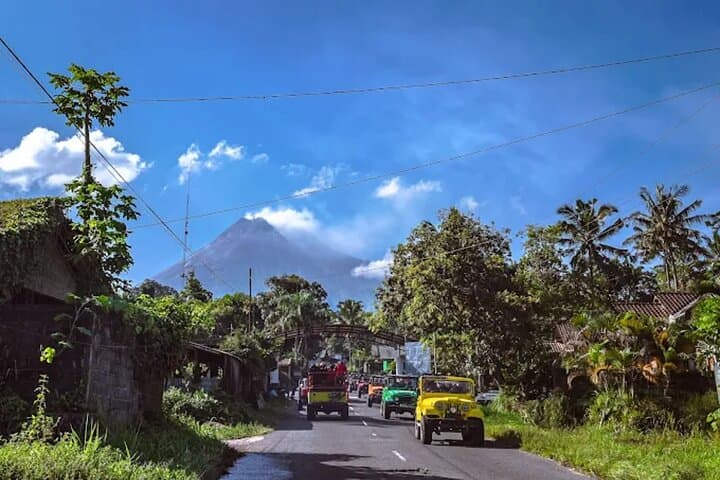
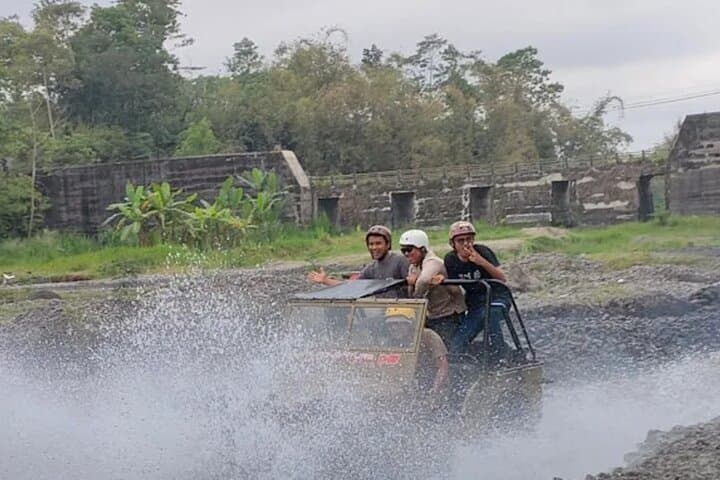
A pre-dawn jeep rattles up volcanic gravel as the first light skims Mount Merapi’s jagged rim—smoke and steam like a restless animal stretching into the sky. Travelers gather at the bunker viewpoint, breath fogging in cool mountain air, then ride across black sand fields and lava tracks where eruptions have reshaped villages and viewpoints alike.
A pre-dawn jeep rattles up volcanic gravel as the first light skims Mount Merapi’s jagged rim—smoke and steam like a restless animal stretching into the sky. Travelers gather at the bunker viewpoint, breath fogging in cool mountain air, then ride across black sand fields and lava tracks where eruptions have reshaped villages and viewpoints alike.
By mid-morning the scene changes: a harness clip, a controlled descent into Jomblang’s vertical sinkhole and a cathedral of light. Sunbeams puncture the cavity, illuminating an ancient forest floor where roots and limestone seem to keep their own slow time. Later the tone softens again underground at Pindul, where a slow river carries tubes through cavern passages, light filtering through skylights to paint the rock in quiet colors.
Geology and human history are constant companions: Merapi is one of Indonesia’s most active volcanoes with frequent eruptions that have molded local culture and emergency architecture; Jomblang and Pindul sit within the Gunungkidul karst system—limestone shaped by water over millennia. Local guides run these sites, and community-based enterprises supply safety gear and simple meals.
Practical notes: start very early for Merapi’s sunrise, allow the full day for travel between sites, and expect ticketing and safety briefings at each attraction. Bring a headlamp, sturdy shoes, a dry bag for the tubing segment and a light jacket for mountain winds. Visitors with back, heart, or pregnancy concerns should skip the descent. Book with a guide to streamline transfers and on-site ticket purchases—this day stacks high-adrenaline vistas with accessible cave-sourced calm.