THE ADVENTURE COLLECTIVE® · Independent discovery and booking for outdoor travel

Watch molten flows illuminate Mount Merapi from a safe viewpoint outside exclusion zones. This guided night tour from Yogyakarta combines hotel pickup, warm drinks, and expert interpretation for a dramatic and responsible volcano encounter.
Watch molten flows illuminate Mount Merapi from a safe viewpoint outside exclusion zones. This guided night tour from Yogyakarta combines hotel pickup, warm drinks, and expert interpretation for a dramatic and responsible volcano encounter.
A low, red glow bleeds into the night as the silhouette of Merapi rises against a sky thick with ash and stars. You arrive by air-conditioned minivan, coffee warming your hands, and the guides point toward the incandescent streaks flowing down the flank — molten rock moving with a deliberate, dangerous grace.
Verified experiences and guided adventures in the surrounding area.
Operated by Borobudursunrise.com · Yogyakarta, Special Region of Yogyakarta
A low, red glow bleeds into the night as the silhouette of Merapi rises against a sky thick with ash and stars. You arrive by air-conditioned minivan, coffee warming your hands, and the guides point toward the incandescent streaks flowing down the flank — molten rock moving with a deliberate, dangerous grace.
Geologically, Merapi is one of Indonesia’s most active stratovolcanoes, sitting on the tectonic meeting of the Sunda and Australian plates. Eruptions are frequent; the 2010 event reshaped slopes and communities. Locally, Merapi holds cultural weight in Javanese tradition — rituals and seasonal observances still acknowledge the mountain’s power.
The tour stages your night viewing from an approved vantage outside exclusion zones, where binoculars and snacks are provided and guides interpret activity patterns. Expect intermittent eruptions or lava flows, visible as red ribbons or glowing avalanches depending on activity that night. Sky conditions matter: clearer, dry months give the best optical contrast.
Practical guidance: wear warm layers and closed, sturdy shoes for uneven terrain; bring a headlamp with a red filter so your eyes adapt for viewing; a dust mask helps on windier nights. This outing runs about 3–5 hours, includes hotel pickup and return, and is suitable for most fitness levels but not recommended for pregnant travelers or those with serious heart conditions. Follow guides’ instructions closely — the safest viewing means staying in designated areas and respecting local warnings. With preparation and respect, a Merapi night-viewing is a rare, elemental encounter with a living volcano.
easy.
3–5 hours.
Suitable for people in average physical condition; involves short walks on uneven ground and standing at viewpoint.
No — volcanic activity and weather control visibility; guides choose nights with documented activity but cannot guarantee eruptions.
Tours last approximately 3–5 hours and typically include hotel pickup and return in an air-conditioned vehicle.
Children can attend if supervised, but the operator notes it is not recommended for pregnant travelers or those with serious heart conditions.
No — the tour uses approved safe-distance viewing points; access to exclusion zones is restricted for safety and legal reasons.
Merapi has been erupting for centuries and is central to local Javanese culture; major eruptions such as 2010 caused significant landscape and community changes.
Tours stick to designated viewing areas to limit erosion and ash disturbance; visitors should pack out all trash and follow guide directions to protect regrowth on volcanic slopes.
Borobudursunrise.com operates guided outdoor trips and adventures with an emphasis on safety, stewardship, and memorable experiences.
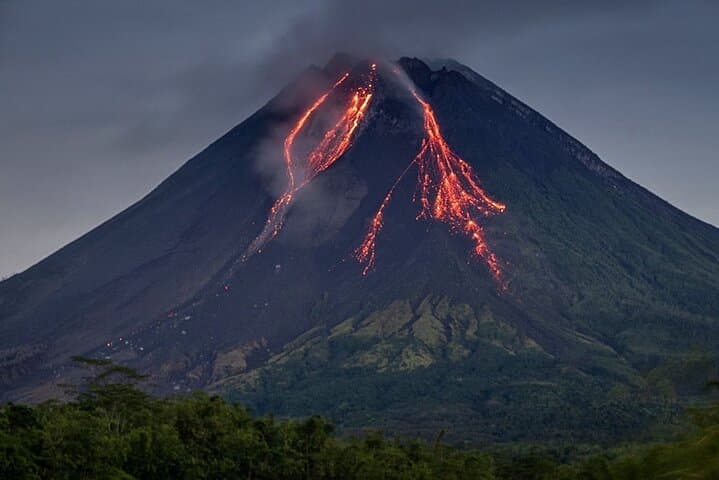
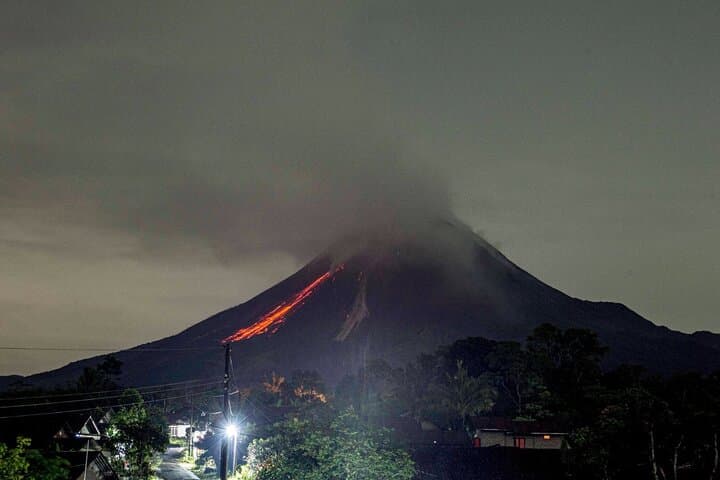
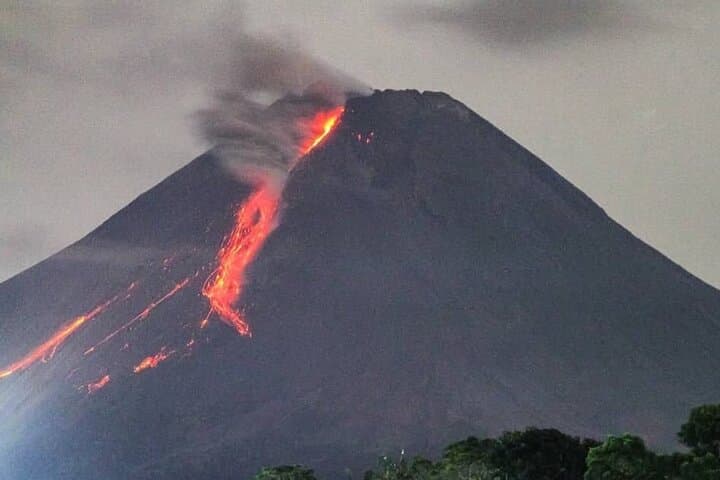
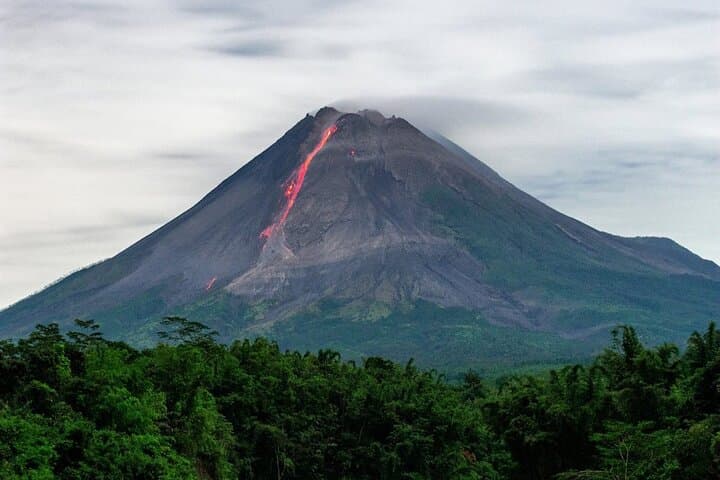
A low, red glow bleeds into the night as the silhouette of Merapi rises against a sky thick with ash and stars. You arrive by air-conditioned minivan, coffee warming your hands, and the guides point toward the incandescent streaks flowing down the flank — molten rock moving with a deliberate, dangerous grace.
A low, red glow bleeds into the night as the silhouette of Merapi rises against a sky thick with ash and stars. You arrive by air-conditioned minivan, coffee warming your hands, and the guides point toward the incandescent streaks flowing down the flank — molten rock moving with a deliberate, dangerous grace.
Geologically, Merapi is one of Indonesia’s most active stratovolcanoes, sitting on the tectonic meeting of the Sunda and Australian plates. Eruptions are frequent; the 2010 event reshaped slopes and communities. Locally, Merapi holds cultural weight in Javanese tradition — rituals and seasonal observances still acknowledge the mountain’s power.
The tour stages your night viewing from an approved vantage outside exclusion zones, where binoculars and snacks are provided and guides interpret activity patterns. Expect intermittent eruptions or lava flows, visible as red ribbons or glowing avalanches depending on activity that night. Sky conditions matter: clearer, dry months give the best optical contrast.
Practical guidance: wear warm layers and closed, sturdy shoes for uneven terrain; bring a headlamp with a red filter so your eyes adapt for viewing; a dust mask helps on windier nights. This outing runs about 3–5 hours, includes hotel pickup and return, and is suitable for most fitness levels but not recommended for pregnant travelers or those with serious heart conditions. Follow guides’ instructions closely — the safest viewing means staying in designated areas and respecting local warnings. With preparation and respect, a Merapi night-viewing is a rare, elemental encounter with a living volcano.