THE ADVENTURE COLLECTIVE® · Independent discovery and booking for outdoor travel

A single day that moves from carved stone to volcanic slopes: visit Borobudur, Mendut and Pawon temples, drive Merapi’s lower flanks by jeep, and finish at Prambanan. Expect cultural depth, uneven terrain, and a long but rewarding schedule.
A single day that moves from carved stone to volcanic slopes: visit Borobudur, Mendut and Pawon temples, drive Merapi’s lower flanks by jeep, and finish at Prambanan. Expect cultural depth, uneven terrain, and a long but rewarding schedule.
Morning light slices across Java’s low hills as the air-conditioned car hums out of Yogyakarta; rice paddies blur past and the bulk of Merapi looms ahead, restless and dark against a pale sky. The day moves between contrasts—Buddhist bas-reliefs chiselled nine centuries ago at Borobudur, the quiet stone chambers of Mendut and Pawon, and the raw, ashen slopes of an active volcano that still shapes local life.
Verified experiences and guided adventures in the surrounding area.
Operated by JAVA BALI TRIPS · Yogyakarta, Special Region of Yogyakarta
Morning light slices across Java’s low hills as the air-conditioned car hums out of Yogyakarta; rice paddies blur past and the bulk of Merapi looms ahead, restless and dark against a pale sky. The day moves between contrasts—Buddhist bas-reliefs chiselled nine centuries ago at Borobudur, the quiet stone chambers of Mendut and Pawon, and the raw, ashen slopes of an active volcano that still shapes local life.
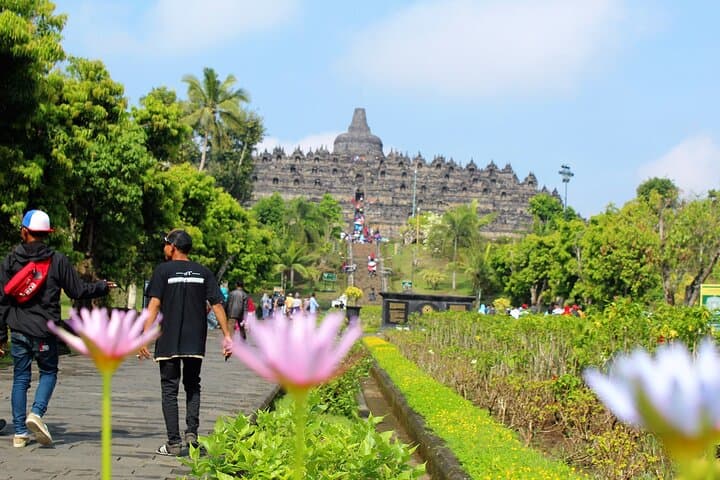
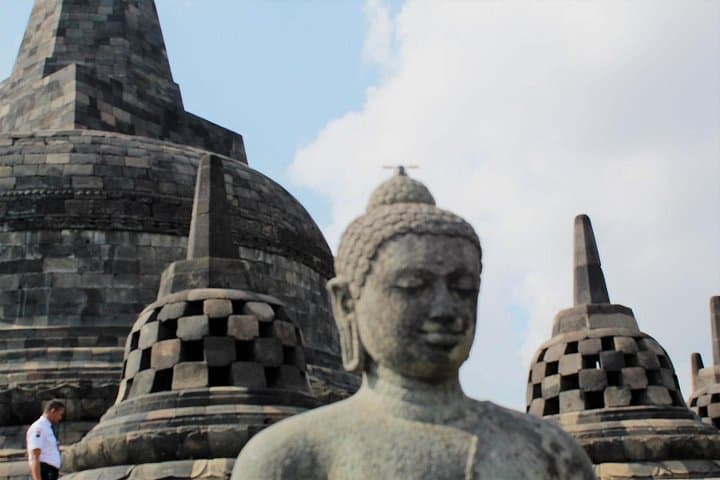
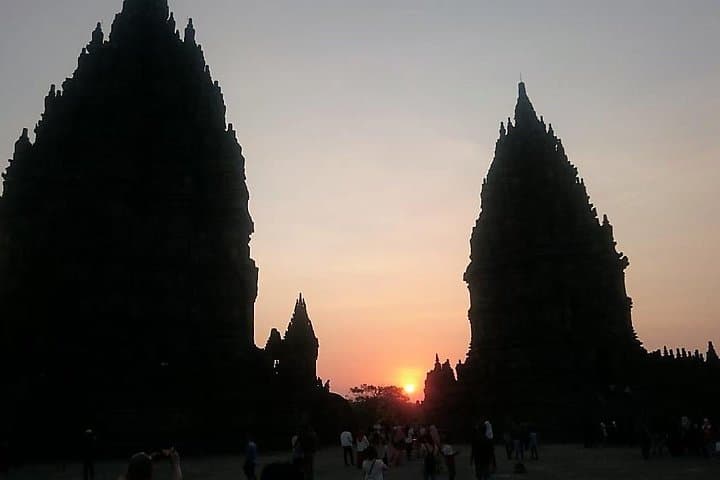
Borobudur was raised by the Sailendra dynasty in the 8th–9th centuries and remains one of the largest Buddhist monuments on earth. Nearby Prambanan, a 9th-century Hindu complex, offers a sharper vertical geometry—tall spires carved with epics of the Ramayana. Geologically Merapi is a classic stratovolcano: steep, frequently eruptive, and responsible for recent lava flows and reworked slopes where deserted villages stand as evidence of its power.
Culturally the itinerary threads temple ritual, Javanese court traditions, and communities who farm the volcanic soils. Local guides translate iconography and point out living customs—offers, shadow-puppet references, and rice-harvest rhythms—while pointing to viewpoints where dawn or dusk frames the monuments.
Practical guidance: expect a long day (8–12 hours) with several short walks on uneven stone and jeep rides over loose volcanic gravel. Bring sturdy walking shoes, sun protection, and a light rain layer during the wet months. Hydrate through the day; lunch is typically at a riverside restaurant. Timing matters—early starts avoid crowds at Borobudur, and late afternoons give the best light at Prambanan. Respect temple rules, follow your guide, and allow time at each stop to absorb both the carved stories and the landscape that made them.
moderate.
8–12 hours.
Moderate fitness—able to walk short uneven sections, climb stairs at temple sites, and tolerate a full day of activity.
The tour runs about 8–12 hours and typically includes pick-up/drop-off in Yogyakarta, entrance fees to listed temples, jeep tour on Merapi slopes, lunch, bottled water, and a guide.
The tour is private and can be adapted, but it involves long transfers and some walking on uneven surfaces; travelers with mobility issues should consult the operator first.
Yes—many itineraries allow an early start to catch sunrise, though it’s busier and may require earlier pick-up and slightly different logistics.
Most full-day packages include temple admissions and private air-conditioned transport; confirm details at booking if you need special arrangements.
Borobudur and Prambanan date to the 8th–9th centuries under competing Hindu and Buddhist dynasties; Merapi’s eruptions have repeatedly reshaped communities and agriculture for centuries.
High visitor numbers can impact temple stone and local paths—stick to marked areas, avoid touching reliefs, and support licensed local guides and community-run concessions.
JAVA BALI TRIPS operates guided outdoor trips and adventures with an emphasis on safety, stewardship, and memorable experiences.
Morning light slices across Java’s low hills as the air-conditioned car hums out of Yogyakarta; rice paddies blur past and the bulk of Merapi looms ahead, restless and dark against a pale sky. The day moves between contrasts—Buddhist bas-reliefs chiselled nine centuries ago at Borobudur, the quiet stone chambers of Mendut and Pawon, and the raw, ashen slopes of an active volcano that still shapes local life.
Morning light slices across Java’s low hills as the air-conditioned car hums out of Yogyakarta; rice paddies blur past and the bulk of Merapi looms ahead, restless and dark against a pale sky. The day moves between contrasts—Buddhist bas-reliefs chiselled nine centuries ago at Borobudur, the quiet stone chambers of Mendut and Pawon, and the raw, ashen slopes of an active volcano that still shapes local life.
Borobudur was raised by the Sailendra dynasty in the 8th–9th centuries and remains one of the largest Buddhist monuments on earth. Nearby Prambanan, a 9th-century Hindu complex, offers a sharper vertical geometry—tall spires carved with epics of the Ramayana. Geologically Merapi is a classic stratovolcano: steep, frequently eruptive, and responsible for recent lava flows and reworked slopes where deserted villages stand as evidence of its power.
Culturally the itinerary threads temple ritual, Javanese court traditions, and communities who farm the volcanic soils. Local guides translate iconography and point out living customs—offers, shadow-puppet references, and rice-harvest rhythms—while pointing to viewpoints where dawn or dusk frames the monuments.
Practical guidance: expect a long day (8–12 hours) with several short walks on uneven stone and jeep rides over loose volcanic gravel. Bring sturdy walking shoes, sun protection, and a light rain layer during the wet months. Hydrate through the day; lunch is typically at a riverside restaurant. Timing matters—early starts avoid crowds at Borobudur, and late afternoons give the best light at Prambanan. Respect temple rules, follow your guide, and allow time at each stop to absorb both the carved stories and the landscape that made them.