THE ADVENTURE COLLECTIVE® · Independent discovery and booking for outdoor travel

Mera Peak is Nepal’s highest permitted trekking peak, offering panoramic views of multiple 8,000m giants and a mix of tea-house trekking and high-altitude camping. This guide outlines what to expect on a 17–19 day expedition—from terrain and culture to practical packing and acclimatization advice.
Mera Peak is Nepal’s highest permitted trekking peak, offering panoramic views of multiple 8,000m giants and a mix of tea-house trekking and high-altitude camping. This guide outlines what to expect on a 17–19 day expedition—from terrain and culture to practical packing and acclimatization advice.
You step out of the teahouse into a thin, cold morning and the valley exhales—wind through rhododendron stands, a river daring you forward with a steady, icy voice.
Verified experiences and guided adventures in the surrounding area.
Operated by Nepal Guide Treks and Expedition P. Ltd. · Kathmandu, Bagmati Province
You step out of the teahouse into a thin, cold morning and the valley exhales—wind through rhododendron stands, a river daring you forward with a steady, icy voice.
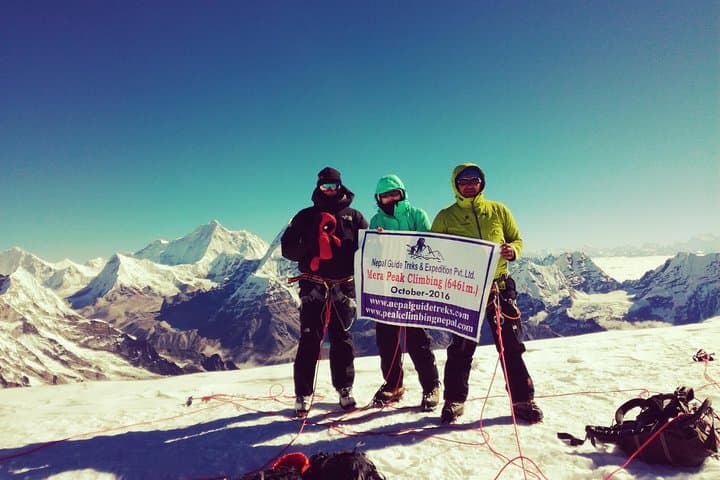
Mera Peak rises like a pale shoulder above the Hongu and Hinku valleys, the summit a hard white goal that rewards endurance with sweeping views of Everest, Makalu, Lhotse, Cho Oyu and Kanchenjunga. The route threads remote yak pastures, glacial moraines and high alpine camps; nights alternate between basic tea houses and tented camps as you move into true mountaineering terrain.
This route runs through Solukhumbu country, where Sherpa communities have worked high trails for generations; the peak itself is a licensed trekking peak under Nepal Mountaineering Association rules, drawing climbers who want a non-technical but high-altitude objective. Geologically, the region is young Himalaya—steep uplift, exposed moraine, and seasonal glaciers that set the rhythm of the climb.
Expect long days of approach and mandatory acclimatization rotations. The final push involves crampon travel and rope-protected sections; weather governs success more than ambition—clear pre-monsoon and autumn windows give the best panoramas.
Practical essentials: plan 17–19 days from Kathmandu, secure climbing permits, travel with an experienced guide, and prioritize acclimatization. Hydrate steadily (2–3 L lukewarm water daily), layer for dramatic temperature swings, and be ready to descend at the first sign of altitude illness. With careful planning, Mera Peak is an achievable, unforgettable Himalayan objective that pairs cultural immersion with high-mountain challenge.
challenging.
17–19 days.
Requires excellent aerobic fitness, experience with multi-day trekking and ability to carry a 10–15 kg daypack; prior high-altitude experience recommended.
Yes—Mera Peak is a permitted trekking peak; permits are arranged through your operator and are required before climbing.
Typical itineraries run 17–19 days from Kathmandu, allowing for acclimatization, approach, summit push and contingency days.
You should have basic mountaineering skills (crampon and ice-axe use) and experience with roped travel; many teams include skill refreshers led by guides.
High-altitude illness, severe weather and crevasse/glacier hazards on the upper slopes are the primary risks; guided teams manage routes and rescue protocols.
The Mera region has long been a seasonal grazing and trade corridor for Sherpa communities; the mountain became a licensed trekking peak under Nepal’s permitting system to promote regulated access.
Wastes and human impact concentrate in high camps—respect “pack it in, pack it out” rules, use local porters fairly, and support operators that follow clean-climb practices.
Nepal Guide Treks and Expedition P. Ltd. operates guided outdoor trips and adventures with an emphasis on safety, stewardship, and memorable experiences.
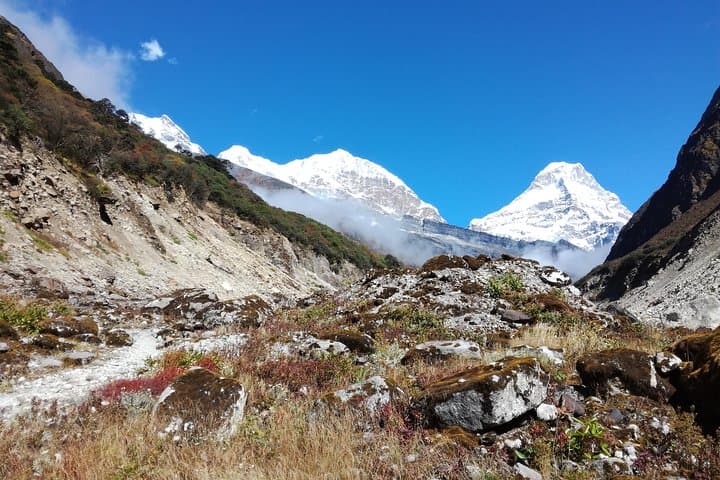
You step out of the teahouse into a thin, cold morning and the valley exhales—wind through rhododendron stands, a river daring you forward with a steady, icy voice.
You step out of the teahouse into a thin, cold morning and the valley exhales—wind through rhododendron stands, a river daring you forward with a steady, icy voice.
Mera Peak rises like a pale shoulder above the Hongu and Hinku valleys, the summit a hard white goal that rewards endurance with sweeping views of Everest, Makalu, Lhotse, Cho Oyu and Kanchenjunga. The route threads remote yak pastures, glacial moraines and high alpine camps; nights alternate between basic tea houses and tented camps as you move into true mountaineering terrain.
This route runs through Solukhumbu country, where Sherpa communities have worked high trails for generations; the peak itself is a licensed trekking peak under Nepal Mountaineering Association rules, drawing climbers who want a non-technical but high-altitude objective. Geologically, the region is young Himalaya—steep uplift, exposed moraine, and seasonal glaciers that set the rhythm of the climb.
Expect long days of approach and mandatory acclimatization rotations. The final push involves crampon travel and rope-protected sections; weather governs success more than ambition—clear pre-monsoon and autumn windows give the best panoramas.
Practical essentials: plan 17–19 days from Kathmandu, secure climbing permits, travel with an experienced guide, and prioritize acclimatization. Hydrate steadily (2–3 L lukewarm water daily), layer for dramatic temperature swings, and be ready to descend at the first sign of altitude illness. With careful planning, Mera Peak is an achievable, unforgettable Himalayan objective that pairs cultural immersion with high-mountain challenge.