THE ADVENTURE COLLECTIVE® · Independent discovery and booking for outdoor travel

Skip the license and pilot your own day on Menorca’s west coast. From Ciutadella you can motor to turquoise calas, anchor in sheltered coves and return after a four‑hour loop with sun, swims and remote viewpoints.
Skip the license and pilot your own day on Menorca’s west coast. From Ciutadella you can motor to turquoise calas, anchor in sheltered coves and return after a four‑hour loop with sun, swims and remote viewpoints.
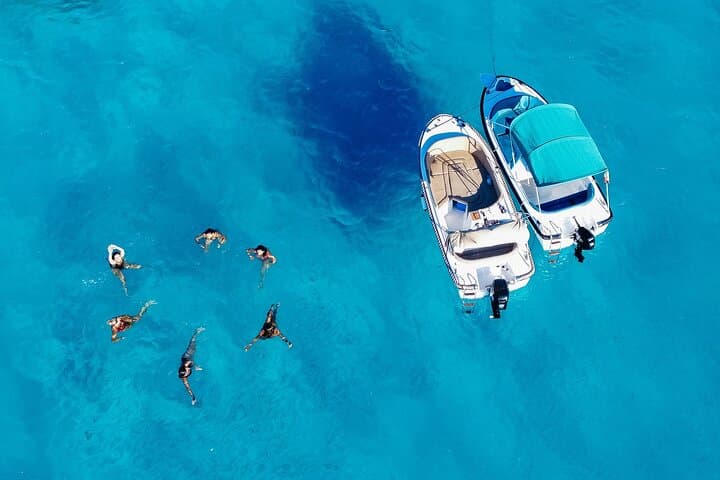
You push off from the old stone quay of Ciutadella, the motor's steady hum answering gull calls as the town shrinks behind you. The western coast of Menorca opens like a map of hidden inlets: limestone cliffs fold into sudden beaches, caves gash the shoreline, and turquoise pockets of water tempt you to drop anchor.
Verified experiences and guided adventures in the surrounding area.
Operated by 7faros Menorca · Ciutadella de Menorca, Balearic Islands
You push off from the old stone quay of Ciutadella, the motor's steady hum answering gull calls as the town shrinks behind you. The western coast of Menorca opens like a map of hidden inlets: limestone cliffs fold into sudden beaches, caves gash the shoreline, and turquoise pockets of water tempt you to drop anchor.
This stretch of the Balearics has a layered history — Phoenician and Roman traders once passed these headlands, and watchtowers from the 16th–18th centuries punctuate the skyline. Geologically, the coast is compact limestone and marl, carved by wind and wave into steep coves and narrow entrances that reward careful handling. Local culture still orients around the sea: fishermen's boathouses, seasonal calas, and the island's slow pace invite exploration by small craft.
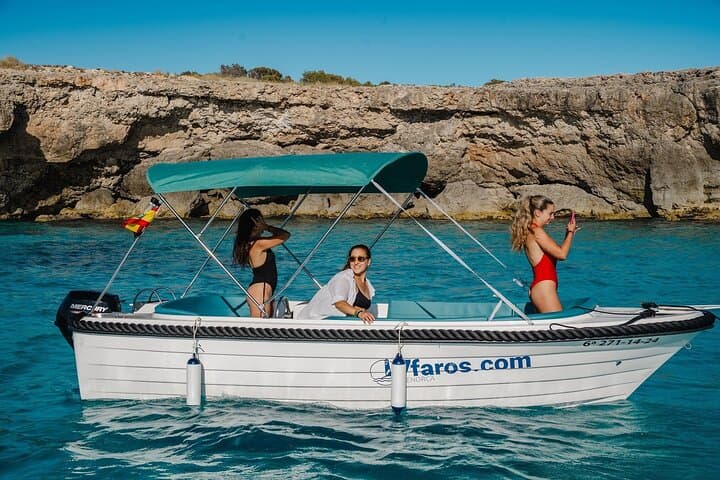
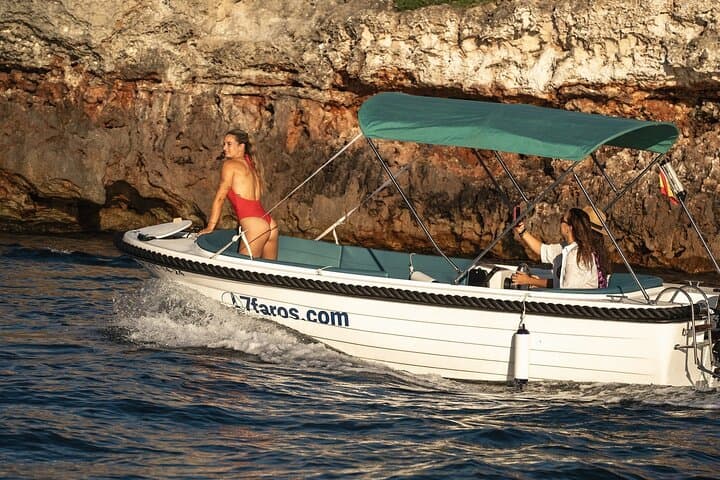
On a four‑hour no‑license rental you can reach Pont den Gil, Cala en Forcat, Calan Blanes and quieter spots like Sa Caleta. Boats carry a large solarium, awning, ladder, fridge and Bluetooth speaker; all vessels are geolocated and assisted remotely, so basic coastal navigation is enough.
Plan for wind: mornings are usually calmer; afternoons can develop sea breezes. Respect Posidonia meadows — anchor in sand only — and avoid protected coves when closures apply. Bring sunscreen, a lifejacket for every passenger (provided or required), fresh water and a waterproof bag for valuables. Briefings cover safety and sustainable anchoring; follow them and let the island's coast reward you with clear water, short swims and unmatched viewpoint access.
easy.
4 hours.
Suitable for most fitness levels; ability to climb a ladder and move on a small deck recommended
No—this rental specifically provides boats that can be piloted without a license; a safety briefing is mandatory before departure.
These craft accommodate up to five people comfortably; check the specific listing for exact capacity and weight limits.
Delivery and return are at the port of Ciutadella; crew will provide exact mooring details and timing after booking.
Yes—the boats are geolocated and have remote assistance available; briefings cover emergency procedures and local navigation tips.
Ciutadella’s port has been a maritime hub since antiquity; the western coast bears watchtowers erected to spot corsairs in the 16th–18th centuries.
Menorca protects large areas of coastal Posidonia meadows and many coves are within marine protection zones—anchoring rules and no‑take restrictions help preserve water clarity and biodiversity.
7faros Menorca operates guided outdoor trips and adventures with an emphasis on safety, stewardship, and memorable experiences.
You push off from the old stone quay of Ciutadella, the motor's steady hum answering gull calls as the town shrinks behind you. The western coast of Menorca opens like a map of hidden inlets: limestone cliffs fold into sudden beaches, caves gash the shoreline, and turquoise pockets of water tempt you to drop anchor.
You push off from the old stone quay of Ciutadella, the motor's steady hum answering gull calls as the town shrinks behind you. The western coast of Menorca opens like a map of hidden inlets: limestone cliffs fold into sudden beaches, caves gash the shoreline, and turquoise pockets of water tempt you to drop anchor.
This stretch of the Balearics has a layered history — Phoenician and Roman traders once passed these headlands, and watchtowers from the 16th–18th centuries punctuate the skyline. Geologically, the coast is compact limestone and marl, carved by wind and wave into steep coves and narrow entrances that reward careful handling. Local culture still orients around the sea: fishermen's boathouses, seasonal calas, and the island's slow pace invite exploration by small craft.
On a four‑hour no‑license rental you can reach Pont den Gil, Cala en Forcat, Calan Blanes and quieter spots like Sa Caleta. Boats carry a large solarium, awning, ladder, fridge and Bluetooth speaker; all vessels are geolocated and assisted remotely, so basic coastal navigation is enough.
Plan for wind: mornings are usually calmer; afternoons can develop sea breezes. Respect Posidonia meadows — anchor in sand only — and avoid protected coves when closures apply. Bring sunscreen, a lifejacket for every passenger (provided or required), fresh water and a waterproof bag for valuables. Briefings cover safety and sustainable anchoring; follow them and let the island's coast reward you with clear water, short swims and unmatched viewpoint access.