THE ADVENTURE COLLECTIVE® · Independent discovery and booking for outdoor travel

A focused half-day tour around Erdeven and Carnac that brings you close to Neolithic menhirs and dolmens. Ideal for travelers who want an archaeological walk with short drives between rarely visited sites.
A focused half-day tour around Erdeven and Carnac that brings you close to Neolithic menhirs and dolmens. Ideal for travelers who want an archaeological walk with short drives between rarely visited sites.
You step out of the car into a low Breton wind and the stones are already waiting—rows of upright menhirs punctuate green fields, and the forest breathes around buried dolmens.
Verified experiences and guided adventures in the surrounding area.
Operated by Menhir secrets · Carnac, Brittany
You step out of the car into a low Breton wind and the stones are already waiting—rows of upright menhirs punctuate green fields, and the forest breathes around buried dolmens.
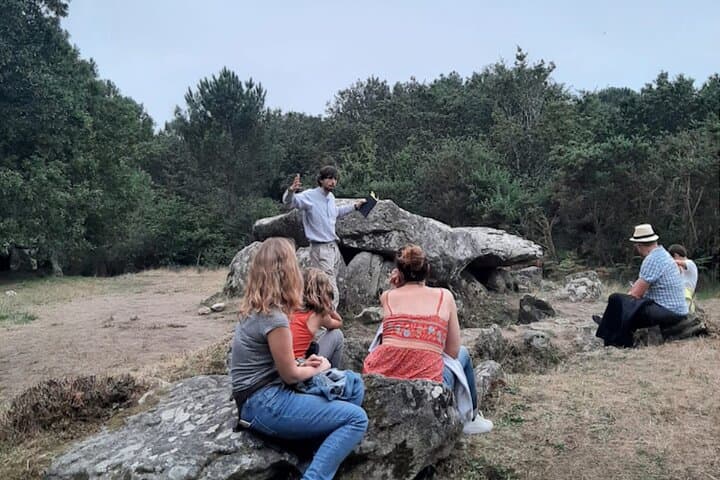
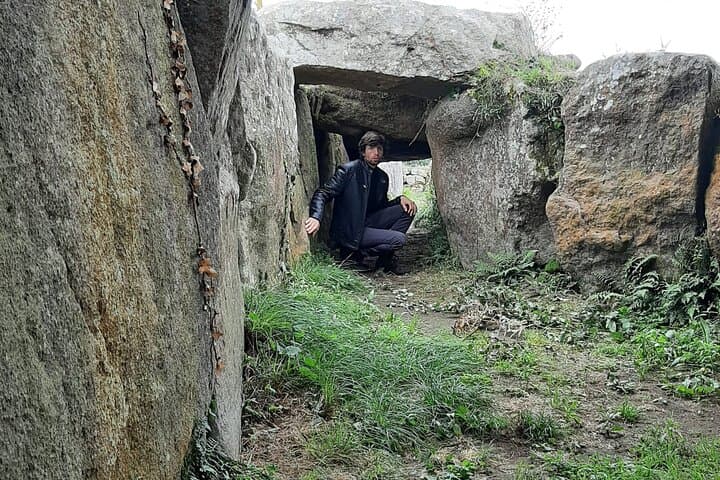
This half-day circuit threads Erdeven and Carnac, moving between exhibition halls at the Pôle Menhirs and quiet field sites where a local guide peels back Neolithic layers of meaning. The Carnac alignments date to the late Neolithic (roughly 4500–3300 BCE); many standing stones were set in long rows, and nearby dolmens served as communal tombs. Geologically the area sits on Armorican Massif outcrops and glacially influenced soils, which affected where builders placed heavy slabs.
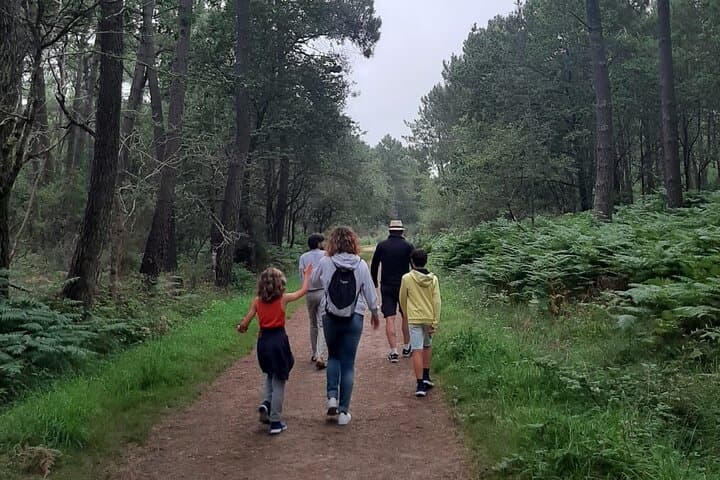
The walk balances archaeology and landscape: you’ll cross farm tracks, short forest stretches, and grassy platforms where moss has reclaimed the stone bases. Local life—small Breton farming plots, coastal fishing culture a few kilometers away—still shapes how access is managed: many sites are protected, and interpretation blends scientific study with regional folklore.
Practical guidance: expect 1–4 km of walking on uneven ground and brief roadside transfers by car between points (the operator covers roughly 15 km by vehicle). Wear sturdy shoes and layers; rain and wind are common outside summer. Bring water and a small snack—the Pôle Menhirs has an exhibition and small bookshop but refreshments can be limited. Follow your guide’s route and signage: touching, climbing, or moving stones is prohibited to prevent damage.
This circuit is compact but immersive: it’s less about long mileage than close study—standing near a carved capstone, listening as the guide names a place that has held human attention for thousands of years.
moderate.
3–4 hours.
Moderate fitness—able to walk 1–4 km over uneven ground and stand for interpretation stops
Walking ranges from 1–4 km total across several short on-foot visits; the overall tour lasts about 3.5 hours.
Many sites are on protected land with limited access; the guide provides access to lesser-known sites in agreement with local stewards.
It suits children who can manage short walks and adults with moderate mobility; contact the operator about mobility restrictions before booking.
Access to the Pôle Menhirs exhibition and bookshop is included; refreshments there are paid separately.
Carnac’s alignments and nearby dolmens were erected in the late Neolithic and represent some of Europe’s densest megalithic concentrations.
Many sites are sensitive to erosion and visitor impact; follow marked paths, heed signage, and avoid touching stones to preserve them for future study.
Menhir secrets operates guided outdoor trips and adventures with an emphasis on safety, stewardship, and memorable experiences.
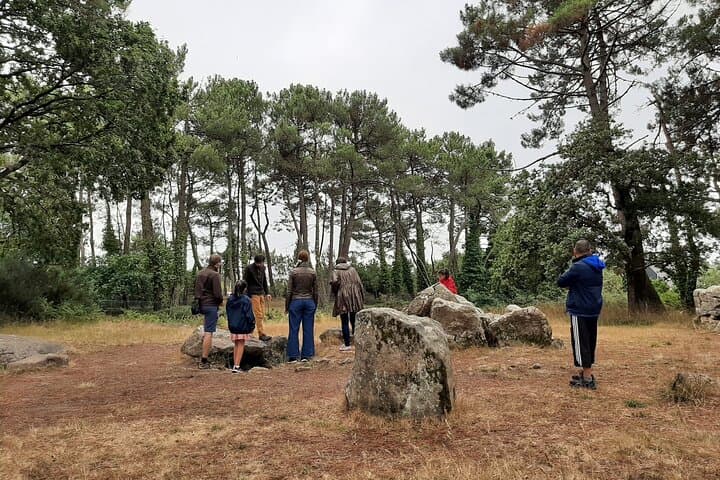
You step out of the car into a low Breton wind and the stones are already waiting—rows of upright menhirs punctuate green fields, and the forest breathes around buried dolmens.
You step out of the car into a low Breton wind and the stones are already waiting—rows of upright menhirs punctuate green fields, and the forest breathes around buried dolmens.
This half-day circuit threads Erdeven and Carnac, moving between exhibition halls at the Pôle Menhirs and quiet field sites where a local guide peels back Neolithic layers of meaning. The Carnac alignments date to the late Neolithic (roughly 4500–3300 BCE); many standing stones were set in long rows, and nearby dolmens served as communal tombs. Geologically the area sits on Armorican Massif outcrops and glacially influenced soils, which affected where builders placed heavy slabs.
The walk balances archaeology and landscape: you’ll cross farm tracks, short forest stretches, and grassy platforms where moss has reclaimed the stone bases. Local life—small Breton farming plots, coastal fishing culture a few kilometers away—still shapes how access is managed: many sites are protected, and interpretation blends scientific study with regional folklore.
Practical guidance: expect 1–4 km of walking on uneven ground and brief roadside transfers by car between points (the operator covers roughly 15 km by vehicle). Wear sturdy shoes and layers; rain and wind are common outside summer. Bring water and a small snack—the Pôle Menhirs has an exhibition and small bookshop but refreshments can be limited. Follow your guide’s route and signage: touching, climbing, or moving stones is prohibited to prevent damage.
This circuit is compact but immersive: it’s less about long mileage than close study—standing near a carved capstone, listening as the guide names a place that has held human attention for thousands of years.