THE ADVENTURE COLLECTIVE® · Independent discovery and booking for outdoor travel

Skip the lines to three formative sites of ancient Egypt—Memphis, Saqqara and Dahshur—and walk where millennia of architecture changed the skyline. This half-day loop pairs close-up views of the Step, Bent and Red pyramids with practical logistics for beating the heat and crowds.
Skip the lines to three formative sites of ancient Egypt—Memphis, Saqqara and Dahshur—and walk where millennia of architecture changed the skyline. This half-day loop pairs close-up views of the Step, Bent and Red pyramids with practical logistics for beating the heat and crowds.
The morning light slices across the Western Desert as the group steps from an air-conditioned vehicle onto hard-packed sand and limestone.
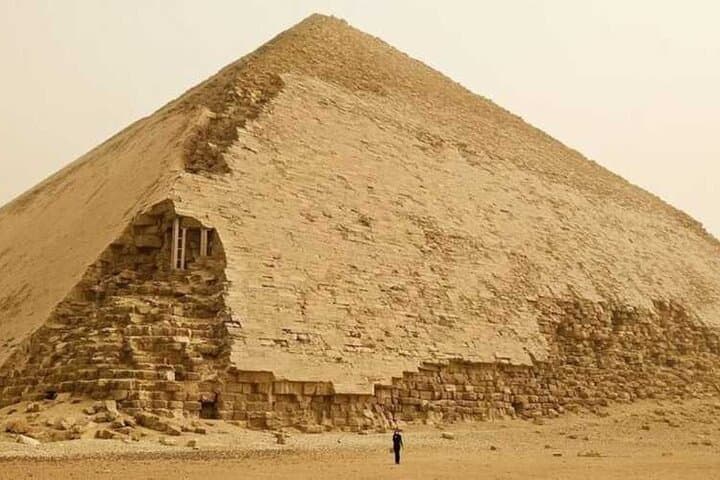
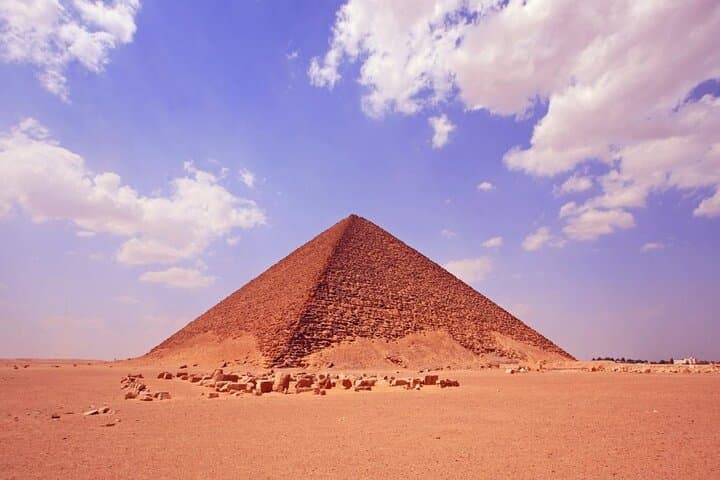
A wind pushed down from the plateau nudges at jackets and water bottles alike, and before them the Bent and Red pyramids of Dahshur rise like geometric cliffs carved by time rather than water.
Verified experiences and guided adventures in the surrounding area.
Operated by Egipto Excursiones · Saqqara, Giza Governorate
The morning light slices across the Western Desert as the group steps from an air-conditioned vehicle onto hard-packed sand and limestone.
A wind pushed down from the plateau nudges at jackets and water bottles alike, and before them the Bent and Red pyramids of Dahshur rise like geometric cliffs carved by time rather than water.
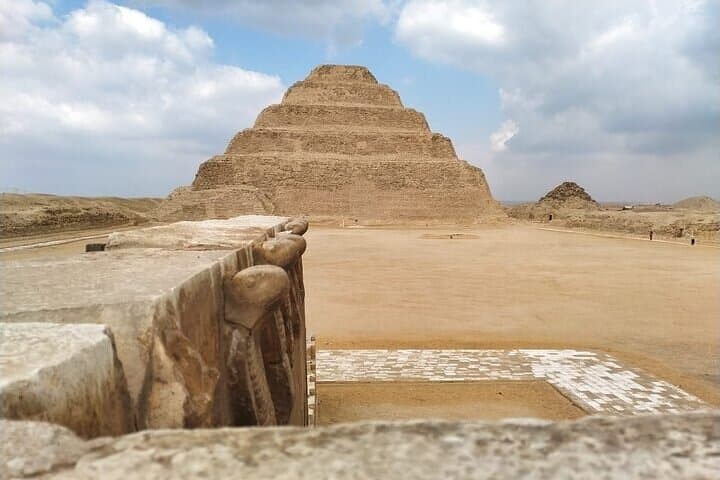
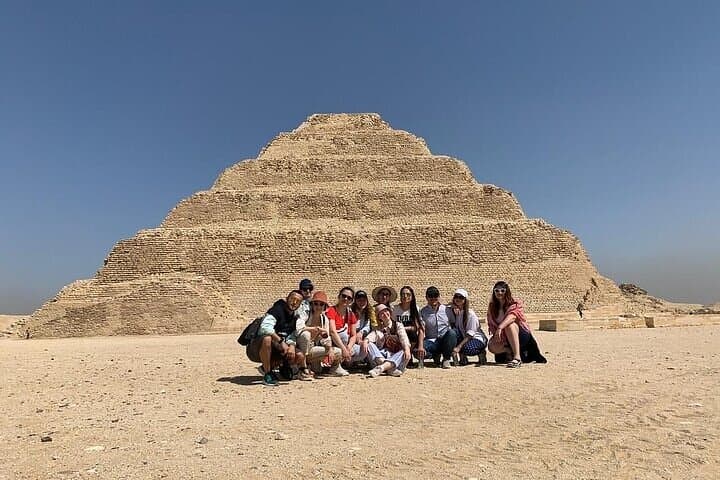
This loop—Memphis, Saqqara (Step Pyramid), and Dahshur—tracks the early arc of royal funerary architecture: Memphis served as the administrative heart of the Old Kingdom, Saqqara holds the Step Pyramid of Djoser (circa 27th century BCE), and Dahshur preserves Sneferu’s experiments in pyramid design, including the Bent Pyramid’s abrupt change in angle and the Red Pyramid’s smooth profile.
Geologically, these monuments sit on a sandstone and limestone shelf at the edge of the cultivated Nile floodplain; walking is mostly flat, with sandy and rubble-strewn surfaces that demand steady footing.
Expect short hikes of a few hundred meters between viewpoints and 20-minute guided stops at local craft sites. The experience is cultural first and physical second: minimal elevation gain, but long sun exposure and loose sand make early starts and hydration essential.
Practical notes: bring sun protection and closed shoes, carry at least 1–2 liters of water, and plan visits for early morning or late afternoon to avoid peak heat and harsh light for photography. Respect site rules—no climbing on monuments—and allow time to absorb both the architecture and the human history written into the stone.
easy.
3–5 hours.
Suitable for most travelers with basic mobility; expect flat walking on sandy, uneven ground for several short stretches.
This tour includes entry tickets and private, air-conditioned transport between Memphis, Saqqara and Dahshur as described in the itinerary.
The itinerary is low-impact with short walks, but uneven ground may be challenging for those with mobility limitations—check pickup options and request assistance in advance.
Photography is generally allowed in open areas; however, flash and tripods may be restricted in some zones—follow your guide’s instructions.
Restrooms and basic refreshment stops are available near major visitor areas and at partner craft stops; carry water between stops.
Memphis was the first capital of ancient Egypt’s northern region; Saqqara’s Step Pyramid, built for Djoser by Imhotep, marks the transition from mastaba tombs to monumental stone pyramids. Sneferu’s Dahshur experiments led directly to the smooth-sided Great Pyramids.
These sites are UNESCO-listed and sensitive to erosion and visitor wear; follow marked paths, avoid touching masonry, and support licensed local guides and official ticketing to aid preservation.
Egipto Excursiones operates guided outdoor trips and adventures with an emphasis on safety, stewardship, and memorable experiences.
The morning light slices across the Western Desert as the group steps from an air-conditioned vehicle onto hard-packed sand and limestone.
A wind pushed down from the plateau nudges at jackets and water bottles alike, and before them the Bent and Red pyramids of Dahshur rise like geometric cliffs carved by time rather than water.
The morning light slices across the Western Desert as the group steps from an air-conditioned vehicle onto hard-packed sand and limestone.
A wind pushed down from the plateau nudges at jackets and water bottles alike, and before them the Bent and Red pyramids of Dahshur rise like geometric cliffs carved by time rather than water.
This loop—Memphis, Saqqara (Step Pyramid), and Dahshur—tracks the early arc of royal funerary architecture: Memphis served as the administrative heart of the Old Kingdom, Saqqara holds the Step Pyramid of Djoser (circa 27th century BCE), and Dahshur preserves Sneferu’s experiments in pyramid design, including the Bent Pyramid’s abrupt change in angle and the Red Pyramid’s smooth profile.
Geologically, these monuments sit on a sandstone and limestone shelf at the edge of the cultivated Nile floodplain; walking is mostly flat, with sandy and rubble-strewn surfaces that demand steady footing.
Expect short hikes of a few hundred meters between viewpoints and 20-minute guided stops at local craft sites. The experience is cultural first and physical second: minimal elevation gain, but long sun exposure and loose sand make early starts and hydration essential.
Practical notes: bring sun protection and closed shoes, carry at least 1–2 liters of water, and plan visits for early morning or late afternoon to avoid peak heat and harsh light for photography. Respect site rules—no climbing on monuments—and allow time to absorb both the architecture and the human history written into the stone.