THE ADVENTURE COLLECTIVE® · Independent discovery and booking for outdoor travel

Trace the arc of Egyptian pyramid design on a focused day tour from Cairo. Visit Memphis’ colossal relics, Saqqara’s Step Pyramid and Dahshur’s Bent and Red Pyramids with a guide who explains the architecture and history.
Trace the arc of Egyptian pyramid design on a focused day tour from Cairo. Visit Memphis’ colossal relics, Saqqara’s Step Pyramid and Dahshur’s Bent and Red Pyramids with a guide who explains the architecture and history.
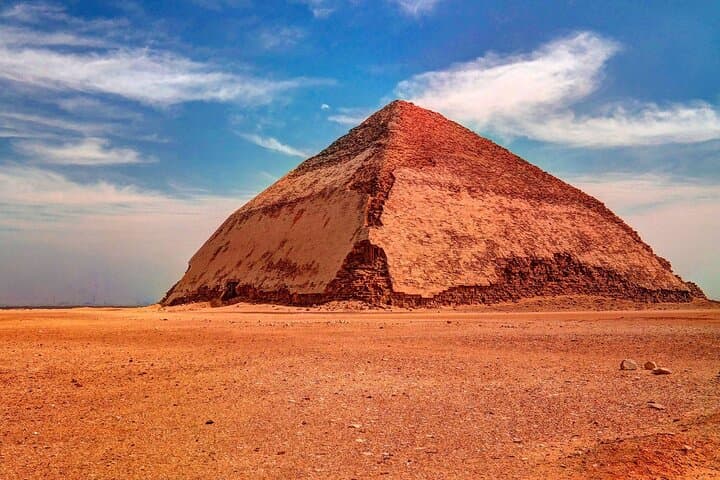
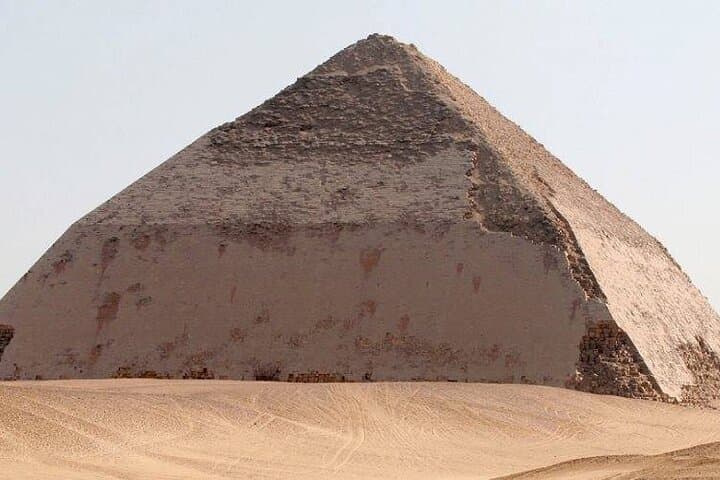
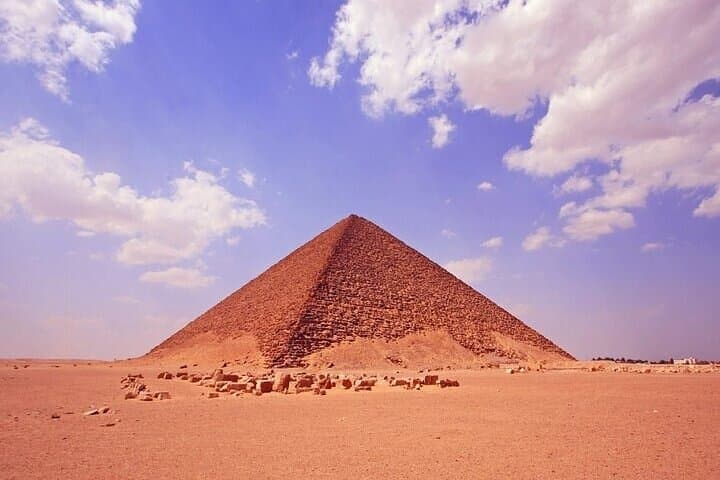
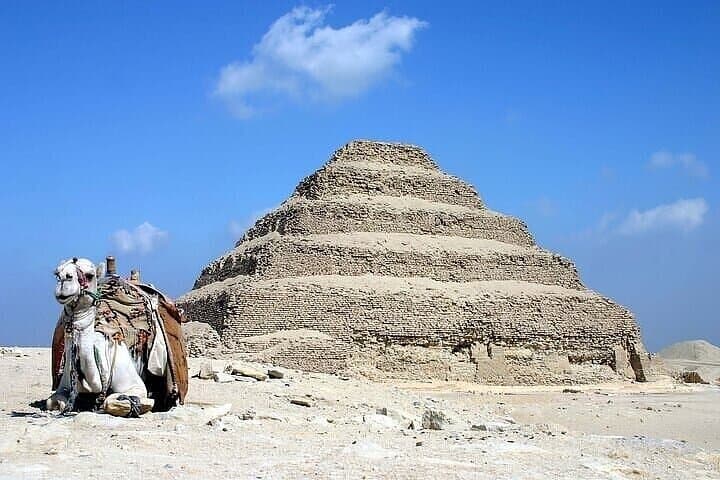
Morning light slices across the desert as a private air‑conditioned vehicle threads south from Cairo toward the low ridges of Saqqara and Dahshur. Sand and stone meet in a quiet contrast: the Step Pyramid rises in layered stone like an architectural experiment frozen in time, while the Bent and Red Pyramids at Dahshur tilt and glow with a rusty hue under the sun.
Verified experiences and guided adventures in the surrounding area.
Operated by Emo Tours Swiss · Giza, Cairo Governorate
Morning light slices across the desert as a private air‑conditioned vehicle threads south from Cairo toward the low ridges of Saqqara and Dahshur. Sand and stone meet in a quiet contrast: the Step Pyramid rises in layered stone like an architectural experiment frozen in time, while the Bent and Red Pyramids at Dahshur tilt and glow with a rusty hue under the sun.
This route threads three key chapters of ancient Egyptian history. Memphis, founded around 3100 BCE, served as the Old Kingdom capital and preserves the colossal statue of Ramses II and an alabaster sphinx. Saqqara is the workshop of pyramid evolution — the Step Pyramid of Djoser marks the shift from mastaba tombs to monumental stone construction. Dahshur showcases royal experimentation in geometry: the Bent Pyramid’s angle change and the Red Pyramid’s smoother slope reveal engineering lessons learned centuries ago.
Expect compacted desert tracks, short sections of loose sand and carved stone steps; walking is moderate but mostly level. Guides will explain masonry techniques, funerary culture and the neighborhoods of artisans that once surrounded these necropolises.
Practical guidance: start early to avoid midday heat, carry sun protection and 1–2 liters of water, and wear sturdy walking shoes for uneven surfaces. Entry is handled with skip‑the‑line access in many tours, but interior access to certain chambers may be restricted and involves stooping. Photography is permitted at most outdoor sites; tightened security means pockets may be checked. A full‑day private transfer makes the logistics straightforward—plan for a 5‑hour outing with pickup from Cairo or Giza and drop‑off on return.
easy.
5 hours.
Light walking over mostly level, uneven ground; suitable for travelers without special fitness training
The scheduled excursion is approximately 5 hours including hotel pickup and drop‑off in Cairo or Giza.
This tour typically includes guide services and transfers; confirm whether site entrance fees are covered when booking, as policies vary.
Interior access is limited and sometimes requires separate tickets or has age/health restrictions; check with your operator and be prepared to stoop through low passages.
The tour is rated physically easy for average travelers, but it’s not recommended for those with serious spine, heart, or pregnancy restrictions; uneven ground can be challenging for limited mobility.
Memphis was Egypt’s first capital after unification around 3100 BCE; Saqqara’s Step Pyramid (Djoser) marks the first large‑scale cut‑stone construction in Egypt, while Dahshur’s pyramids date to the Fourth Dynasty as architects refined slope and structure.
Visitor pressure and sun exposure accelerate stone erosion; stick to designated paths, avoid touching fragile masonry and support guides who prioritize respectful visitation.
Emo Tours Swiss operates guided outdoor trips and adventures with an emphasis on safety, stewardship, and memorable experiences.
Morning light slices across the desert as a private air‑conditioned vehicle threads south from Cairo toward the low ridges of Saqqara and Dahshur. Sand and stone meet in a quiet contrast: the Step Pyramid rises in layered stone like an architectural experiment frozen in time, while the Bent and Red Pyramids at Dahshur tilt and glow with a rusty hue under the sun.
Morning light slices across the desert as a private air‑conditioned vehicle threads south from Cairo toward the low ridges of Saqqara and Dahshur. Sand and stone meet in a quiet contrast: the Step Pyramid rises in layered stone like an architectural experiment frozen in time, while the Bent and Red Pyramids at Dahshur tilt and glow with a rusty hue under the sun.
This route threads three key chapters of ancient Egyptian history. Memphis, founded around 3100 BCE, served as the Old Kingdom capital and preserves the colossal statue of Ramses II and an alabaster sphinx. Saqqara is the workshop of pyramid evolution — the Step Pyramid of Djoser marks the shift from mastaba tombs to monumental stone construction. Dahshur showcases royal experimentation in geometry: the Bent Pyramid’s angle change and the Red Pyramid’s smoother slope reveal engineering lessons learned centuries ago.
Expect compacted desert tracks, short sections of loose sand and carved stone steps; walking is moderate but mostly level. Guides will explain masonry techniques, funerary culture and the neighborhoods of artisans that once surrounded these necropolises.
Practical guidance: start early to avoid midday heat, carry sun protection and 1–2 liters of water, and wear sturdy walking shoes for uneven surfaces. Entry is handled with skip‑the‑line access in many tours, but interior access to certain chambers may be restricted and involves stooping. Photography is permitted at most outdoor sites; tightened security means pockets may be checked. A full‑day private transfer makes the logistics straightforward—plan for a 5‑hour outing with pickup from Cairo or Giza and drop‑off on return.