THE ADVENTURE COLLECTIVE® · Independent discovery and booking for outdoor travel

Walk a purposeful route through Santiago’s recent history, from the Museum of Memory to Villa Grimaldi and Estadio Nacional. This four-hour private tour pairs measured reflection with local context and practical guidance for first-time visitors.
Walk a purposeful route through Santiago’s recent history, from the Museum of Memory to Villa Grimaldi and Estadio Nacional. This four-hour private tour pairs measured reflection with local context and practical guidance for first-time visitors.
A narrow avenue of plane trees leads from the Quinta Normal district into a sequence of places that ask you to slow down and remember. On this four-hour private Memory Tour in Santiago, the city’s everyday rhythm—honking buses, market chatter—gives way to quieter spaces where plaques, photographs and silent courtyards demand attention.
Verified experiences and guided adventures in the surrounding area.
Operated by Tangol · Santiago, Santiago Metropolitan Region
A narrow avenue of plane trees leads from the Quinta Normal district into a sequence of places that ask you to slow down and remember. On this four-hour private Memory Tour in Santiago, the city’s everyday rhythm—honking buses, market chatter—gives way to quieter spaces where plaques, photographs and silent courtyards demand attention.
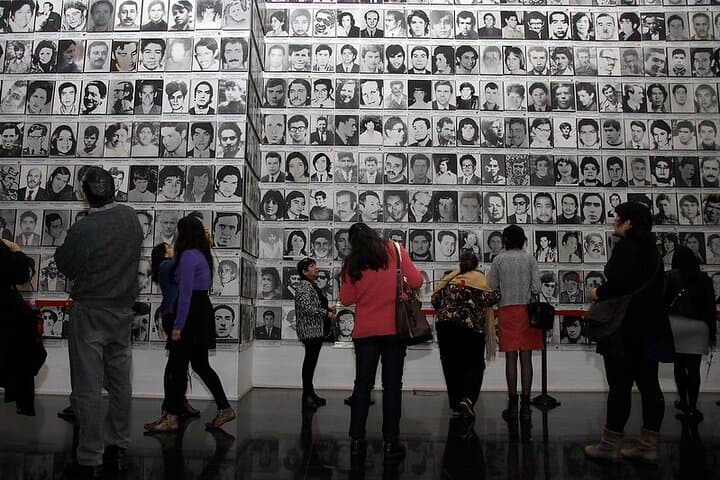
The route centers on the Museum of Memory and Human Rights, whose exhibits document abuses during the 1973–1990 dictatorship and the long civic struggle that followed. From there the tour moves to Estadio Nacional, a site of sports triumphs and a darker past when thousands were detained, and finishes at Villa Grimaldi, now Parque por la Paz, where reconstructed cells and open gardens foster reflection.
Geologically, Santiago sits in a broad valley at the foot of the Andes; urban terraces and the nearby Mapocho River shaped how neighborhoods and public spaces developed, including the stadium complex. Culturally, the tour traces how memory and urban space intersect—how plazas, murals and museums serve as civic classrooms for younger generations.
Practical guidance: expect mostly flat walking with short transfers by private vehicle between sites. Plan mid-morning or late afternoon to avoid peak sun; take water and a light jacket. Photography rules vary—follow guide instructions, particularly at Villa Grimaldi. The tour is suitable for most fitness levels, accessible in parts, and best for travelers who want context and conversation alongside landmarks.
easy.
4 hours.
Suitable for most fitness levels; mostly flat walking with occasional short stairs or curbs.
Yes; the tour is described as suitable for all fitness levels but includes emotionally intense content—consider age-appropriate preparation and take breaks as needed.
Yes; the itinerary indicates admission is included for the listed sites, though some memorials have free entrances and guided components.
Private guides often offer Spanish and English—confirm language availability at booking to ensure the guide matches your preference.
Full refund if canceled at least 24 hours before departure; no refund within 24 hours of the tour start.
The tour focuses on sites tied to Chile’s 1973–1990 military dictatorship and the subsequent human rights movement that reshaped national memory.
These memorial sites prioritize respectful visitation and education—follow site rules, avoid touching exhibits, and support local preservation efforts by not leaving waste.
Tangol operates guided outdoor trips and adventures with an emphasis on safety, stewardship, and memorable experiences.
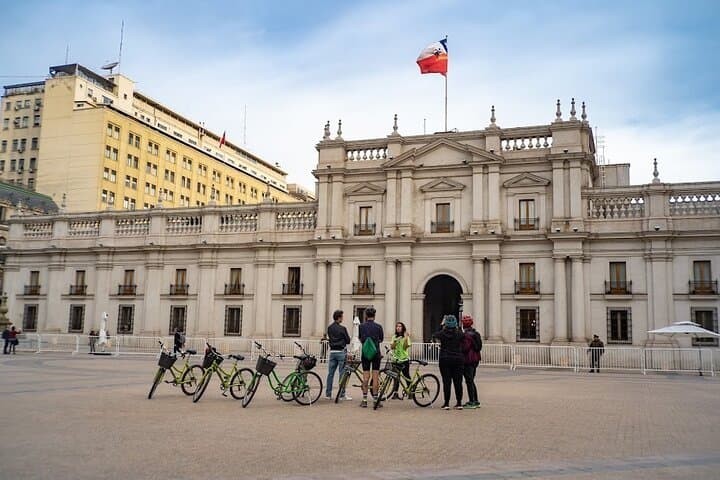


A narrow avenue of plane trees leads from the Quinta Normal district into a sequence of places that ask you to slow down and remember. On this four-hour private Memory Tour in Santiago, the city’s everyday rhythm—honking buses, market chatter—gives way to quieter spaces where plaques, photographs and silent courtyards demand attention.
A narrow avenue of plane trees leads from the Quinta Normal district into a sequence of places that ask you to slow down and remember. On this four-hour private Memory Tour in Santiago, the city’s everyday rhythm—honking buses, market chatter—gives way to quieter spaces where plaques, photographs and silent courtyards demand attention.
The route centers on the Museum of Memory and Human Rights, whose exhibits document abuses during the 1973–1990 dictatorship and the long civic struggle that followed. From there the tour moves to Estadio Nacional, a site of sports triumphs and a darker past when thousands were detained, and finishes at Villa Grimaldi, now Parque por la Paz, where reconstructed cells and open gardens foster reflection.
Geologically, Santiago sits in a broad valley at the foot of the Andes; urban terraces and the nearby Mapocho River shaped how neighborhoods and public spaces developed, including the stadium complex. Culturally, the tour traces how memory and urban space intersect—how plazas, murals and museums serve as civic classrooms for younger generations.
Practical guidance: expect mostly flat walking with short transfers by private vehicle between sites. Plan mid-morning or late afternoon to avoid peak sun; take water and a light jacket. Photography rules vary—follow guide instructions, particularly at Villa Grimaldi. The tour is suitable for most fitness levels, accessible in parts, and best for travelers who want context and conversation alongside landmarks.